The monthly payment may be the first number you compare, but it rarely tells the full story. When weighing communities versus apartments, the better fit often comes down to how you want to live after you walk through the front door: how much room you need, what you can predict each month, whether outdoor space matters, and how connected you want to feel to your neighbors.
For many working adults, families, retirees, and budget-conscious households, a manufactured home community can offer a different kind of value than a conventional apartment. It is not automatically the right choice for everyone. A downtown apartment may make more sense for someone who values walkability and a short commute above all else. But for people seeking space, stability, and a welcoming neighborhood setting, a well-managed community deserves a closer look.
Communities Versus Apartments: Start With Daily Life
Apartments are often designed around convenience and density. They can place residents near employers, restaurants, transit, and entertainment, particularly in urban and suburban centers. Maintenance for the building and shared areas is typically handled by the property owner, and moving in can be relatively straightforward.
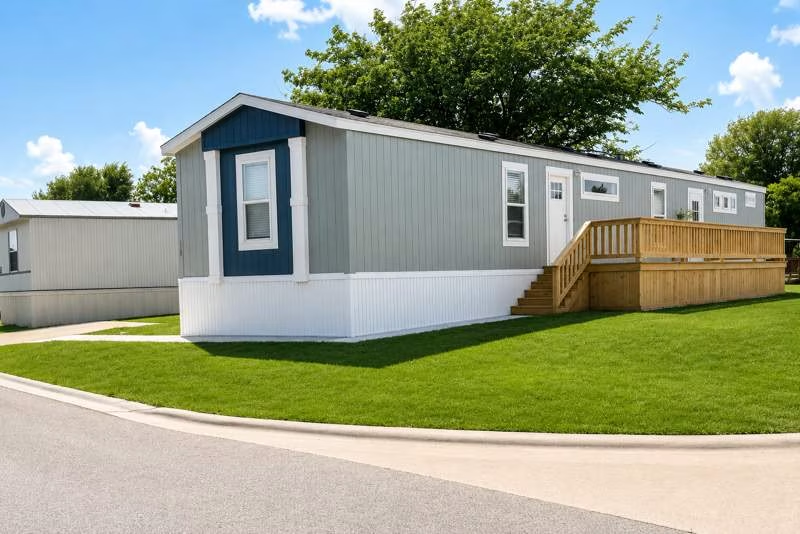
A manufactured home community offers a more residential rhythm. Homes are generally single-story and set on individual sites, which can mean more separation from neighbors than an apartment building provides. Many residents value having a driveway, room for outdoor seating, space for pets to stretch out, or simply fewer shared walls.
That difference affects the small moments of a day. Carrying groceries directly from your car, enjoying coffee outside, or letting children play in an open area can feel very different from taking an elevator or navigating a crowded parking lot. The right setting depends on your priorities, not on a one-size-fits-all definition of home.
Look Beyond the Advertised Monthly Price
Comparing rent alone can lead to surprises. An apartment’s advertised rate may not reflect parking fees, pet charges, utility arrangements, amenity fees, or a larger security deposit. A community home also has costs to understand, especially if you are purchasing a manufactured home while leasing the home site.
The useful question is not simply, “Which option costs less?” Ask instead, “What does this cost provide for my household?” A home with more bedrooms, storage, and parking may reduce the need to rent an off-site storage unit or move again when life changes. A predictable housing arrangement can also make it easier to plan for school expenses, transportation, savings, and everyday needs.
Renting and Owning Create Different Paths
Apartments are generally rental housing. You sign a lease, make monthly payments, and do not take responsibility for the home as an owner would. This can be appealing when flexibility is your main goal, such as during a temporary job assignment or a period of transition.
In a manufactured home community, residents may rent a home, purchase a home, or purchase a home and pay a monthly site lease. Each arrangement has distinct responsibilities and benefits. Homeownership can offer more control over your living space and an opportunity to build equity, while renting may better suit someone who wants fewer long-term commitments.
Before deciding, request a clear explanation of monthly charges, lease terms, utility responsibilities, maintenance expectations, and any community rules. Straightforward information is a sign of a property operator that respects residents’ time and trust.
Space, Privacy, and Room to Grow
Square footage matters, but layout matters too. An apartment may advertise generous square footage while placing bedrooms close together or limiting storage. Manufactured homes are often designed with practical living in mind, including distinct living areas, multiple bedrooms, and storage options that support real household routines.
Privacy is another key distinction. In an apartment, shared ceilings, hallways, walls, and parking areas are part of daily life. Some people enjoy that energy. Others want a little more breathing room. A detached home in a community can provide more personal space while still keeping neighbors nearby.
For families, that balance can be especially meaningful. Children may benefit from a familiar neighborhood where they see the same faces, while adults appreciate an environment that feels settled without being isolated. For older adults, single-level living can also be a practical advantage. Every household is different, but space that works today should also support the life you expect to have a year or two from now.
Community Is More Than Proximity
Apartment buildings can certainly have friendly neighbors. Yet living close to people does not always create a sense of belonging. The difference often comes from the setting and the management behind it.
A quality manufactured home community is maintained as a neighborhood, not merely a collection of units. Clean common areas, cared-for roads, clear standards, and responsive onsite or remote management help residents feel that their home environment matters. When maintenance requests have a clear path, communication is timely, and rules are applied consistently, people can focus more on living and less on chasing answers.
That is where thoughtful operations make a real difference. Online resident portals can make routine tasks such as paying rent, reviewing account details, or submitting a maintenance request easier to manage around work and family schedules. These tools do not replace attentive people. They give residents another convenient way to stay informed and get help when needed.
Consider Location Without Sacrificing Livability
Location can be the strongest argument for an apartment, especially if your work, school, or social life centers on a dense urban area. A short commute can be worth paying for, and walkable access is valuable for households with one vehicle or no vehicle.
Still, a slightly different location may deliver a better overall housing experience. Manufactured home communities are often located near the services residents need while offering more room than high-density housing. In growing markets across Arizona, Georgia, North Carolina, Tennessee, Texas, and Utah, the choice may be less about city versus suburb and more about deciding what trade-offs best support your budget and routine.
Factor in the full commute, not just mileage. Consider traffic patterns, fuel, public transportation, school routes, childcare, grocery access, and the time you spend getting where you need to go. A lower monthly payment loses some of its value if the location adds hours of stress each week. On the other hand, a manageable commute may be a fair trade for more space and a stronger neighborhood feel.
What to Ask Before You Choose
Whether you are touring an apartment or a community home, pay attention to what happens beyond the model or vacant unit. Are the grounds clean? Is parking organized? Do you see signs of regular upkeep? Can the management team explain how maintenance requests are handled and what residents can expect after move-in?
Ask about lease renewal practices, pet policies, utility billing, visitor parking, and home or site responsibilities. If you are considering buying a manufactured home, ask what financing and ownership options are available and what improvements require approval. These details are not minor. They shape your experience long after moving day.
It also helps to picture an ordinary Tuesday, not just your first weekend in a new place. Where will you park after work? Where will holiday guests stay? How will you store seasonal items? What will you do when something needs attention? The answers reveal whether a property is convenient in a lasting way.
Choose the Home That Supports Your Next Chapter
Apartments can be a smart choice for people who want central access, a shorter commitment, or minimal responsibility for the home itself. Manufactured home communities can be an excellent fit for those who want more room, neighborhood connection, and housing options that may better align with long-term goals.
The strongest choice is the one that gives your household confidence, not just a key. As you compare properties, look for clear costs, well-kept surroundings, convenient service, and management that treats your home as a place worth caring for. A good home should make the next chapter feel more possible.