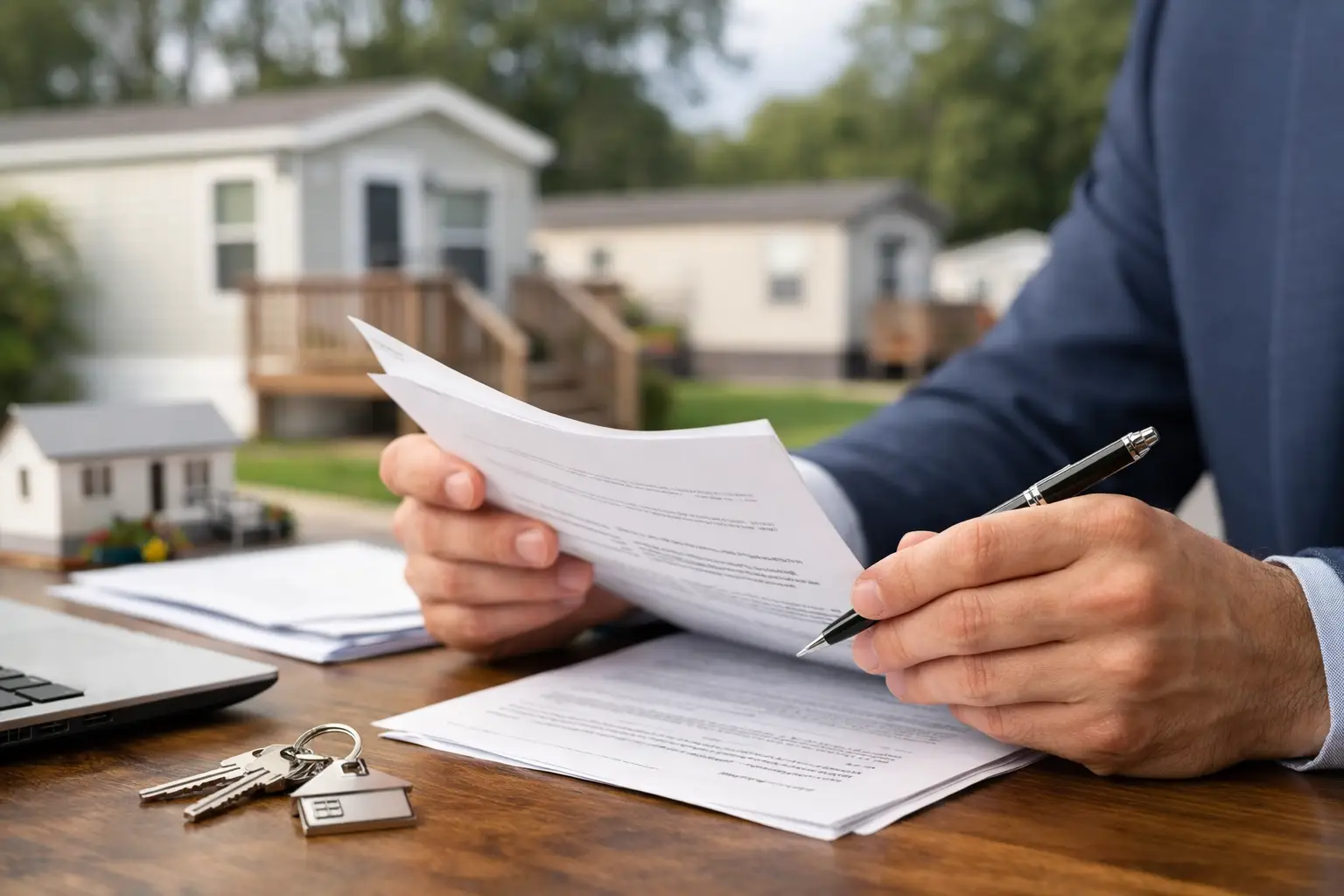
You can feel it the moment you turn into a community.
The streets tell you whether water drains after a storm or sits for days. The lighting tells you if evening walks feel normal or tense. The landscaping tells you whether the rules are real or just words on a lease. And the way a maintenance request gets handled tells you if management is truly present.
That is why manufactured home community maintenance standards matter. They are not about perfection or policing people. They are about protecting day-to-day livability, keeping costs predictable, and building the kind of neighborhood where residents feel proud to invite family over.
Manufactured home community maintenance standards, explained
Maintenance standards are the shared expectations for how the community is cared for - by the owner/operator and, in certain areas, by residents. They cover everything that affects safety, function, and appearance: roads, drainage, lighting, utilities, common areas, amenities, and the basic look and condition of lots.
In a well-managed community, standards are not vague. They show up as routines (like regular grounds checks), response targets (like how quickly urgent issues are addressed), and planned improvements (like resurfacing roads or upgrading lighting). They are also enforced consistently, because inconsistent enforcement is how a community ends up feeling unpredictable.
The trade-off is real: higher standards require ongoing investment and clear rules, which can feel strict if you have experienced communities where “anything goes.” But that structure is often what keeps the place stable, clean, and easier to live in.
The core areas that separate “fine” from “well-run”
A community can have friendly neighbors and still suffer from deferred maintenance. The difference between an okay experience and a great one is usually found in a few practical categories.
Roads, curbs, and drainage
Roads are one of the biggest signals of long-term upkeep because they are expensive to ignore and hard to fix quickly.
Good standards typically include regular pothole monitoring, clear striping where needed, and a plan for patching versus resurfacing. Drainage is just as important. If swales are overgrown or inlets are clogged, you will see standing water, erosion, and eventually damage to roads and lots.
It depends on the region, of course. Freeze-thaw cycles in colder states punish asphalt. Heavy rains in other areas expose drainage problems fast. Strong standards account for local weather patterns, not just a calendar.
Lighting, signage, and visible safety basics
Maintenance is a safety system, not just a curb-appeal project.
Functional streetlights, clearly marked speed limits, legible address numbers, and maintained signage all reduce accidents and make it easier for guests, deliveries, and emergency responders to navigate. If lighting stays out for weeks, it changes how residents use the community at night. Standards should set expectations for inspection frequency and repair timelines, especially in high-traffic areas like entrances, mail stations, and amenity spaces.
Utilities and infrastructure you cannot see
Some of the most important maintenance work is invisible until it fails.
Communities vary in how utilities are configured. Some have community-managed water or wastewater components, while others rely more heavily on municipal connections. Either way, strong standards include routine inspection, leak monitoring, valve access management, and clear procedures for after-hours emergencies.
This is also where communication becomes part of maintenance. If a repair requires temporary water shutoff or road access limitations, residents deserve clear notice and realistic timing. The best standard is not “nothing ever breaks.” It is “when something breaks, it is handled quickly and transparently.”
Common areas: landscaping, trash, and pest prevention
Common areas are where standards become social.
When landscaping is consistently trimmed, trash is contained, and debris is removed after storms, the whole community feels calmer and more cared for. It also reduces pests. Overflowing dumpsters, standing water, and overgrown brush create conditions that invite problems.
The nuance here is that “clean” should not mean “sterile.” Many residents value mature trees, shade, and outdoor life. Maintenance standards can support that by focusing on health and safety - pruning, visibility at corners, and removing hazards - rather than stripping a community of character.
Amenities and shared spaces
If a community offers a clubhouse, playground, pool, or other shared amenities, maintenance standards should protect two things: usability and trust.
Usability means equipment works, spaces are clean, and issues are repaired quickly enough that amenities do not sit closed for long stretches. Trust means residents believe rules are in place for everyone’s benefit - such as posted hours, guest policies, and basic cleanliness expectations.
Amenity maintenance is also a credibility test. A community that advertises features but does not maintain them trains residents not to believe what they are told.
Lot standards: where respect and consistency matter most
Lot standards can be sensitive because they intersect with pride, personal freedom, and budget. Done poorly, they can feel judgmental. Done well, they protect neighbors from preventable issues and keep the community looking like a neighborhood, not a storage yard.
Most reasonable standards focus on a few themes: safe stairs and railings, maintained skirting, controlled weeds, appropriate outdoor storage, and basic exterior condition. The goal is not to make every home look identical. The goal is to prevent hazards and visible neglect that drags down everyone’s experience.
Consistency is the key. If rules are enforced only when there is a complaint, residents lose confidence. If standards are enforced evenly, with clear notice and reasonable timelines, they start to feel less like “rules” and more like shared respect.
Response time: the standard residents feel the most
You can resurface roads once every few years. You cannot “resurface” a reputation.
The fastest way a community earns trust is by responding well to problems residents actually encounter: a broken streetlight, a fallen branch, a drainage issue, a concern about common-area cleanliness.
Strong maintenance standards typically separate issues into urgency levels. A blocked road after a storm is different from a cosmetic issue at a garden bed. Residents do not need rigid promises that cannot be kept, but they do need a clear sense that urgent issues are prioritized and that routine issues are not ignored.
Digital tools help here when they are paired with real follow-through. An online portal can make it easier to submit requests and track progress. But the real “standard” is whether people feel heard and whether work is completed in a reasonable window.
Inspections: proactive beats reactive
Communities with high maintenance standards do not wait for complaints. They walk the property.
Proactive inspections catch small issues before they become expensive ones. They also reduce resident friction. If a manager notices a developing pothole, a clogged inlet, or a damaged sign during routine checks, residents do not have to become the messenger.
The practical balance is frequency versus disruption. Too many inspections can feel intrusive if they are not clearly scoped. The best approach is predictable common-area inspections and respectful, properly noticed lot-related checks that focus on safety and community rules.
How standards affect affordability (yes, they are connected)
People sometimes assume maintenance standards only increase costs. In reality, deferred maintenance can be one of the most expensive choices a community can make.
When small problems are ignored, they tend to become urgent, disruptive, and costly. Poor drainage damages roads. Broken lighting increases safety concerns. Unchecked debris attracts pests. All of that can lead to larger repairs and a less stable living environment.
Well-planned upkeep supports predictable budgeting. It also supports property values for homeowners and a better long-term experience for renters. The “it depends” part is timing: a major improvement project can be disruptive in the short term, but it is often what keeps the community from sliding backward.
What to ask when you are choosing a community
If you are touring communities, you do not need a checklist as much as you need a few smart conversations.
Ask how maintenance requests are submitted and how after-hours issues are handled. Ask what upgrades have been completed recently and what is planned next. Walk the roads and look for drainage clues. Check lighting at the entrance and around common areas. Look at how trash is managed. Notice whether lot standards look consistent across the neighborhood.
Also pay attention to how the answers are delivered. Clear, specific responses usually indicate a team that runs on systems, not improvisation.
If you are searching for a community that pairs affordability with visible upkeep and a resident-first approach, you can explore communities and available homes through Medallion Communities.
When standards feel strict, and why that can be a good sign
Some residents come from environments where there were few rules and even less follow-through. In that context, any standard can feel like a big change.
The goal is not to make people feel watched. The goal is to protect the neighborhood feel that many families and working households are looking for: clean streets, working lights, cared-for common areas, and neighbors who are held to the same basic expectations.
A healthy community can explain the “why” behind its standards, offer reasonable time to resolve issues, and treat residents with respect throughout the process. That combination is what transforms standards from frustration into stability.
A well-maintained community is not one where nothing ever needs fixing. It is one where the place keeps getting better in small, steady ways - and where residents can count on the basics, month after month.