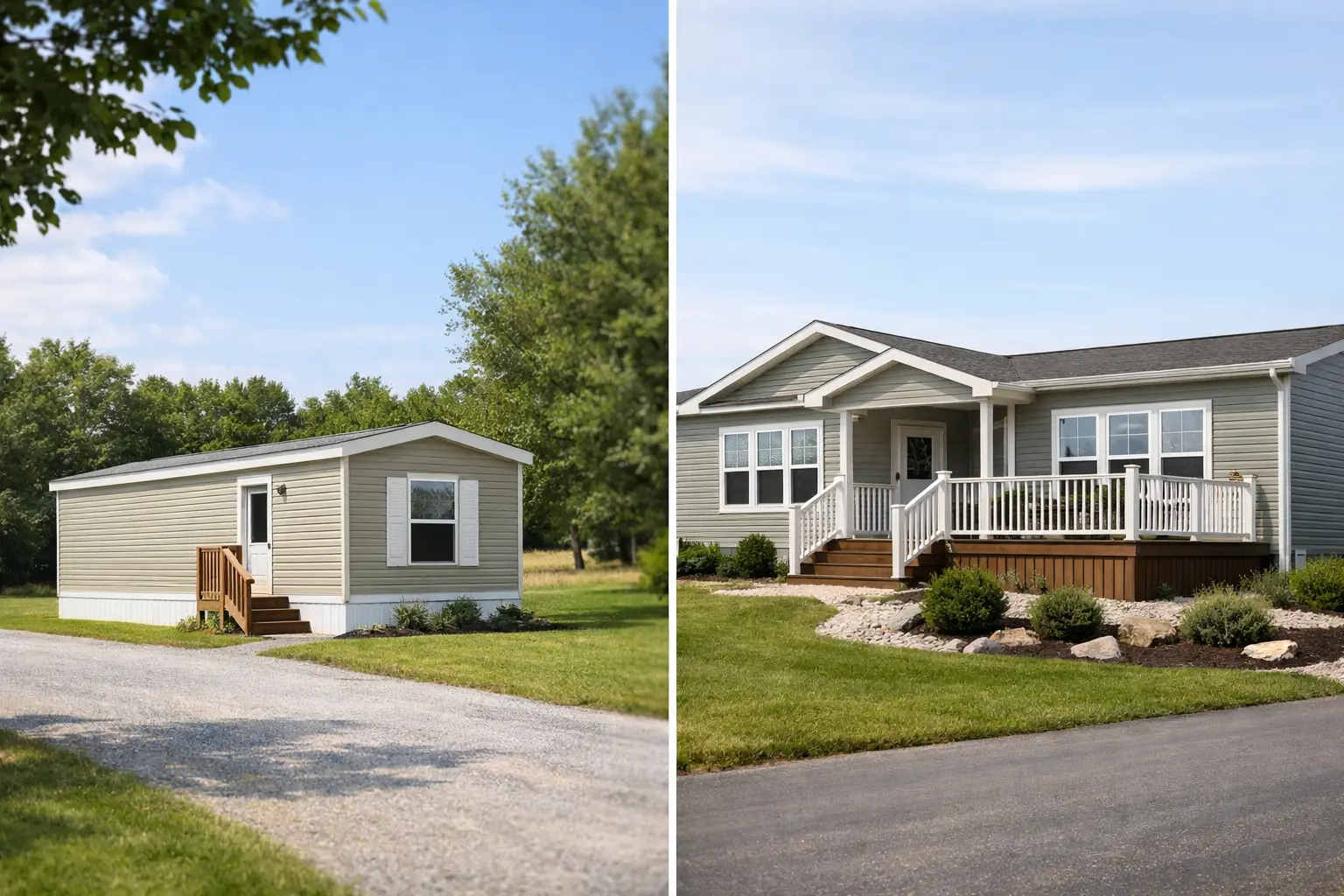
You have the budget. You’ve found a home you can picture yourself in. Then one question decides whether the numbers work - how are you going to finance it?
Manufactured homes can be one of the most attainable paths to homeownership, but financing isn’t one-size-fits-all. The loan that fits a brand-new home in a land-lease community can look very different from the loan for a home placed on private land. Your credit profile matters, of course, but so do details people often learn too late: the home’s age, whether it’s titled as personal property or real estate, what kind of foundation it has, and even whether you’re also financing the land.
Below is a clear, buyer-friendly breakdown of manufactured home financing options for buyers, what each one is best for, and how to choose the route that keeps your monthly payment predictable.
Start with the two questions lenders care about most
Financing usually comes down to two big factors.
First: will the home be titled as personal property (like a vehicle) or as real estate (like a site-built home)? Many manufactured homes in land-lease communities are titled as personal property, which points you toward chattel-style financing. Homes on owned land are more often titled as real estate, which can open the door to traditional mortgages.
Second: are you buying just the home, or the home plus land? If you are purchasing land at the same time, you may qualify for mortgage products with longer terms and potentially lower interest rates. If you’re leasing the lot in a well-managed community, your financing may focus solely on the home, with lot rent as a separate monthly cost.
Neither setup is “better” across the board. It depends on your goals: lowest cash to close, lowest payment, long-term equity, or flexibility.
Chattel loans: common for homes in land-lease communities
A chattel loan finances the home as personal property. This is one of the most common manufactured home financing options for buyers purchasing a home in a land-lease community.
Chattel loans can be faster and more straightforward than a mortgage because they typically involve fewer real-estate steps. They’re often used for newer homes, especially when the buyer is not purchasing land. Terms may be shorter than a standard 30-year mortgage, and rates can be higher than a comparable real-estate mortgage, which is the trade-off for flexibility and simpler collateral.
The best way to evaluate a chattel loan is not just the interest rate. Look closely at the full monthly payment, your down payment requirement, and whether there are penalties for paying extra. If you plan to refinance later, ask what conditions would need to change - for example, converting title to real property or adding the home to owned land.
Conventional mortgages: when the home qualifies as real estate
If the manufactured home is permanently affixed to owned land and titled as real property, a conventional mortgage may be on the table. This often means a longer term and potentially a lower rate than chattel financing, but the home must meet specific lender requirements.
Lenders commonly look for the home to be on a permanent foundation and to be classified as real estate in county records. The home’s condition, age, and installation standards also matter. Some lenders are cautious with older homes, and many will require an appraisal process that accounts for manufactured-home comps.
The upside is familiar: mortgage-style financing can support long-term stability and a payment structure that aligns with other types of homeownership. The downside is that qualifying can be stricter, timelines can be longer, and you’ll likely have more closing steps.
FHA loans: designed to broaden access, with rules to follow
FHA financing is often considered by first-time buyers because it can allow lower down payments and more flexible credit standards than many conventional loans. For manufactured homes, FHA options depend heavily on whether you’re financing the home alone or the home with land, and whether the property meets FHA requirements.
FHA programs can be a strong fit when the home is newer, properly installed, and meets standards related to safety and durability. Expect documentation requirements. Lenders may ask for proof of compliance with HUD construction and installation standards, and the property must be eligible under the program rules.
A key trade-off is mortgage insurance, which can increase the monthly payment. Buyers sometimes focus on the lower down payment and forget to calculate the all-in cost.
VA loans: a powerful option for eligible veterans
For buyers who qualify, VA financing can be one of the most affordable routes because it may allow low or even no down payment and has competitive terms. Manufactured homes can be financed with VA loans, but the home and property have to meet the VA’s guidelines.
This is where planning matters. If you’re looking at a home in a land-lease community, ask early whether VA financing is feasible for that specific setup and what documentation is required. If you’re placing a home on land you own (or are buying), VA financing can be more straightforward.
VA loans can be a game-changer for monthly affordability, but they’re not automatic. Start with eligibility, then confirm the property and title requirements before you fall in love with a specific home.
USDA loans: location matters
USDA loans are intended to support homeownership in eligible rural and some suburban areas. If you’re buying a manufactured home and the location qualifies, USDA financing can offer favorable terms.
The “if” is important. Eligibility depends on both the property location and household income limits. Also, many USDA loans are structured around real-estate setups - meaning the home is typically on owned land and titled as real property.
If you’re searching in smaller towns or areas outside major metros, it’s worth checking whether USDA could apply. It can meaningfully improve affordability for the right buyer in the right place.
Retailer or manufacturer financing: convenient, but compare carefully
Some buyers are offered financing through the retailer or manufacturer network. The convenience can be real: fewer handoffs, faster processing, and loan products built specifically for manufactured homes.
But convenience should not replace comparison. Ask for the APR, total loan cost over the term, down payment requirements, and any fees that are rolled into the loan. If you’re also paying for delivery, setup, skirting, steps, or upgrades, confirm what is financed and what is cash due.
This path can be a good fit for buyers who want a simpler process and a clear package price. Just be sure you’re comparing apples to apples against other lenders.
Personal loans: usually a last resort
Personal loans can sometimes be used for smaller manufactured home purchases or for specific costs like renovations. They usually come with shorter terms and higher rates than secured home financing.
In most situations, a personal loan is better suited for a gap - for example, modest repairs or improvements after purchase - rather than financing the home itself. If you find yourself relying on an unsecured loan to make the purchase work, that’s a signal to step back and re-check the plan.
Don’t forget the “real” monthly cost: home payment plus the community
Manufactured housing is attractive because it can offer a lower total cost than many site-built options. The way you keep it affordable is by modeling the full monthly picture.
If you’re in a land-lease community, you’ll typically have a home payment plus monthly lot rent. Utilities, insurance, and property taxes may be separate, depending on how the home is titled and local rules. Some buyers also budget for routine upkeep and future improvements, just as they would in any neighborhood.
Quality of management matters here because it affects day-to-day living and long-term predictability. A well-run community with clear standards, maintained infrastructure, and responsive onsite teams tends to feel more stable - and that stability is part of what you’re buying.
What to gather before you apply
Most buyers move faster and avoid surprises when they prepare a simple packet before applying. You’ll typically need proof of income, recent pay stubs, tax returns (especially if self-employed), identification, and permission for a credit pull. You may also need details about the home: year built, HUD data plate information, serial number, installation documentation, and where it will be located.
If you already own a manufactured home and plan to move it into a community, financing can include transport and setup costs. Those line items can be significant, so ask early how lenders treat them and whether they must be paid in cash.
How to choose the right option for you
When buyers ask which loan is best, the honest answer is: it depends on your property setup and what you value most.
If you want the simplest path to purchasing a home in a land-lease community, chattel financing may be the most direct. If you’re buying land and can meet title and foundation requirements, conventional, FHA, VA, or USDA routes may offer longer terms and different cost dynamics.
Your next step should be to run two scenarios side by side: the lowest cash-to-close option and the lowest monthly payment option. Sometimes they’re the same, but often they’re not. Choosing intentionally keeps you from feeling stretched six months after move-in.
If you’re exploring homes in established communities and want a neighborhood feel with clear standards, you can view available homes and locations through Medallion Communities and then align your financing choice with the specific home and placement details.
A helpful closing thought: financing is not just a hurdle to clear - it’s the tool that should protect your peace of mind. Pick the option that lets you enjoy the home and the community without holding your breath every month when the payment is due.