You find a home that fits your budget, the neighborhood feels right, and you can picture your routine there. Then the application asks for your Social Security number and permission to run a credit check - and the real question hits: will your credit score stop you from renting?
The truth is there is no single national cutoff. Landlords and property managers set their own standards based on risk, local demand, and what else they verify. Still, there are common patterns you can use to plan your next move.
What credit score needed for home rental?
Most renters who get approved fall somewhere in the mid-600s and up, but approvals happen below that range every day. The “right” score depends on the type of rental, how competitive the market is, and what your overall application looks like.
In many areas, a score around 650 or higher tends to look straightforward on paper, especially if your income and rental history line up cleanly. Scores in the low-to-mid 600s can still be workable, but you may need stronger supporting details like stable income, a longer work history, or a larger deposit where allowed. Below 600, approvals become more case-by-case. That does not automatically mean “no,” but it often means the landlord will look harder at recent late payments, collections, or high debt.
If you are applying in a high-demand area where homes rent quickly, the bar often rises. In a slower market, managers may have more flexibility - especially when an applicant shows consistent income and a track record of paying housing costs on time.
Why landlords look at credit in the first place
A credit score is a shorthand way to estimate whether someone pays bills on time and manages debt responsibly. It is not a perfect measure of how someone will treat a home or be a good neighbor, but it is one of the few standardized tools landlords can use across applicants.
For a landlord, the risk is not only missed rent. It is the cost of turnover, legal fees, vacancy time, and property wear if a lease ends badly. A stronger score can signal lower risk, which is why some properties use credit as a screening filter.
That said, credit is only one piece. Many managers care just as much about whether your monthly income comfortably covers rent, whether your job is steady, and whether previous landlords would rent to you again.
What a credit report tells them (beyond the number)
Two applicants can have the same score for totally different reasons. That is why many landlords look at the report itself.
A few common things that raise questions are recent missed payments, unpaid utility bills in collections, or a pattern of maxed-out credit cards. A past bankruptcy may be less of a concern if it is older and your recent history shows consistent on-time payments. Medical collections are another area where the “why” matters. Some landlords weigh them differently than other unpaid debts.
If you have a thin credit file - meaning not much credit history - you might not have a high score yet, but that does not always read as risky. In that case, the landlord may lean more heavily on income verification, rental references, and your overall stability.
A practical way to think about score ranges
If you are trying to predict how your application will be viewed, it helps to think in broad ranges rather than one magic number.
If you are above 700, you are typically in a strong position for most rentals, assuming the rest of your application supports it.
If you are in the mid-600s to high-600s, you are often in a “generally acceptable” zone. In competitive markets, you may still be compared against higher-score applicants, but approvals are common.
If you are in the 600-649 range, expect more scrutiny. Many people get approved here, but it helps to show steady income and be prepared to explain any recent negatives.
If you are below 600, the decision often becomes highly situational. Some landlords will not consider it, while others will if you have compensating strengths like a longer job history, a co-signer, or a larger upfront payment where legal.
These are not guarantees. They are simply the most common patterns renters encounter.
“It depends” factors that can outweigh your score
Credit is rarely the only deciding factor. A lower score can be offset by other strengths, and a high score does not automatically fix weak income or inconsistent rental history.
Income is usually the biggest practical factor. Many landlords look for rent to be a manageable portion of monthly gross income. If your budget is already tight, even a good credit score may not be enough.
Rental history can matter more than credit history. If you have a solid record of paying rent on time and taking care of your home, that is meaningful. On the flip side, an eviction filing or repeated late rent payments can be harder to overcome than a modest credit score.
Debt-to-income can also shift the picture. A person with a 680 score but high monthly debt payments may be riskier than a person with a 620 score and very little debt.
Finally, local competition is real. If a landlord has five qualified applicants for one home, they may use credit as a quick tie-breaker.
If your score is lower, what can help you get approved?
If your score is not where you want it, you still have options. The goal is to reduce uncertainty for the landlord and show that rent will be paid consistently.
A larger security deposit is one approach in some places, but rules vary by state and sometimes by city. Some areas cap deposit amounts or restrict how they are collected. Do not assume you can simply “offer more” without checking what is allowed.
A co-signer or guarantor can be another path, especially for younger renters or people rebuilding credit. This is a serious commitment for the co-signer, so it needs to be someone who understands the responsibility.
You can also strengthen your application by providing clean documentation upfront: recent pay stubs, an offer letter, bank statements if you are self-employed, and references. When everything is organized, it signals stability.
If there is a specific issue on your report, address it directly. A short, honest explanation can go a long way, especially when paired with evidence that the problem is resolved. For example, if a past late payment was tied to a temporary job loss, show that you are now consistently employed and have made on-time payments since.
Steps to raise your score before you apply
If you have a little time before moving, even 30 to 90 days can make a difference depending on what is driving your score.
Start by checking your credit reports for errors and disputing anything that is inaccurate. Incorrect balances, duplicated accounts, or wrongly reported late payments do happen.
Next, focus on on-time payments. Payment history is a major part of scoring models, and a single new late payment can set you back.
If credit cards are near their limits, paying down balances can help. Even if you pay in full each month, a high reported balance at statement time can hurt utilization. Reducing utilization often produces one of the faster improvements.
Avoid opening multiple new accounts right before applying. New credit inquiries and new accounts can temporarily lower your score and make you look like you are taking on more debt.
If you have no credit history, consider building it slowly with a secured credit card or a credit-builder loan through a reputable institution. The key is to keep balances low and pay on time.
Manufactured home rentals and credit checks
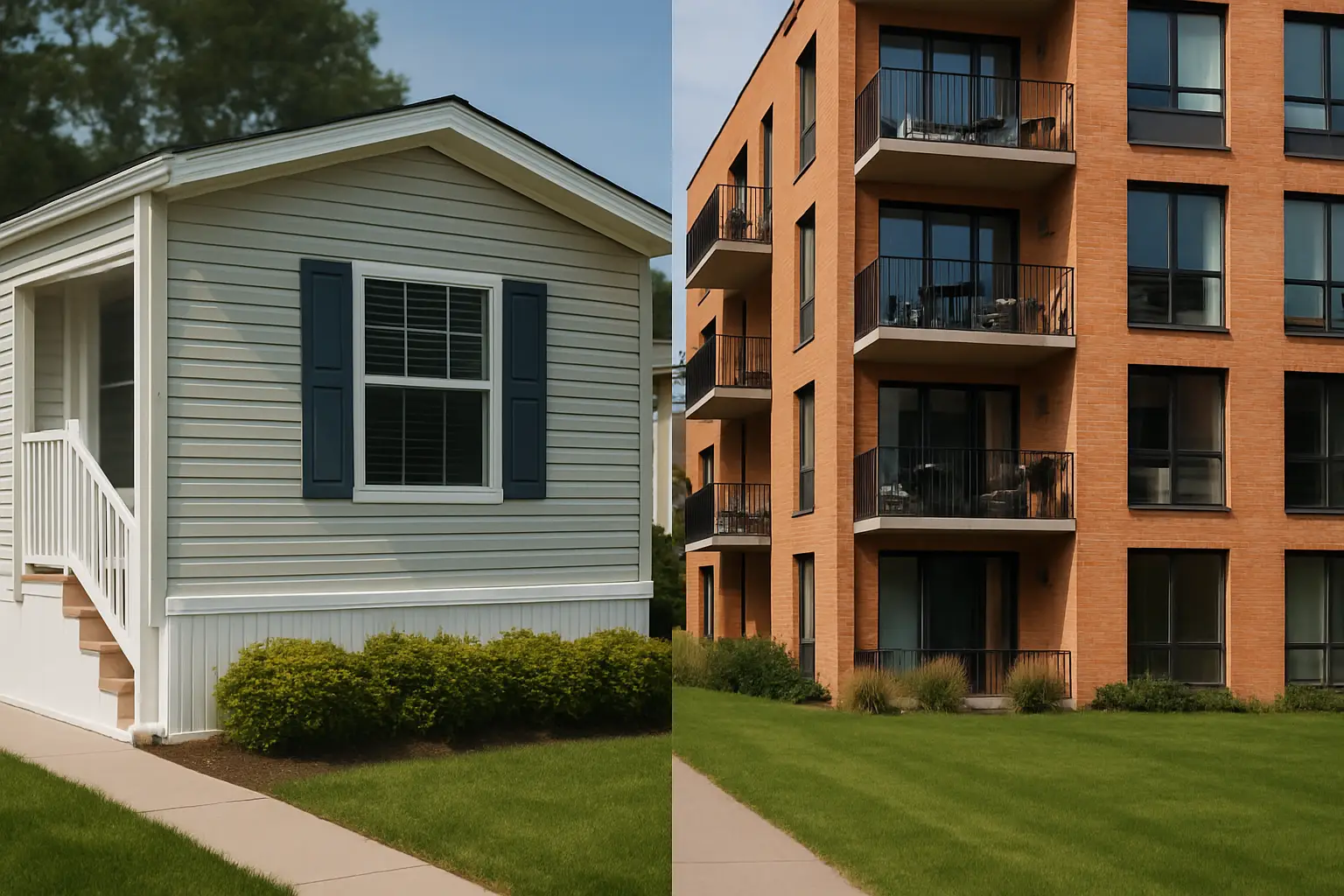
Renting a manufactured home can feel different from renting an apartment, but screening often looks similar: identity verification, credit, income, and background checks. What tends to matter most is that the household can comfortably afford the monthly payment and will follow community guidelines that protect everyone’s quality of life.
In community-oriented housing, there is also a neighbor factor. Managers want residents who will treat the home with care, keep up with responsibilities, and contribute to a clean, respectful environment. A credit report cannot measure that directly, which is why the rest of your application - communication, documentation, and references - matters.
If you are exploring affordable, neighborhood-style housing in a manufactured home community, you will often have options across rent ranges and locations. That flexibility can help you find a payment that fits your budget, which is one of the simplest ways to reduce application stress.
If you want to browse available homes and community locations, Medallion Communities offers online search tools and a resident-focused application experience designed to make the process clearer from the start.
Questions to ask before you spend money on applications
Application fees add up quickly, especially if you apply to multiple homes. Before you pay, ask what screening standards are used and what would cause an automatic denial.
You can ask whether there is a minimum credit score, whether they consider applicants with limited credit history, and how they weigh medical collections, past bankruptcies, or paid-off collections. You can also ask what income documentation they require and whether they consider alternative proof like consistent bank deposits for self-employed applicants.
A good manager will not promise approval, but they should be able to explain the process clearly so you can make an informed choice.
If you are denied, use it to move forward
A denial feels personal, but it is usually procedural. If you are declined based on credit, you can ask what factor drove the decision and what documentation might help next time.
Sometimes the fix is simple, like correcting an error on your report or showing proof that a past balance is paid. Sometimes it is a timing issue, and the best move is to apply again after a few months of on-time payments and lower card balances.
If your score is damaged due to a specific event, focus on rebuilding a recent pattern of stability. Landlords often care less about what happened years ago and more about what you have done lately.
A home is more than an address. It is where your routines settle in and where a sense of belonging can actually take root. If your credit score is not perfect, you are not out of options - keep your paperwork tight, choose a payment you can sustain, and look for housing providers who value long-term residents, not just a three-digit number.