A manufactured home can lower your housing cost. The land decision is where the bigger long-term question starts.
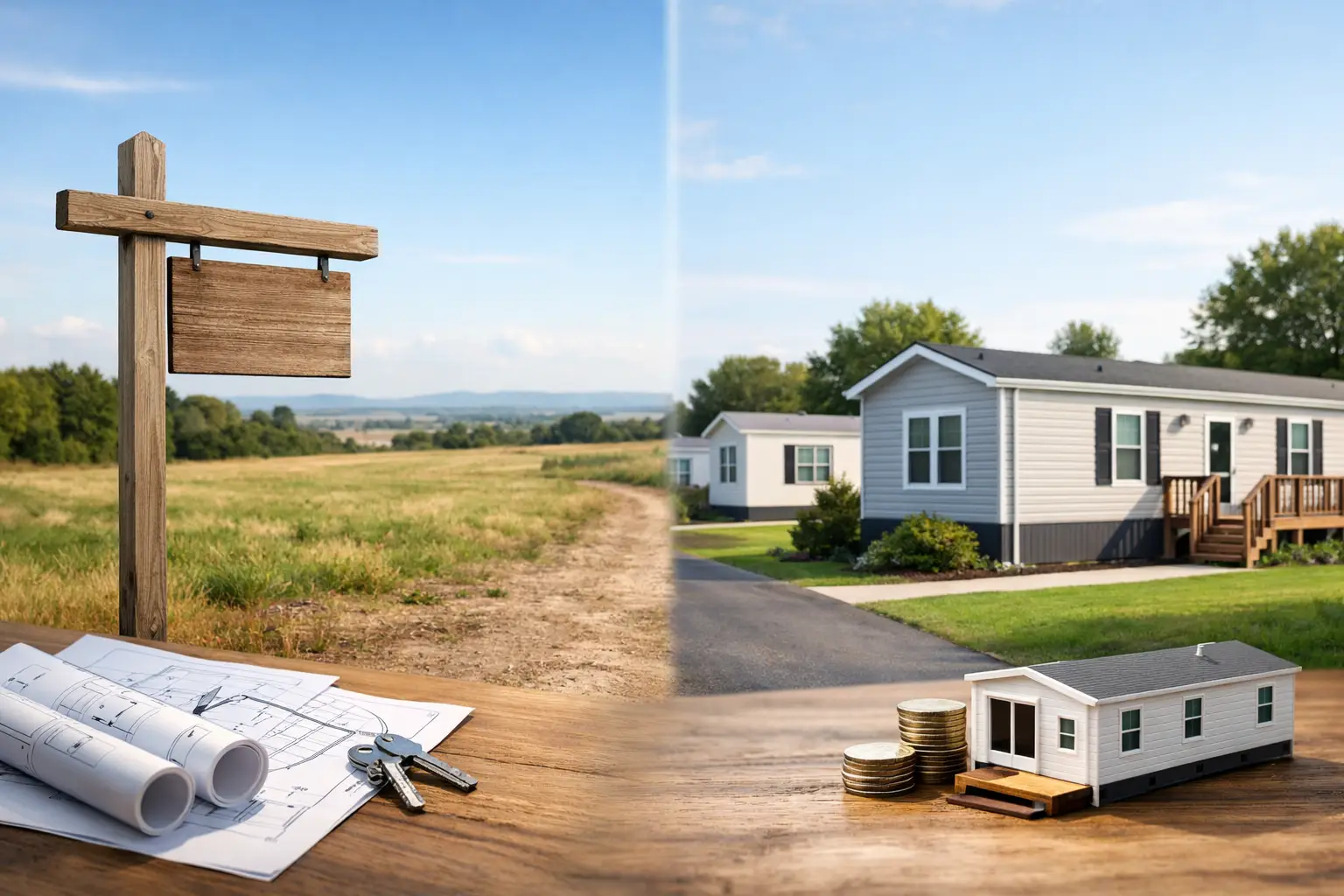
Some buyers assume owning the home means they also need to buy the land under it. Others see a lot lease as a compromise. In reality, buying land vs lot lease is not about picking the "better" option in every case. It is about choosing the setup that matches your budget, your timeline, and the kind of neighborhood experience you want every day.
For many households, that answer comes down to a simple trade-off. Buying land gives you more control and a different kind of long-term asset. Leasing a lot can lower the upfront barrier, simplify maintenance responsibilities, and place your home inside an established community with rules, amenities, and responsive management already in place.
Buying land vs lot lease: what is the difference?
When you buy land, you purchase the homesite itself along with your home, or you buy land separately and place a manufactured home on it. You are responsible for the property, the site work, and the ongoing upkeep tied to the land. That often includes utilities, drainage, permits, grading, taxes, and access issues that may not be obvious at first glance.
With a lot lease, you own or finance the home but pay a monthly fee to place it on a homesite in a manufactured home community. That lease fee generally covers the right to use the lot and may also support community operations, shared spaces, infrastructure, and on-site management. The exact terms vary by community, so the details matter.
This is why the decision is not only financial. It is also operational. One path gives you more direct responsibility. The other gives you a more structured living environment.
Why buying land appeals to some homeowners
The biggest draw is control. If you own the land, you are not working within a landlord-tenant relationship for the homesite. You may have more freedom over how the property is used, subject to local zoning, deed restrictions, and code requirements.
There is also the equity question. Some buyers want the satisfaction of owning both the home and the land together. Depending on the market, the location, and the condition of the property, land ownership may support long-term value in ways that matter to your financial goals.
Privacy is another factor. Some households prefer a standalone property with more distance from neighbors, fewer community rules, and a setting that feels fully their own.
But land ownership can become more complicated than it first appears. Raw land or vacant lots may need utility connections, septic review, paving access, surveys, and local approvals before a home can even be placed. If the property looks affordable on paper, those setup costs can change the picture fast.
Where buying land can get expensive
This is the part many first-time buyers underestimate. The purchase price of the land is only one number.
You may also need to budget for site preparation, utility hookups, foundation work, permits, engineering requirements, stormwater issues, driveway installation, and ongoing property maintenance. If something goes wrong with the land itself, there is no community management office to call. The responsibility is yours.
Financing can also be more layered. Depending on how the home and land are purchased, the loan structure may be different than a standard housing transaction. Some buyers are comfortable navigating that process. Others want a simpler path.
If your goal is predictable monthly housing costs, buying land may still work well, but only if you have planned for the true cost of ownership rather than just the sale price.
Why lot lease works well for many buyers
A lot lease can make homeownership more attainable. Instead of taking on the full cost and responsibility of land purchase and development, you place your focus on the home itself and pay a monthly lot rent for the homesite.
That lower upfront burden matters. It can help buyers who want stability and space without stretching their savings to cover land acquisition, utility installation, and other major setup costs.
Just as important, a leased lot in a professionally managed community offers something land alone cannot: an established neighborhood. Streets are already in place. Utilities are typically already available. Community standards help support cleanliness and curb appeal. Shared amenities may be part of the experience. And when management is attentive, residents benefit from a stronger sense of consistency and security.
For many working adults and families, that combination is the point. They are not only looking for a place to put a home. They are looking for a place where daily life feels easier and more connected.
Buying land vs lot lease: the lifestyle trade-off
This choice often becomes clearer when you stop treating it as a real estate question and start treating it as a lifestyle question.
If you buy land, you may gain independence, but you also take on more of the burden alone. The property standards, maintenance expectations, and surrounding environment can vary widely from one area to another. If nearby properties are not well maintained, that affects your living experience too.
With a lot lease in a strong manufactured home community, you are choosing a neighborhood with structure. That may include community rules, but those rules are often there to protect quality of life. Clean common areas, maintained roads, lighting, and responsive management do not happen by accident. They come from active stewardship.
For buyers who value belonging, predictability, and a neighborhood feel, that structure can be a real advantage rather than a limitation.
What costs should you compare?
A side-by-side comparison needs to go beyond the monthly payment.
If you are buying land, compare the land price, taxes, insurance, utility installation, permits, site work, maintenance, and any financing costs tied to both the home and the property. Also consider the time involved. Delays in approvals or installation can cost money too.
If you are considering a lot lease, review the monthly lease amount, what it includes, community rules, utility responsibilities, and whether the community offers services or amenities that would otherwise come out of your own pocket. Ask how maintenance is handled for shared infrastructure and who to contact when issues come up.
The most affordable option is not always the one with the lowest sticker price. It is the one that gives you a cost structure you can live with comfortably over time.
When a lot lease makes especially good sense
A lot lease often fits buyers who want to own a home without taking on the full complexity of land ownership. It can also be a smart fit for people relocating for work, downsizing, or looking for an established community where they can settle in quickly.
It is also worth considering if you already own a manufactured home and need a place to move it. In that situation, a well-managed community can offer the infrastructure, standards, and support that make placement far more straightforward than trying to prepare private land on your own.
That is one reason many residents choose communities operated by companies focused on long-term quality, not just occupancy. At Medallion Communities, for example, the value is not only in the homesite itself but in the experience around it - maintained neighborhoods, a stronger sense of community, and management that treats quality of life as part of the housing decision.
Questions to ask before you choose
Before making a decision, ask yourself what you want your housing to do for you.
Do you want maximum control over the property, even if that means handling more costs and more logistics? Or do you want a path that makes ownership more accessible and day-to-day living more predictable?
How long do you plan to stay? How much upfront cash do you want to commit? Do you value privacy above all else, or do you want an established neighborhood with standards, amenities, and a sense of connection?
There is no one-size-fits-all answer here. A buyer with land development experience and a long time horizon may feel very comfortable purchasing property. A first-time buyer focused on affordability, neighborhood quality, and lower upfront costs may find that lot leasing is the stronger fit.
The right decision is the one that supports both your budget and your peace of mind. If a housing option helps you feel secure, welcomed, and able to plan ahead, that value should count just as much as the numbers on paper.