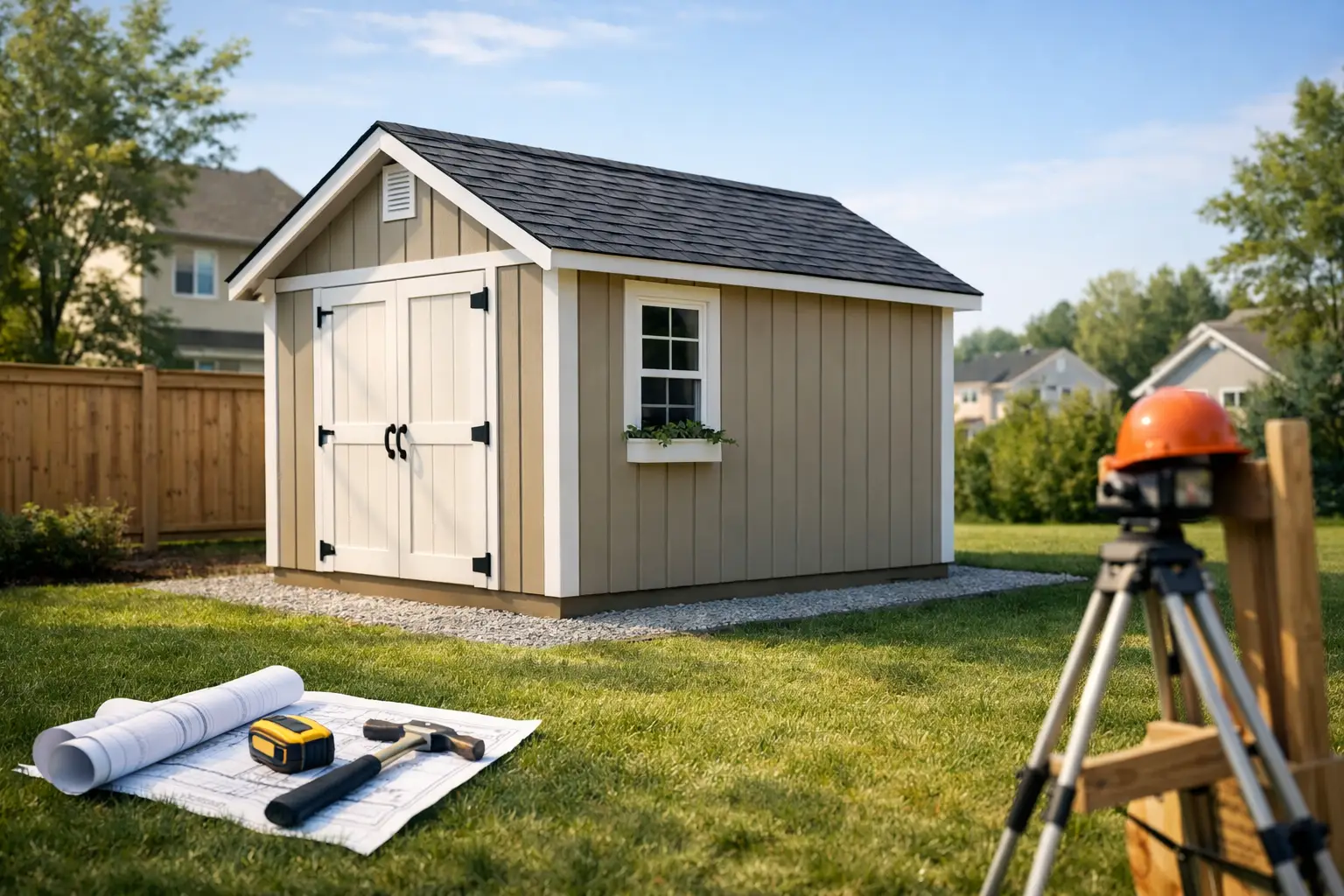
If you're looking at your yard and thinking, can I install a shed, you're probably not asking for fun. You need space for tools, bikes, holiday storage, or the overflow that builds up in everyday life. A shed can solve a real problem, but the right answer depends on more than whether you have room for one.
At a single-family property, the question usually comes down to local code, setbacks, permits, utility lines, and HOA rules. In a manufactured home community, there is one more layer that matters just as much - the community's standards. Those standards are not there to make life harder. They help protect safety, appearance, drainage, access, and the quality of the neighborhood for everyone who lives there.
Can I install a shed on my lot?
The honest answer is maybe, but only after you confirm the rules that apply to your specific home and lot. In many cases, residents can add a shed. In other cases, the size, location, materials, or installation method may be limited. Some properties do not allow detached structures at all, especially where lot sizes are tight or utility access needs to stay open.
That is why a quick yes-or-no answer can be misleading. A shed that works perfectly on one site may not be allowed a few streets over because of grading, easements, emergency access, or spacing between homes. Even if your neighbor has one, do not assume the same setup is approved for your lot.
What decides whether a shed is allowed?
The biggest factor is land use and placement. Local governments often regulate accessory structures, which is the category most sheds fall into. That can include maximum size, height limits, distance from property lines, and whether a permit is required.
Then there is the lot itself. A shed has to sit in a place that does not interfere with drainage, sidewalks, utility pedestals, meters, septic components, or maintenance access. If the shed creates standing water or blocks crews from reaching infrastructure, it can become a problem fast.
If you live in a managed community, the appearance of the structure matters too. Color, roof style, siding, anchoring, and condition may all be part of the approval process. Well-kept communities usually have standards for a reason. Consistent property upkeep supports safety, protects curb appeal, and helps the whole neighborhood feel cared for.
Start with community approval before you buy anything
One of the most common mistakes residents make is buying a shed first and asking questions second. That usually leads to frustration, extra cost, or a structure that has to be moved or removed.
If you live in a manufactured home community, start with management. Ask whether sheds are allowed, what sizes are permitted, where they can be placed, and whether a written request is required. Some communities want a site plan. Others may ask for dimensions, photos, color details, or installation specs before they approve anything.
That step is worth taking seriously. Community teams are balancing individual needs with lot layout, property standards, and infrastructure concerns across the entire neighborhood. Clear communication upfront usually saves everyone time.
Permits: small shed does not always mean no permit
Many people assume a small storage shed is too minor to matter to the city or county. Sometimes that is true. Sometimes it is not. Permit rules vary widely by jurisdiction, and the square footage threshold can be lower than people expect.
Even if a permit is not required for the structure itself, there may be separate rules for electrical work, grading, or anchoring. If you plan to run power to the shed for lighting, a freezer, or tools, that almost always raises the bar on what needs to be approved and inspected.
This is one of those areas where guessing is expensive. Fines, failed inspections, or forced removal can cost far more than taking a day to verify the rules in advance.
Size and placement matter more than most people think
When people ask, can I install a shed, they often focus on the structure and not the footprint around it. But placement is usually where projects run into trouble.
Most lots need setback space between the shed and the lot line, the home, fences, roadways, and shared areas. There may also need to be enough room for mowing, drainage flow, or access to skirting, utility hookups, and service points.
A bigger shed is not always better. It may hold more, but it can overwhelm a small lot, crowd neighboring homes, or create a bulky look that changes the feel of the site. In a community setting, a modest shed that fits the lot well is often easier to approve than one that pushes every limit.
The base and anchoring are part of the decision
A shed is not just a box you drop in the yard. It needs a stable base, and the way it is supported can affect safety, drainage, and long-term maintenance.
Some installations use gravel, concrete blocks, pavers, or a slab. The right option depends on the size of the shed, the soil, local code, and the community's requirements. Poor installation can lead to leaning, water pooling, door failure, and wind damage.
Anchoring matters too. In areas with strong storms or high winds, lightweight sheds can become hazards if they are not secured correctly. A community may require a specific installation method because what happens during bad weather affects more than one household.
Matching the community matters
A shed may be practical, but it is still part of the property's appearance. In a neighborhood that values cleanliness, order, and pride of place, the design should complement the home instead of looking like an afterthought.
That does not mean everything has to be expensive. It means choosing something durable, neat, and appropriately sized. Neutral colors, good repair, and a clean installation usually go a long way. A worn-out metal unit with a sagging roof may be cheaper today, but it can quickly become a maintenance issue and a visual problem.
For residents who chose community living because they want affordability without giving up a neighborhood feel, this is part of the value. Standards help keep the environment welcoming and well managed.
Can I install a shed myself?
Sometimes yes, but self-installation is not always the smartest route. A smaller prefab shed may be manageable if you are handy and the site is simple. But larger sheds, uneven ground, code requirements, or anchoring needs can make a professional install the safer choice.
There is also the issue of damage. If a shed is assembled incorrectly and shifts, leaks, or affects drainage, the repair bill lands on you. If it damages underground utilities or common areas, the problem gets bigger.
If your community requires approved contractors or specific installation standards, follow that guidance. It protects your investment and helps avoid disputes later.
Questions to ask before moving forward
Before you spend money, get clear answers to a few practical questions. Is a shed allowed on your specific lot? What size and materials are acceptable? Where can it go? Do you need community approval, a permit, or both? Will there be rules about color, roof type, foundation, or tie-downs?
You should also ask who is responsible for maintenance, what happens if the shed falls into disrepair, and whether it must be removed if you move out. These are normal questions, and getting the answers upfront makes the process much smoother.
A good shed should solve a problem, not create one
The best shed projects start with a real need and a clear plan. They fit the lot, respect the rules, and add useful storage without affecting safety or appearance. That balance matters in any neighborhood, but especially in a managed community where the way each home is cared for shapes everyday quality of life.
If you live in a professionally managed neighborhood such as a Medallion Communities property, your first step should be a conversation with the local management team. A quick check now can help you choose the right shed, avoid wasted money, and keep your home site both functional and attractive.
Extra storage should make home feel easier. When the shed fits the space and the community, it usually does.