A storage unit should make life easier, not create a new worry about what happens to your belongings after the door closes. When comparing climate controlled versus standard storage, the right choice comes down to what you are storing, how long you need the space, and the conditions your items will face while they are stored.
Both options can provide secure, convenient extra space for a move, a growing household, seasonal belongings, or business inventory. The difference is not simply whether one unit is better than the other. It is whether the unit matches the value and sensitivity of the items you need to protect.
What climate-controlled storage does
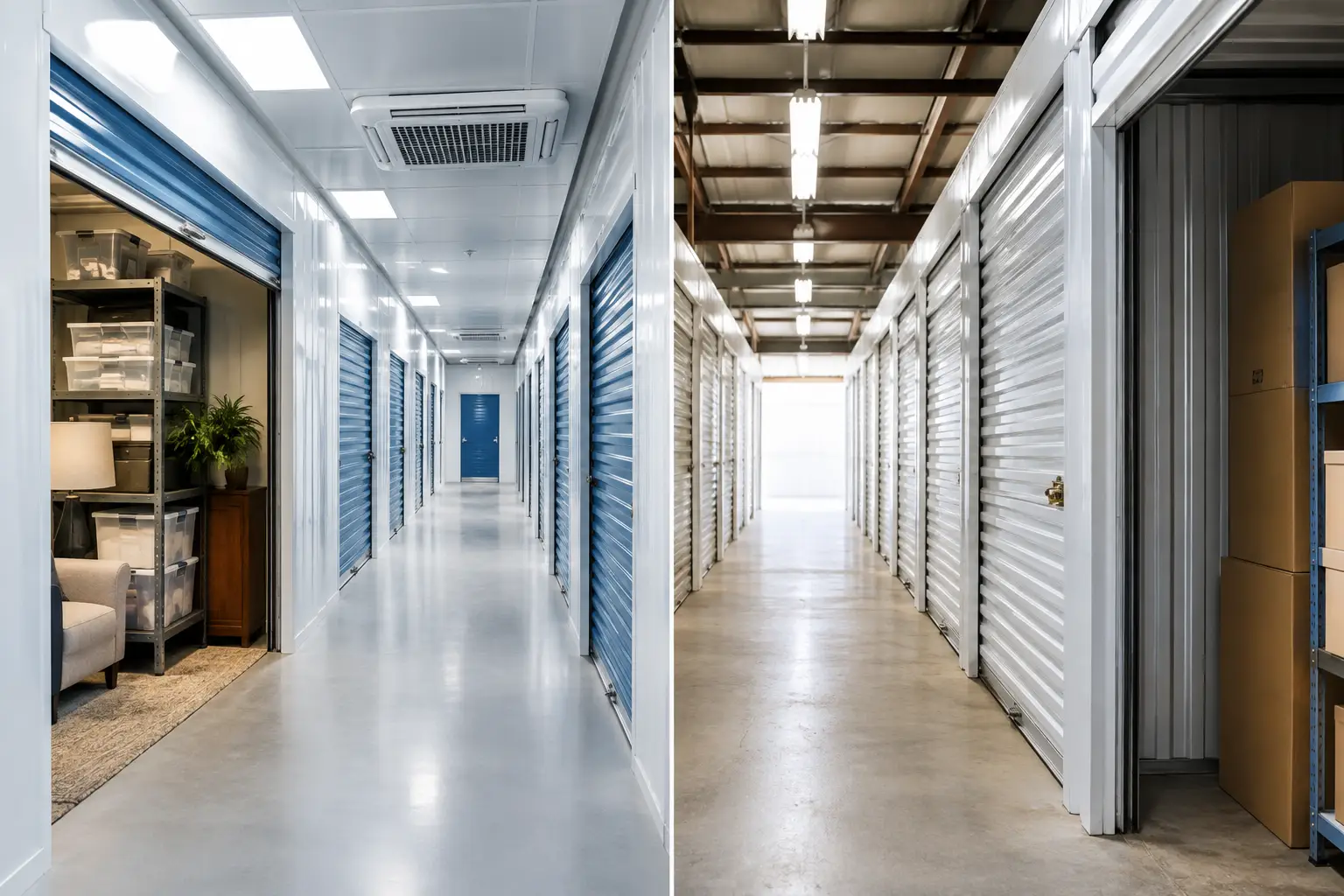
Climate-controlled storage maintains a more consistent indoor temperature than the outdoor environment. Units are typically located inside a building, which adds a layer of separation from summer heat, winter cold, and rapid temperature swings.
This matters because many materials expand, contract, dry out, warp, or weaken when exposed to changing conditions over time. Wood furniture can crack or split. Paper records may yellow or become brittle. Electronics and media can be affected by heat. Leather, photographs, artwork, and musical instruments can also suffer when they sit in an uncontrolled space for months.
Some facilities also offer humidity-controlled environments, but climate control and humidity control are not always the same thing. If moisture protection is especially important for your belongings, ask how the facility manages humidity rather than assuming every indoor unit provides identical conditions.
Climate-controlled units are often a smart fit for long-term storage, higher-value possessions, and items you would be disappointed to replace. They can also make visits more comfortable, especially during the hottest parts of the year in states such as Arizona and Texas.
When standard storage is the practical choice
Standard storage is generally an enclosed unit without regulated indoor temperature. Many standard units offer drive-up access, allowing you to pull a vehicle directly to the door for faster loading and unloading. For heavy furniture, tools, equipment, or frequent business deliveries, that convenience can be a meaningful advantage.
A standard unit is often the right choice for durable belongings that can handle normal seasonal temperature changes. Think patio furniture, lawn equipment, tools, boxed household goods, outdoor gear, or appliances that have been properly cleaned and dried. It can also be an efficient solution for a short move when items will only be stored briefly.
Cost is another factor. Standard units commonly cost less than climate-controlled space of the same size, so they can help keep a project within budget. If you are storing sturdy items for a few weeks or a couple of months, paying for a specialized environment may not add enough value to justify the difference.
That said, standard storage still deserves careful packing. Keeping boxes off the floor with pallets or shelving, using sturdy plastic bins when appropriate, and avoiding damp or unclean items will help protect your belongings in any unit.
Climate controlled versus standard storage: the real trade-offs
The decision is often less about the unit itself and more about the risk you are willing to accept. Climate control offers greater consistency and peace of mind for sensitive items, but it may cost more and may require loading through an interior hallway or elevator. Standard storage can be more budget-friendly and easier to access by vehicle, but it exposes belongings to a wider range of seasonal conditions.
Consider the following questions before choosing:
- Would heat, cold, or moisture damage this item or shorten its useful life?
- Is this item expensive, sentimental, difficult to replace, or needed for business?
- Will it be stored for several seasons or just during a short transition?
- Do you need drive-up access for frequent loading, deliveries, or large equipment?
- Would replacing a damaged item cost more than the added monthly cost of climate control?
These questions can prevent a common mistake: selecting the lowest-priced unit without considering the true value of what is going inside it.
Items that usually benefit from climate control
Climate control is worth considering for wood or upholstered furniture, antiques, collectibles, books, documents, photographs, artwork, electronics, vinyl records, musical instruments, and clothing. It is also helpful for business files, retail inventory, product samples, and office equipment.
For households, a climate-controlled unit can be especially useful during a renovation, extended travel, or a move with uncertain timing. You can store the items that matter most in a stable setting while using a standard unit for durable overflow items.
For business owners, separating inventory by sensitivity can help control costs. Delicate merchandise, paper records, and technology may belong in climate-controlled space, while shipping materials, displays, or durable supplies may be perfectly suited for standard storage.
Items that are often fine in standard storage
Standard storage is commonly suitable for metal or plastic outdoor furniture, tools, garden equipment, sporting goods, sealed household supplies, and boxed items that are not sensitive to temperature changes. Vehicles, trailers, and recreational equipment may also require a different type of storage arrangement altogether.
Preparation still matters. Never store food, hazardous materials, wet textiles, or items with lingering moisture. Clean equipment before storing it, dry appliances thoroughly, and leave refrigerator and freezer doors slightly open once they are unplugged and fully dry. These small steps help protect your property and support a clean storage environment for everyone.
Storage conditions are only one part of protection
A climate-controlled unit is not automatically more secure simply because it is indoors, and a standard unit is not automatically less secure because it has drive-up access. Security depends on the facility’s operational practices and features, including well-maintained grounds, lighting, access controls, camera coverage where available, and attentive management.
Just as important, choose the right unit size. Overpacking a small unit can make it hard to reach items, increase the chance of damaged boxes, and turn a simple retrieval into a frustrating afternoon. A little extra aisle space lets you organize shelves, label containers clearly, and access what you need without unloading half the unit.
At Medallion Communities, the goal is to provide storage that feels dependable and straightforward. A clean, well-managed facility, clear access expectations, and convenient account tools all contribute to a better experience, whether you need space for one month or much longer.
How to make the best choice for your move or project
Start by making two groups: items that are sensitive or valuable, and items that are durable or easily replaced. Then estimate the length of storage. A short-term gap between homes may call for a standard drive-up unit, while a long-term plan to protect family heirlooms may make climate control the more sensible investment.
You do not have to choose one option for every item. Some customers use a smaller climate-controlled unit for documents, electronics, furniture, and keepsakes, while placing tools, outdoor items, or moving supplies in standard storage. This approach can balance protection with affordability.
Before moving in, inspect your belongings, take photos of valuable items, and label every box on more than one side. Use covers for furniture, avoid storing anything directly against walls when possible, and place frequently needed items near the entrance. Good organization protects your time as much as it protects your possessions.
The best unit is the one that fits your belongings, your timeline, and your budget without asking you to compromise on what matters most. Choose based on the life your items need to live while you are not using them, then give yourself the confidence of knowing they are stored with purpose.