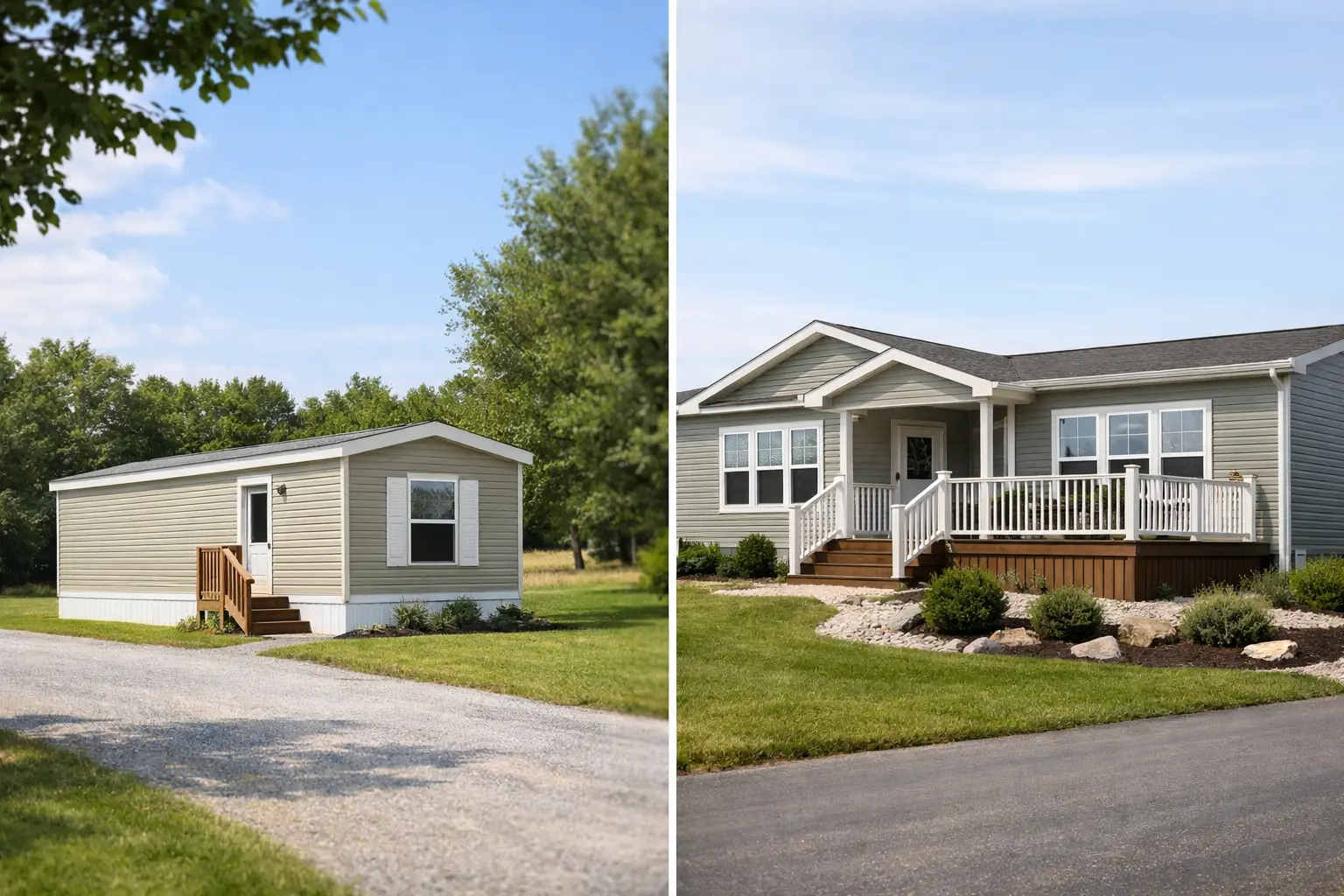
You can feel the difference before you run the numbers.
An apartment tour usually starts with a hallway, a shared elevator, and a quick look at finishes you may or may not get in your exact unit. A manufactured home community tour often starts outside - curb lines, lighting, how the streets look, whether people wave, and whether the place feels cared for. Those small signals matter because your housing choice is not just a floor plan. It is how you live day to day.
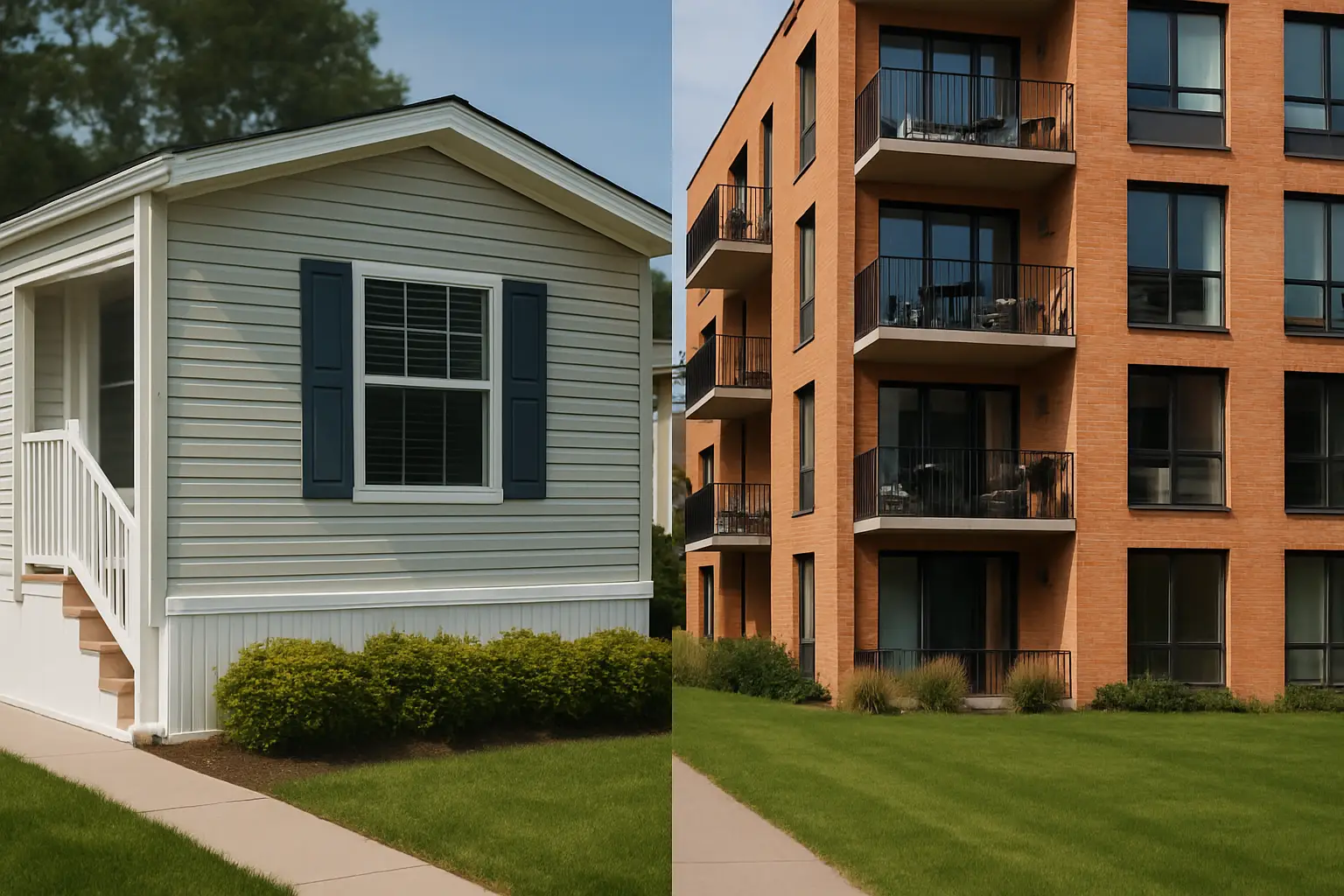
If you are weighing a manufactured home community vs apartment, the best answer is rarely a blanket statement. It depends on what you value most: space, privacy, predictability, amenities, commute, school zones, and the kind of neighborhood energy you want.
Manufactured home community vs apartment: the real differences
Both options can be affordable, safe, and well-managed. Both can also be frustrating if you choose a property that is poorly maintained or unclear about expectations. The key is understanding what you are actually buying with your monthly payment.
With most apartments, you are paying primarily for the unit and the building - plus shared amenities and the convenience of a centralized location. With a manufactured home community, you are paying for a neighborhood setting and a dedicated home footprint, typically with a yard area, parking close by, and a community layout that looks and feels more like a subdivision than a complex.
That difference shows up in five practical areas: monthly costs, space and privacy, maintenance responsibilities, rules and stability, and the social experience.
Monthly costs: rent, fees, and how predictable it feels
Apartments are usually simple on paper: monthly rent plus utilities, plus pet rent or parking in many markets. The challenge is how often the base rent can change. In high-demand areas, renewals can jump sharply year to year. That uncertainty can be stressful if you are working hard to keep your budget steady.
Manufactured home communities can be structured a few ways. Some residents rent a home in the community, which can feel similar to apartment renting but with a different living environment. Others own their manufactured home and pay a monthly lot rent for the homesite, which typically covers community infrastructure and shared areas. Depending on the community, that may include services like trash pickup or access to amenities.
The trade-off is that you want clarity upfront about what is included and what is not. Ask for a written breakdown of monthly charges, typical utility responsibilities, and any one-time fees. A well-run community should be able to explain this without hesitation.
One more financial angle that people miss: storage and parking. Apartment living often pushes you into paid storage units, offsite parking, or living with less. A manufactured home setting often gives you more space to store everyday life where you live, which can reduce those extra monthly “side costs.”
Space and privacy: what you get beyond square footage
Square footage is only part of the comfort equation. The other part is how that space is positioned.
In an apartment, your living room shares walls, ceilings, or floors with neighbors. Even in a quiet building, you may hear footsteps, music, or doors. Privacy depends heavily on construction quality and neighbor habits.
In a manufactured home community, you typically have more separation between homes than you would between apartment units. You may have a yard area, your own entry, and fewer shared interior spaces. For families with kids, pet owners, or anyone who works odd hours, that separation can be a daily relief.
That said, apartments can win on location. If being close to downtown, a major hospital, or a university is your top priority, apartments often offer the most options within that radius.
A good question to ask yourself is: do I want my home to feel like a private retreat, or do I want my home to be a launchpad right next to the places I go most? Neither is “better.” They are different lifestyles.
Maintenance and management: who fixes what, and how fast
A common assumption is that apartments mean “no maintenance responsibilities,” and manufactured homes mean “you are on your own.” Real life is more nuanced.
In an apartment, maintenance is usually handled by the property team, but your experience depends on responsiveness, staffing, and how the property prioritizes repairs. Some apartment residents wait days for basics. Others get same-day service.
In a manufactured home community, responsibilities depend on whether you rent the home or own it. If you rent a home, many of your repair requests may still go through the community management team, similar to an apartment. If you own your home, you typically take on more of the home-specific upkeep, while the community handles common areas, roads, lighting, and overall neighborhood standards.
What matters most is not the housing type - it is the quality of management. Ask direct questions: How are maintenance requests submitted? What is the typical response time? Is there an online portal for payments and service requests? Are there clear rules for upkeep so the neighborhood stays clean and consistent?
Strong management shows up in visible ways: well-lit streets, maintained signage, clean common areas, and a team that communicates expectations without being confrontational.
Rules, neighbors, and stability: the “community standards” factor
Apartments come with rules, but they often focus on unit-level behavior: noise, pets, parking, and lease terms. In some buildings, the rules are strict but inconsistently enforced, which is how you end up with a frustrating mix of “technically not allowed” behavior that still happens.
Manufactured home communities typically operate with community guidelines that are meant to protect the neighborhood feel. That can include standards for lawns, exterior appearance, parking, and shared-space behavior. When those standards are consistent and fair, they are not about being controlling. They are about making sure your surroundings stay livable and your home investment - whether you rent or own - is respected.
Stability can look different too. Apartment residents often experience higher turnover, especially in markets with lots of short-term leases. In many manufactured home communities, residents stay longer, which can translate into more familiar faces and a stronger sense of belonging.
Of course, stability cuts both ways. If you like the energy of constant new people and a more anonymous feel, a large apartment complex can be a better match.
Amenities and lifestyle: what you actually use
Apartments often market amenities heavily: gyms, pools, package rooms, business centers. They can be great, but the value depends on whether you will truly use them and whether they are maintained well.
Manufactured home communities can offer amenities too, often with a different vibe: community spaces, playgrounds, neighborhood events, and outdoor areas that feel more residential than resort-like. The lifestyle difference is subtle but real. It is the difference between “amenities as a selling point” and “amenities as part of a neighborhood routine.”
A practical way to decide is to think about your week. If you want a gym downstairs because you will use it four times a week, that matters. If you want a place where your kids can ride bikes and you can chat with neighbors outside, that matters too.
Renting vs owning: the long-term angle
Apartments are purely rental, so the trade is simplicity for long-term equity. You get flexibility, but you are not building ownership.
Manufactured housing opens multiple paths. You may rent a home, which keeps things simple while still giving you a single-family feel. Or you may buy a manufactured home, which can be an entry point into homeownership at a price that is often more attainable than site-built homes in the same region.
If you already own a manufactured home, the choice may be less about “community vs apartment” and more about finding a community with the right lot availability, move-in requirements, and infrastructure. In that case, ask about lot dimensions, utility hookups, community rules, and the move-in process so you do not run into surprises.
How to choose confidently (without overthinking it)
Start by being honest about what stresses you out most about housing. If rent spikes and tight space keep you up at night, you are probably looking for more predictability and breathing room. If commute time and walkability are non-negotiable, you may accept shared walls to be closer to everything.
Then, tour with intention. Do not just look at the unit or the home. Look at how the place is run. Notice the condition of roads and lighting, the cleanliness of shared areas, and whether the staff can clearly explain next steps. Ask how residents pay rent and submit requests. A modern resident portal is not a luxury - it is a sign the operation is organized.
Finally, listen to the tone of the rules. A good property sets expectations that protect your quality of life. The best ones do it with respect, consistency, and a clear reason behind the policies.
If a community-oriented manufactured home option is what you are looking for, Medallion Communities is built around that neighborhood feel, with homes for rent or sale and support for residents who want to move their own home into a well-managed community.
A few scenarios where each option usually wins
If you are choosing an apartment, it is often because you want location convenience, minimal personal responsibility for upkeep, and the flexibility to move quickly. That makes a lot of sense for job changes, school, or a season of life where you want fewer moving parts.
If you are choosing a manufactured home community, it is often because you want more space, more privacy, and a place that feels like a neighborhood instead of a building. That tends to fit families, pet owners, and anyone who wants a calmer daily rhythm without stepping away from affordability.
Neither choice is a “forever” choice. It is the right fit for right now.
The most helpful closing thought is this: pick the option that makes your ordinary Tuesday feel easier. The best housing decision is the one you stop thinking about once you are home.