A great RV trip ends with more than a safe drive home. It ends with knowing your RV has a clean, dependable place to stay until the next departure. When comparing covered versus uncovered RV storage, the right choice comes down to how you use your rig, the weather it faces, and how much protection matters between trips.
An RV is built for the road, but months of sun, rain, debris, and inactivity can take a toll. Storage is not a one-size-fits-all decision. An uncovered space may offer the straightforward value and easy access you need. A covered space may be worth the additional cost when protecting your roof, exterior finishes, and onboard systems is a higher priority.
Covered Versus Uncovered RV Storage: The Real Differences
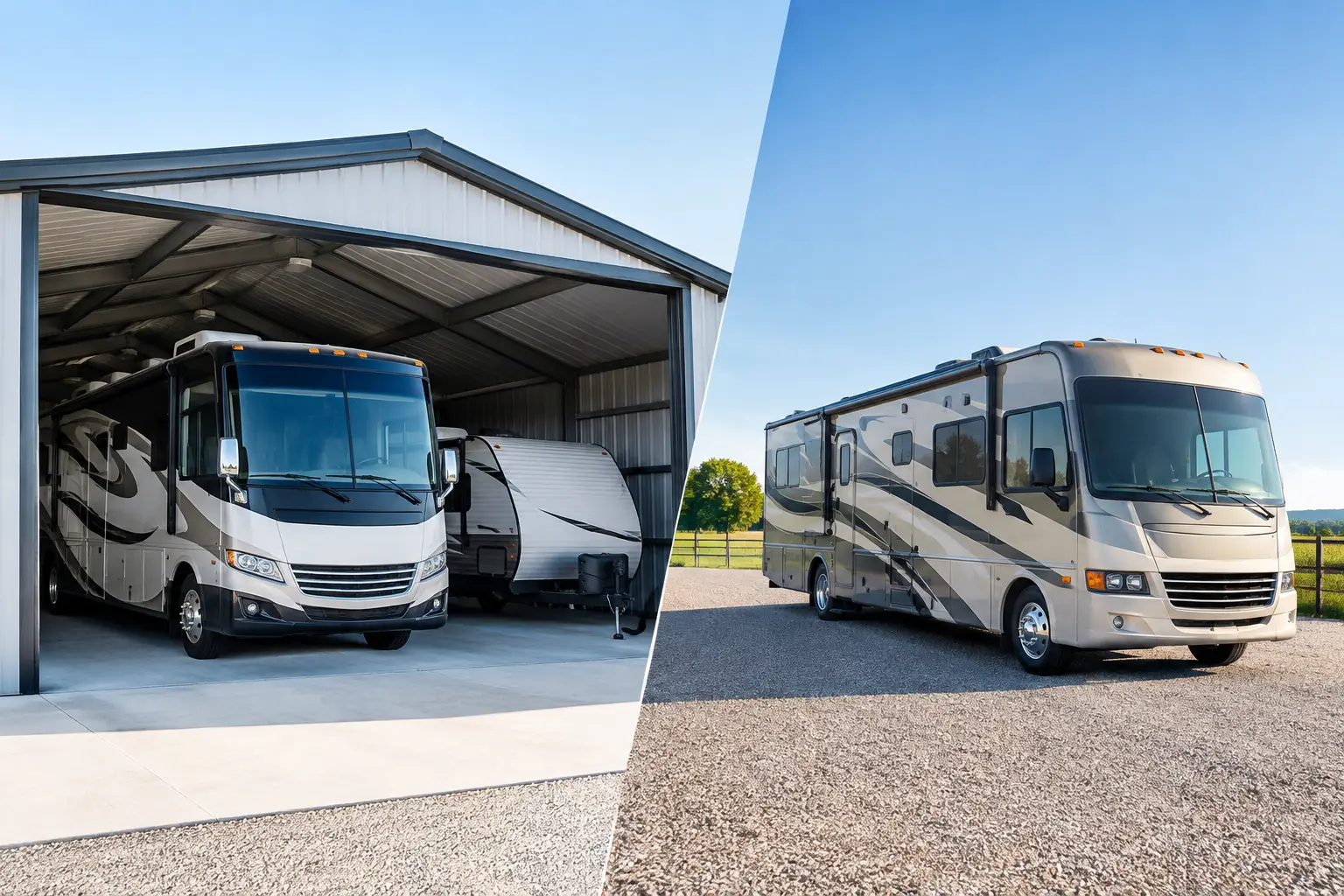
The most visible difference is the roof over your RV. Covered storage typically places your vehicle beneath a canopy or carport-style structure, while uncovered storage provides a designated outdoor parking space without overhead shelter. Both can be practical, secure options at a well-managed facility.
What changes is the level of exposure. A covered space helps limit direct sunlight, falling leaves, bird droppings, rain, and hail. It does not create a fully enclosed environment, so windblown dust, side-driven rain, and changing temperatures can still affect the vehicle. Uncovered storage leaves the RV exposed to the elements, which makes routine inspections and maintenance even more important.
The best choice is not automatically the most protected option. It is the option that supports your budget, your travel schedule, and the condition you want your RV to be in when it is time to head out again.
Start With Your Storage Budget
Covered RV storage usually costs more because the facility has invested in structures that provide overhead protection. For owners storing a newer motorhome, a premium fifth wheel, or a travel trailer with a well-maintained exterior, that added monthly cost can feel like a sensible way to preserve a significant purchase.
Uncovered storage is often the more affordable route. If you travel frequently, check on your RV regularly, or need a convenient place to park between shorter trips, an uncovered space can deliver the essentials without stretching your monthly budget. It may also be the only option for oversized RVs at some locations, since covered bays have height and width limits.
Think beyond the monthly rate. Consider what exposure could mean over time: faded decals, worn seals, roof maintenance, dirty solar panels, or an exterior that needs more frequent washing. Covered storage may reduce some of those expenses, but it will not eliminate normal RV upkeep. Value comes from choosing a space that fits your ownership habits, not paying for features you will not use.
Consider Your Local Weather and Season
Climate can make this decision much clearer. In sunny areas such as Arizona, Texas, and Utah, constant UV exposure can fade paint and graphics, dry out rubber seals, and raise interior temperatures. A covered space can give your RV meaningful relief from direct sun during long stretches off the road.
In locations with frequent storms, overhead coverage can help shield the roof from rain and light debris. However, no canopy should be treated as a guarantee against severe weather. Strong winds, driving hail, and extreme storms can still create risk, so appropriate RV insurance remains essential regardless of where you store.
Uncovered storage can work well in milder conditions or for short storage periods. It simply asks more of the owner. A quality RV cover, tire covers, regular roof checks, and timely cleaning can help manage exposure. Before using any cover, make sure it fits correctly and is designed for RV use. A loose or abrasive cover can trap moisture or rub against finishes in windy conditions.
Roof Care Deserves Special Attention
Your RV roof carries a lot of responsibility. It protects wiring, insulation, vents, air-conditioning equipment, and the living space below. Water intrusion often begins with a small crack or a neglected seal, then becomes a much larger repair.
Covered storage reduces the amount of rain and debris landing directly on the roof, but it does not replace inspections. Check seals around vents, skylights, antennas, and air-conditioning units before storing and after retrieving your RV. Remove leaves and standing water promptly. These simple habits matter whether your space has a roof above it or open sky.
Balance Protection With Access
For many RV owners, access matters as much as coverage. An easy-to-navigate facility with wide drive aisles, clear parking spaces, and reliable entry procedures makes departure days less stressful. You should be able to pick up your RV, complete a quick pre-trip inspection, and get on the road without feeling cramped or rushed.
Covered spaces can require more careful maneuvering, particularly for tall Class A motorhomes, fifth wheels, and trailers with rooftop equipment. Ask about the bay’s clearance, turning room, and whether your full setup will fit before signing an agreement. Measure your RV’s height with all permanent roof equipment included, not just the height listed in a brochure.
Uncovered spaces often provide more flexibility for larger rigs and may be easier to enter or exit. That can be especially helpful for travelers who take frequent weekend trips or prefer to avoid tight parking conditions. Still, access should never come at the expense of a well-maintained property. Look for orderly parking, marked spaces, working gates, and a layout that gives vehicles adequate room.
Security Is About More Than a Fence
A roof protects an RV from some weather, not from every other concern. When choosing either covered or uncovered RV storage, assess the facility’s overall approach to security and property care.
Start with the basics: controlled gate access, perimeter fencing, good lighting, and visible cameras can help create a more secure environment. Just as important is whether the property appears cared for. Clear drive lanes, clean common areas, readable rules, and responsive onsite or remote management signal that details are being watched.
Ask how access works outside normal office hours and what process is in place if you need assistance. Digital account tools can make payments and account updates more convenient, but they should be paired with clear communication when questions arise. A storage experience should feel straightforward from move-in through move-out.
It is also wise to protect the RV itself. Lock doors and exterior compartments, remove valuables, secure propane tanks as appropriate, and keep current photos of the unit for your records. If your RV has batteries, follow the manufacturer’s guidance for disconnecting, charging, or maintaining them during storage.
When Covered Storage Makes Sense
Covered storage is often a strong fit if your RV will sit for several months, you live in a high-sun or storm-prone area, or you want to reduce the routine cleaning that follows outdoor exposure. It can also make sense for owners who have invested in a newer RV and want to preserve its appearance and resale value.
Choose covered storage with realistic expectations. It is an added layer of protection, not an enclosed garage. You will still need to winterize when temperatures require it, inspect seals, keep insurance in place, and prepare the unit for inactivity.
When Uncovered Storage Is the Better Fit
Uncovered storage can be the smart, practical choice for owners who prioritize affordability, frequent access, or room for an extra-large RV. It works particularly well when you are willing to maintain the exterior, use protective accessories where helpful, and check the unit regularly.
A clean, secure uncovered space at a professionally managed facility can be far better than squeezing an RV into an inconvenient driveway or leaving it in an area where access and safety are uncertain. The goal is dependable storage that supports your travel lifestyle, not a feature list that exceeds your needs.
Before reserving a space, visit if possible. Look at the condition of the grounds, confirm dimensions, review access procedures, and ask what is included in the rate. A well-kept facility, attentive management, and a space sized for your rig will make every return from the road feel easier. Then, when your next trip calls, your RV can be ready for the miles and memories ahead.