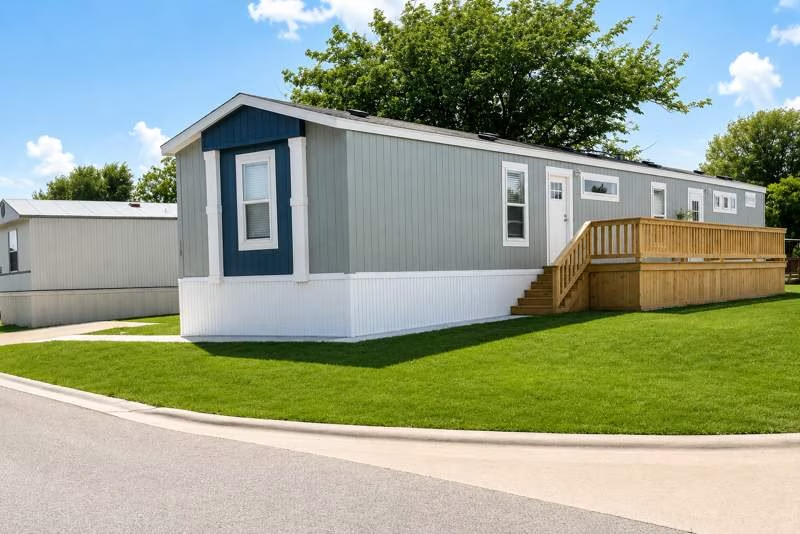
A manufactured home can be an affordable, comfortable place to build your next chapter, but only if the home and homesite truly work together. Knowing how to verify lot compatibility before you purchase, transport, or move a home can prevent expensive delays, surprise site work, and the frustration of finding out a home will not fit where you planned to place it.
Lot compatibility is more than measuring the width of a pad. It involves the home’s dimensions, foundation requirements, utility connections, transportation route, local regulations, and the standards of the community or landowner. Start the conversation early, especially if you are considering a specific home for a specific lot.
What lot compatibility means for a manufactured home
A compatible lot can safely accommodate the home you want, connect to required services, and meet the rules that apply to the property. That may sound straightforward, but a double-section home that fits physically on a lot may still be incompatible if its utility hookups are in the wrong location, the driveway cannot support delivery equipment, or the community only permits certain home sizes or ages.
The process can look different depending on where you plan to live. In a professionally managed manufactured home community, the homesite, roads, utility infrastructure, and community standards are usually established in advance. On private land, you may need to confirm zoning, permits, septic capacity, grading, driveway access, and additional site improvements yourself.
Neither option is automatically better. A community can offer predictable infrastructure and attentive onsite support, while private land may offer more flexibility. The right choice depends on your budget, timeline, and priorities.
How to verify lot compatibility before selecting a home
The best time to verify compatibility is before signing a purchase agreement or arranging a move. Share the home’s specifications with the community manager, retailer, installer, or local planning office as appropriate. Ask for decisions and requirements in writing when possible.
Match the home’s dimensions to the site
Begin with the complete exterior dimensions of the home, including its length, width, roof overhangs, porch plans, attached structures, and the space needed for installation. A home may fit on the pad but leave too little clearance for setbacks, utility equipment, steps, parking, or safe access around the home.
Confirm the lot’s usable dimensions rather than relying on the overall parcel size. Setbacks can reduce the buildable area, and irregular lot shapes, drainage areas, easements, or utility corridors may limit placement. In a community, ask whether there is an approved home footprint or maximum width and length for the site.
Also consider the orientation of the home. The front door, driveway, electrical meter, water connection, sewer line, and HVAC equipment should work together without requiring unnecessary rerouting. Repositioning utilities can add cost and may require approval.
Confirm the foundation and site conditions
Manufactured homes must be installed according to applicable federal, state, and local requirements, along with the manufacturer’s installation instructions. The home’s installation manual identifies foundation and support requirements, which can vary based on the home’s design, wind zone, frost depth, soil conditions, and location.
Ask whether the existing pad is approved for the home you are considering. A site prepared for a smaller single-section home may not be suitable for a larger multi-section home. The pad may need to be expanded, leveled, improved for drainage, or rebuilt before installation.
Do not overlook the ground beneath the home. Soft soil, standing water, poor drainage, or a sloped site can complicate setup and long-term performance. A qualified installer can help determine whether grading, drainage improvements, anchors, piers, or engineered foundation components are needed.
Check water, sewer, electric, and gas connections
A homesite needs more than available utilities. It needs utility connections that are correctly sized, properly located, and ready for the specific home. Ask where water, sewer, electric, natural gas, propane, internet, and cable connections are located, along with who is responsible for any upgrades.
For electric service, verify the panel capacity and whether the home’s electrical requirements match the existing service. For water and sewer, confirm connection locations and capacity. If the property uses a septic system, verify that it is permitted and sized for the planned number of bedrooms, not simply the home’s square footage.
Utility questions are especially important with older homesites. Infrastructure upgrades can be worthwhile, but they affect timing and total move-in costs. A clear estimate upfront makes it easier to compare homes and avoid stretching your budget after the purchase.
Inspect road and delivery access
A home can be compatible with the lot but impossible to deliver without changes to the route. Delivery crews need enough road width, turning radius, overhead clearance, and stable ground to transport home sections safely to the site.
Check for low tree branches, power lines, tight corners, narrow gates, steep grades, soft shoulders, and culverts that may not support heavy equipment. This review should include the route from the main road to the actual homesite, not just the entrance to the property.
In a community, management may know which home sizes can reach each section of the property. On private land, a transporter or installer should evaluate the route before you finalize a purchase. Trimming trees or modifying an entrance may be possible, but it adds another layer of planning and cost.
Review community rules, zoning, and approvals
A compatible lot must also be legally approved for the home. Manufactured home communities may have standards for home age, exterior condition, roof pitch, siding, skirting, additions, landscaping, and occupancy. These standards help support a clean, welcoming neighborhood and protect the experience of everyone who lives there.
Ask for the community’s application process and home approval criteria before buying. If you are relocating an existing home, provide photos, the HUD data plate information if available, year, dimensions, and manufacturer details. Some communities accept pre-owned homes that meet their standards, while others may require newer homes or limit the types of homes that can be moved in.
For private land, contact the local planning or zoning authority to confirm that manufactured housing is allowed. Ask about minimum lot size, setbacks, building permits, inspections, driveway permits, floodplain restrictions, and whether the home must meet a specific code or age requirement. Rules can differ from one county or municipality to the next, so never rely on a neighboring property as proof that your plan will be approved.
Understand the total cost of making a lot ready
A low-priced homesite is not always the lower-cost choice. Site preparation, permits, transportation, installation, utility hookups, skirting, steps, decks, grading, and landscaping can materially change the final number.
Request itemized estimates when you can. Separate what is included in the home price from what is included in the installation quote and what remains your responsibility. If you are moving into an established community, ask which site-ready items are already in place and whether any deposits, application fees, or utility transfer charges apply.
It also helps to plan for the practical details of move-in day. Confirm parking for delivery and installation crews, timing for utility activation, trash removal, mailbox setup, and the process for reporting any site concerns. A well-managed property should make these next steps clear rather than leaving you to piece them together.
Questions to ask before you commit
Before making a final decision, get direct answers to these questions:
- Is this exact home model approved for this exact lot?
- What are the maximum home dimensions and required setbacks?
- Is the pad ready, or does it need grading, expansion, or foundation work?
- Are all utilities available, correctly located, and adequate for this home?
- Can the home be delivered safely through the property and onto the site?
- Which permits, inspections, approvals, and costs remain before move-in?
A compatible lot gives you more than a place to set a home. It gives you confidence that your investment can be installed safely, connected properly, and enjoyed from the first day. Take the time to verify the details with qualified professionals and property management before you buy. A little clarity before the move creates a far more comfortable path to belonging once you arrive.