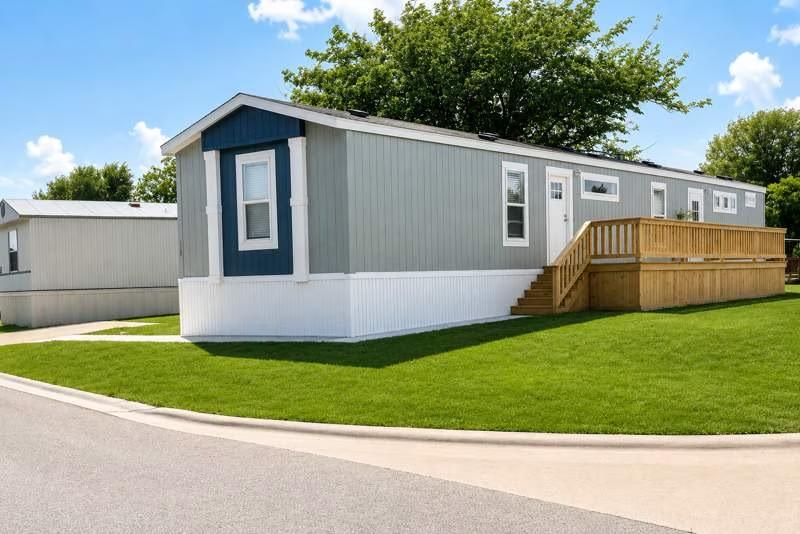
A neighborhood can be affordable on paper and still feel expensive if residents spend every week chasing answers, worrying about safety, or dealing with problems that go unresolved. That is why resident expectations for affordable neighborhoods go well beyond a reasonable monthly payment. People want a home where the costs are understandable, the grounds are cared for, and daily life feels stable.
For working families, retirees, first-time homeowners, and anyone balancing a household budget, affordable housing is not a request to settle for less. It is a request for a practical, well-managed place to build a life. The strongest communities recognize that affordability and quality of life belong together.
What residents expect from affordable neighborhoods
Residents may arrive with different household sizes, schedules, and financial goals, but several expectations are consistent. They want a neighborhood that feels safe, clean, respectful, and easy to navigate. They also want management that treats them as residents, not account numbers.
That standard shows up in everyday details. Streetlights that work, common areas that are maintained, clear parking expectations, and reliable waste collection all shape how a neighborhood feels. So does the condition of homes and lots. When upkeep is visible, residents can feel more confident inviting family over, letting children play outside, and taking pride in where they live.
Affordability matters because it gives households breathing room. But a lower payment loses value when residents face surprise fees, neglected infrastructure, or long delays when they need help. Predictability is one of the most valuable amenities a community can offer.
Clear costs, not confusing surprises
Budget-conscious residents need to know what they will pay and when they will pay it. Rent or home payments are only one part of the equation. Utility responsibilities, pet policies, late-payment procedures, application requirements, and community fees should be explained in straightforward language before move-in.
This does not mean every cost will be the same at every property. A community with included services may price differently from one where residents pay certain utilities directly. What matters is transparency. Residents should be able to compare their options, plan their month, and make a decision without guessing.
Digital tools can support that confidence. An online resident portal makes it easier to review a balance, pay rent, submit a maintenance request, and keep a record of communication. For residents with demanding work hours or limited time during the day, that convenience is more than a feature. It removes unnecessary friction.
Safety that is visible and consistent
Safety is not defined by one gate, one policy, or one sign. It is built through consistent operations and a neighborhood where people know what to expect. Well-lit streets, maintained roads, clearly marked rules, working infrastructure, and attentive onsite or offsite management all contribute to a stronger sense of security.
Residents also notice how a community handles concerns. A report about a damaged light, an abandoned vehicle, or disruptive activity should not disappear into a void. Management cannot promise that every issue will have an instant fix, especially when outside vendors or local authorities are involved. It can provide clear communication, realistic timelines, and follow-through.
A respectful community culture matters here, too. Fairly enforced rules protect the shared experience. The goal is not to make a neighborhood feel restrictive. It is to create reasonable expectations so residents can enjoy their homes without avoidable disruptions.
Affordable neighborhood expectations include responsive management
When something breaks, residents want to know who to contact and what happens next. This is especially true for issues that affect comfort, access, or safety. A responsive management team listens, documents the request, communicates the next step, and follows up when work is complete.
Responsiveness is not the same as promising an immediate solution to every request. A minor cosmetic repair and a water-service interruption do not carry the same urgency. Good management prioritizes appropriately while keeping residents informed. Silence creates frustration. A simple update can preserve trust even when a repair requires parts, scheduling, or coordination with a utility provider.
At Medallion Communities, the focus on operational excellence reflects a simple idea: attentive management helps protect a resident’s time, home, and peace of mind. That approach is especially meaningful in manufactured home communities, where neighborhood infrastructure and individual homes are closely connected.
Maintenance is part of the resident experience
Residents do not separate maintenance from the overall quality of a neighborhood. They see it in the condition of entryways, roads, landscaping, drainage, signage, and shared spaces. These details signal whether a property is actively cared for or merely occupied.
Preventive maintenance often matters most because it addresses concerns before they become disruptions. Regular inspections, seasonal preparation, tree trimming, pavement repairs, and infrastructure upgrades may not always be flashy, but they help residents avoid bigger problems later.
There are trade-offs. Improvements can require temporary construction activity, limited access to an area, or a change in routine. Residents are generally more understanding when they receive advance notice, a clear explanation of the work, and a realistic completion window. Respectful communication turns an inconvenience into evidence that the community is investing in its future.
Belonging should not be treated as a luxury
A true neighborhood is more than a row of homes. Residents want to feel that they belong in the place where they live. That does not require constant events or forced social activity. Some residents value privacy and quiet above all else. Others appreciate opportunities to meet neighbors, participate in seasonal gatherings, or use shared outdoor spaces.
The common thread is respect. A community should make room for different lifestyles while maintaining standards that support everyone. Clean shared areas, thoughtful communication, and a welcoming move-in process can create a stronger sense of belonging than a long list of amenities that are rarely used.
For families, belonging may mean a place where children can spend time outdoors and neighbors look out for one another. For older adults, it may mean easy access, quiet surroundings, and familiar faces. For a resident working long shifts, it may simply mean coming home to a well-kept property without another problem to solve.
Convenience has become a basic expectation
Residents increasingly expect housing to work around real life. Online applications, digital payments, electronic documents, and accessible maintenance reporting make ordinary tasks easier to manage. They are particularly useful for people who cannot visit an office during standard business hours.
Still, digital convenience should not replace human support. Not every question fits into a portal, and not every resident prefers the same communication channel. The best communities offer useful self-service tools alongside a team that can provide clear answers when personal assistance is needed.
Location also shapes convenience. Proximity to employment, schools, healthcare, grocery stores, and major roads can make an affordable home more valuable over time. A lower monthly payment may be less helpful if it creates a costly or exhausting commute. Residents weigh the full picture, including transportation, services, and the time required to reach what matters most.
How residents can evaluate a neighborhood before moving
A tour is an opportunity to look beyond the home itself. Notice whether common areas appear maintained and whether roads, lighting, drainage, and signage are in good condition. Ask what utilities are included, how maintenance requests are submitted, and how the community communicates important updates.
It is also worth asking direct questions about the move-in process, payment options, pet guidelines, parking, and community standards. Clear answers are a positive sign. A well-run community should be able to explain its policies without pressure or confusion.
Prospective residents should consider their own priorities, too. Someone seeking a quiet, long-term home may want different things than a household that needs quick access to work or a flexible move-in timeline. The right affordable neighborhood is not necessarily the one with the lowest advertised price. It is the one that offers the most dependable fit for daily life.
A home should support the future residents are working toward. When a neighborhood pairs attainable costs with clean surroundings, responsive service, and a genuine sense of community, it gives people more than an address. It gives them a place where they can settle in, plan ahead, and feel at home.