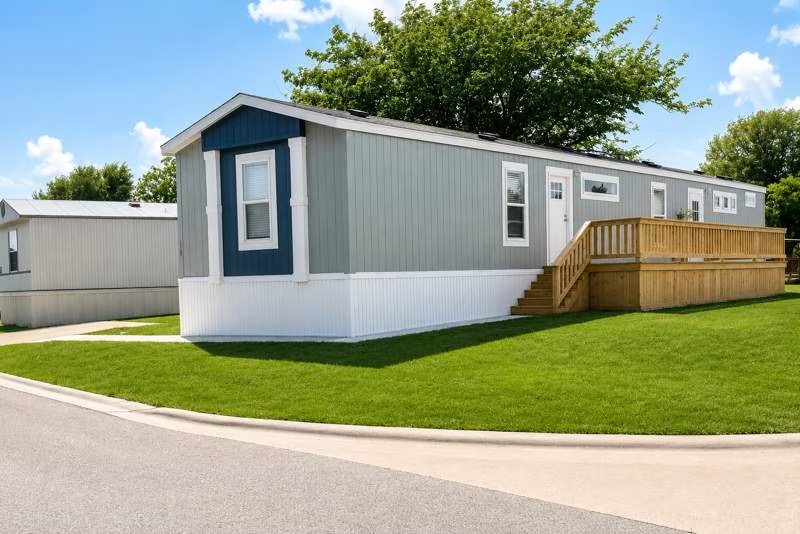
A home can be affordable, well maintained, and exactly the right fit for your household, yet still be unable to go on the lot you have in mind. To understand manufactured home zoning, start with this practical reality: the home itself and the land beneath it are regulated in different ways. Knowing where a home may be placed protects your budget, your timeline, and your peace of mind.
For families and working adults looking for predictable housing costs, zoning can sound like one more complicated step. It does not have to be. The key is asking the right questions before you sign a purchase agreement, reserve a site, or arrange transportation.
What Manufactured Home Zoning Actually Means
Zoning is the set of local rules that controls how land can be used. A city, county, or other local authority may divide land into residential, commercial, agricultural, mixed-use, and other districts. Within those districts, rules can address whether a manufactured home is allowed, what kind of foundation it needs, its setbacks from property lines, utility connections, driveway access, and even its exterior appearance.
A manufactured home built to the federal HUD Code is not the same thing as a site-built home, a modular home, an RV, or a travel trailer. Those distinctions matter because local rules may treat each housing type differently. The label on a listing is not enough. Confirm the home type and ask the local planning or zoning office how it is treated on that specific parcel.
There is also an important difference between zoning and building standards. HUD standards govern the construction and safety of manufactured homes. Zoning governs whether and where a compliant home can be located. A home can meet federal standards and still require local approval for a particular lot.
Why a Manufactured Home Community Can Simplify Placement
In a professionally managed manufactured home community, the property is typically already approved for manufactured homes. That changes the process considerably. Instead of trying to determine whether a private piece of land can support your home, you can focus on the available homes, the site lease, community guidelines, and the services that support daily life.
This does not mean every community has identical requirements. Communities may set standards for home age, condition, skirting, steps, parking, pets, landscaping, and utility setup. These rules help maintain a clean, welcoming environment and protect the experience of residents throughout the neighborhood.
For a resident renting a home in a community, many placement questions have already been handled by the property operator. If you are purchasing a home on a leased site, ask whether the home is already approved for that site and what approval is required if you plan to bring in another home later. Clear answers upfront are a sign of attentive management.
Zoning Questions to Ask Before You Commit
Before money changes hands, identify who owns the land and what you are actually buying or renting. Buying a home on privately owned land involves a different set of responsibilities than renting a home or leasing a site within a community.
If you are considering private land, contact the local planning and zoning department and provide the parcel address or parcel number. Ask whether manufactured homes are permitted by right, allowed only with a special permit, or prohibited. “Allowed” is not the final answer. Ask about minimum lot size, setback requirements, road frontage, floodplain restrictions, foundation requirements, and whether the property has access to approved water, sewer, or septic service.
It also helps to ask whether there are deed restrictions, homeowners association rules, or recorded covenants. These are separate from public zoning and can be more restrictive. A zoning approval does not override a private covenant that limits the type of home allowed in a subdivision.
If the land is in an unincorporated area, county rules may apply. If it is within city limits, the city may have authority. In some areas, both zoning and separate permits from health, transportation, or utility departments may be part of the process. Requirements can differ across Arizona, Georgia, North Carolina, Tennessee, Texas, and Utah, and they can vary even from one nearby municipality to another.
Ask for the Answer in Writing
A quick phone call is a useful first step, but written confirmation is better when you are making a major housing decision. Request the applicable zoning district, the permitted-use rule, and any required permit or hearing process. Keep copies with your purchase documents.
If an official says a special exception, conditional use permit, or variance is needed, ask what that process involves, how long it usually takes, and whether approval is discretionary. Do not schedule delivery based on an assumption that a permit will be granted.
Confirm the Site Can Handle the Home
Zoning approval is only one piece of site readiness. A home must fit physically and functionally on the lot. Verify the home’s dimensions, roof pitch, transport route, utility locations, foundation plan, and drainage conditions.
Older lots can present surprises. Trees, narrow roads, overhead lines, slopes, and undersized utility service may add cost or prevent placement. A reputable installer and local utility providers can help identify these issues before moving day. Planning early is far less stressful than trying to solve a site problem after a home is in transit.
How to Read a Listing Without Making Assumptions
A listing that says “land available” or “mobile home friendly” is not a legal determination. Treat it as an invitation to investigate. Likewise, a home listed as “move-in ready” may be ready at its current location but not eligible to move to another parcel.
Pay close attention to whether the listing includes land, whether lot rent applies, and whether the home must remain in place. If a home is in a manufactured home community, ask about the current site lease, monthly charges, utility billing, community approval, and any occupancy requirements. Predictable costs begin with a complete picture of what is included and what is separate.
When comparing communities, look beyond the home itself. Well-kept streets, functioning infrastructure, clear communication, and responsive onsite management all affect everyday comfort. A community should feel like more than a place to park a home. It should support the routines, safety, and sense of belonging residents value.
A Practical Path to a Confident Decision
Start by deciding whether you want to own land, lease a site, or rent a home. Each option has trade-offs. Private land may offer more control, but it can also require more time, permits, site work, and maintenance responsibility. A leased site can reduce the complexity of initial placement while providing an established neighborhood and shared infrastructure. Renting can offer flexibility for households that are not ready to purchase.
Next, match the home to the location before finalizing either one. If you already own a parcel, verify its rules before shopping for a home. If you have found a home first, confirm that your intended site can accept its size, age, and installation requirements. Avoid nonrefundable deposits until the key approvals and site details are clear.
Finally, work with people who answer specific questions directly. Whether you are speaking with a community manager, seller, installer, lender, or local official, you deserve straightforward information about timelines, costs, and responsibilities. Good housing decisions are built on clarity, not pressure.
A manufactured home can be a practical path to a comfortable home and a connected community. Give zoning the attention it deserves early, and you can spend less time untangling surprises and more time choosing a place where your household can settle in with confidence.