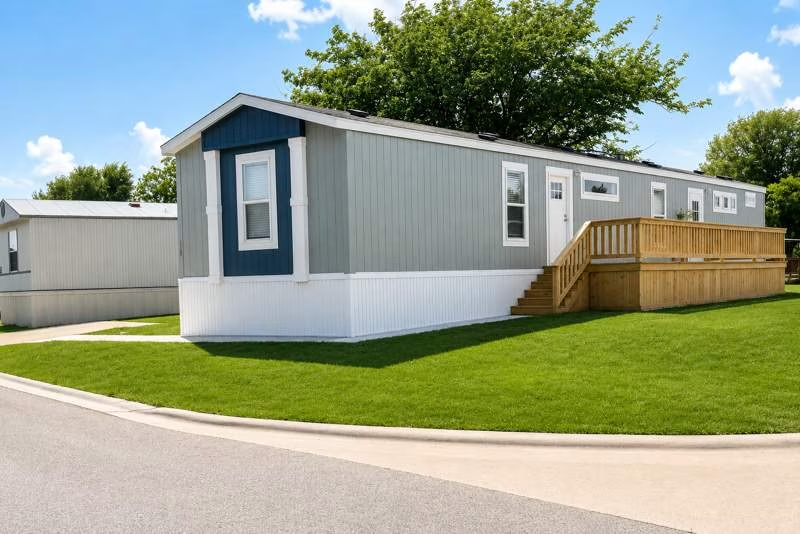
A home can look move-ready from the porch and still be a hard no for transport once the inspection starts. That is why the real answer to can you move an older manufactured home is not a simple yes or no. It depends on the home’s age, condition, code compliance, size, and whether the destination community and local agencies will allow it.
For many homeowners, the bigger question is not just whether the move is possible. It is whether the move makes financial and practical sense. An older manufactured home may carry deep value because it is paid off, familiar, and still serving a family well. But moving any manufactured home, especially an older one, comes with rules, costs, and risks that need a careful look before you commit.
Can you move an older manufactured home legally?
Sometimes yes, but legal approval is often the first hurdle.
Manufactured homes built on or after June 15, 1976, were constructed under the federal HUD Code. Homes built before that date are usually called mobile homes rather than manufactured homes, and many jurisdictions or communities will not allow them to be moved in at all. Even if a pre-1976 home is structurally sound, it may not meet current placement standards, utility requirements, or community policies.
For post-1976 homes, age still matters. Some states, counties, and cities place restrictions on homes over a certain age. A community may also set its own standards for homes being brought in. Those standards are not about appearances alone. They often reflect infrastructure fit, safety, long-term maintenance expectations, and the overall quality of life residents want in the neighborhood.
That is why the first call should be to both the local permitting authority and the destination community. Before you spend money on inspections or transport prep, make sure the home is even eligible.
What determines whether an older manufactured home can be moved?
The moving company, the destination property, and local officials will usually look at the same core issues.
The home’s age and HUD data plate
If the home has its HUD certification labels and data plate intact, that helps. Those markings identify the home and confirm it was built to the federal standard. Missing labels can complicate approvals, insurance, and placement. In some cases, replacements or verification may be possible, but it adds time and paperwork.
Structural condition
Transport puts stress on the frame, walls, roof, axles, and hitch assembly. An older home may have hidden weakness from water intrusion, settling, rust, or past repairs. Floors can be soft. Marriage lines on multi-section homes can shift. Windows and doors may no longer hold square.
A mover may refuse the job if the home cannot handle the trip safely. Even if they agree to move it, they may require repairs first.
Size and configuration
Single-wide homes are generally easier and less expensive to move than double-wides or larger multi-section homes. A larger home means more labor, more escort requirements, more route planning, and more setup work at the destination.
Distance and route
A short in-county move is very different from a multi-county or interstate relocation. Low bridges, narrow roads, steep grades, overhead lines, and utility coordination can all affect whether a route is viable. Sometimes a home can be moved in theory, but not by a practical route.
Destination standards
The receiving lot has to work. That includes lot size, setbacks, pad or foundation requirements, utility access, skirting expectations, and community rules. Well-managed communities often maintain clear standards because residents value clean streets, safe layouts, and homes that fit the neighborhood.
The cost question matters as much as the move itself
Many homeowners start with one goal: keep the home and relocate it. That can be the right move, but older homes deserve a hard look on cost.
A manufactured home move can involve inspection fees, permits, transport, escort vehicles, utility disconnection and reconnection, setup, anchoring, skirting, stairs, and repairs required before or after transit. If the home is older, you may also face costs to bring systems up to standard once it arrives.
That does not automatically make moving a bad idea. If the home is in strong condition and the destination lot is a good fit, relocation may still be more affordable than replacing the home. But if the move triggers major repair work, the math can change fast.
A simple way to think about it is this: compare the full move-in cost against the current value and remaining useful life of the home. If the cost approaches or exceeds what the home is realistically worth, it may be time to consider other housing options instead.
Inspections come before optimism
Hope is not a moving plan. A professional inspection is.
Before scheduling a move, have the home evaluated by a qualified manufactured home mover or inspector familiar with transport requirements. General home inspections can be helpful, but they do not always focus on what matters for relocation. You need someone who understands frame integrity, undercarriage condition, transport prep, axle and tire issues, and whether the home can physically survive the move.
This step protects you in two ways. First, it tells you whether the move is realistic. Second, it gives you a clearer picture of what repairs may be needed before permits, transport, and setup can move forward.
Paperwork can slow the process
Even when the home itself is eligible, paperwork often becomes the delay.
You may need title documentation, tax clearance, permit approvals, utility release forms, proof of ownership, and setup compliance documents for the destination. If the home is financed, lender involvement may also be required before it can be moved.
Interstate moves add another layer. Different states may have different age rules, transport standards, and installation requirements. If you are moving the home into a community, that community may also require an application process, lot approval, and documentation on the home’s condition before final acceptance.
This is one reason many homeowners benefit from starting the conversation early with the destination community. Clear expectations up front can save weeks of back-and-forth later.
When moving an older manufactured home makes sense
There are situations where moving an older home is absolutely worth exploring.
If the home has been well maintained, has a solid frame, still meets code expectations, and the move distance is reasonable, relocation may preserve a housing asset that still has good years left. This can be especially meaningful for households focused on predictable monthly costs and keeping ownership within reach.
It can also make sense when the destination offers a better long-term fit. A clean, professionally managed community with clear standards, reliable infrastructure, and a strong neighborhood feel can improve day-to-day living in ways that matter far beyond the move itself.
When the better answer is not to move it
Sometimes the honest answer is no, even if you were hoping for yes.
If the home is pre-1976, has major structural damage, lacks necessary certification, or needs extensive repairs just to make the trip, relocation may not be the best use of your money. The same is true if the destination will require so many upgrades that the project stops being affordable.
That can be disappointing, but it is also useful clarity. A no early in the process is far better than a failed move, surprise costs, or ending up with a home that cannot be set legally on the new lot.
How to approach the decision with confidence
Start with eligibility, not estimates. Confirm that the home can be accepted where you want to place it. Then get a transport-focused inspection. After that, gather full pricing, including the less obvious items like permits, setup, utility work, and repair contingencies.
If the numbers still work, the next step is choosing experienced professionals. Manufactured home moves are specialized. This is not a general towing job. The companies involved should know the regulations, the route planning, and the installation requirements at the other end.
If you are considering a move into a professionally managed neighborhood, ask detailed questions about lot requirements, home age policies, utility hookups, and appearance standards. Good communities are clear because they are protecting both incoming residents and the people already living there. At Medallion Communities, that kind of clarity supports what residents want most: affordability, belonging, and a place that feels cared for.
The short answer to can you move an older manufactured home is yes, sometimes. The better answer is this: move it only if the home is sound, the rules line up, and the numbers support a stable next chapter rather than an expensive surprise.