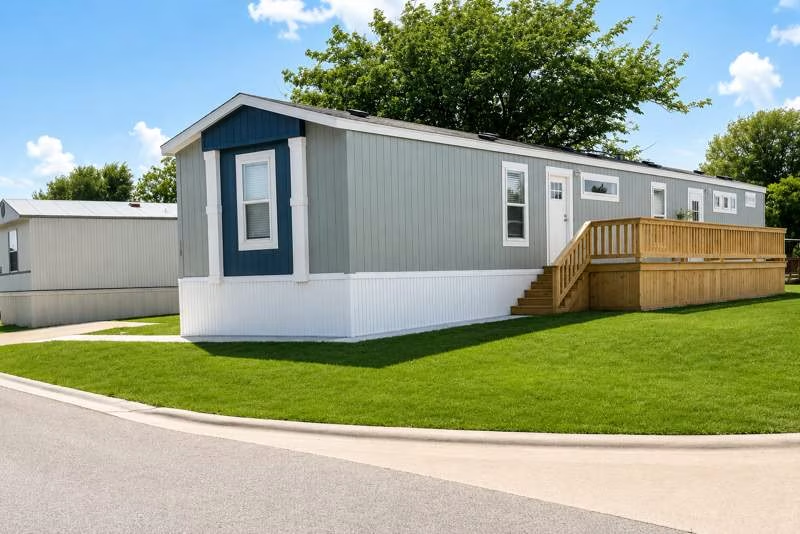
A lower monthly payment can look like the clear winner – until you realize the real question is not just price. With lot lease versus home ownership, the better choice depends on how much control you want, how much maintenance you can handle, and what kind of neighborhood experience matters most to your household.
For many buyers and renters, this comparison comes up when they are looking for affordable housing without giving up stability or a sense of community. That is especially true in manufactured home communities, where the housing model can be more flexible than many people expect. You may own the home and lease the land beneath it, or you may pursue traditional home ownership where both the house and land are yours. Those two paths can lead to very different day-to-day realities.
What lot lease versus home ownership really means
A lot lease usually means you own the home but pay a monthly fee to lease the homesite in a professionally managed community. That fee generally covers the right to keep your home on that lot and may also support community infrastructure, amenities, and maintenance of shared spaces. You are responsible for your home, while the community operator manages the broader property.
Traditional home ownership usually means you buy both the home and the land. You are responsible for the structure, the yard, the utilities on your property, and the long list of maintenance decisions that come with owning real estate outright. You also have more autonomy because you control the parcel itself.
Neither model is automatically better. The right fit depends on what you value most: lower entry costs, predictable living expenses, fewer land-related responsibilities, or long-term control over your property.
Cost is where most people start
For many households, lot lease living is appealing because it can reduce the upfront cost of getting into a home. Buying a manufactured home on leased land is often more attainable than buying a site-built home with land included. That difference matters for first-time buyers, working families, and anyone trying to keep monthly housing costs within reach.
But affordability should be looked at in full, not just at the purchase price. With a lot lease, your monthly housing cost may include the home payment, if financed, plus the lot rent. With traditional home ownership, your monthly cost often includes a mortgage, property taxes, homeowner’s insurance, and all property upkeep. In some markets, that total can be substantially higher than the cost of a manufactured home in a leased-land community.
The flip side is that lot lease costs can change over time. Community fees may increase, just as property taxes and insurance premiums often rise for traditional homeowners. The smart move is to compare the full monthly picture and ask what is included. Is lawn care handled? Are streets, lighting, and common areas professionally maintained? Are there amenities or services that offset costs you would otherwise pay on your own?
Control and flexibility are different in each model
If owning the land matters deeply to you, traditional home ownership has an obvious advantage. You have more freedom over how the property is used, within local rules and zoning. That control can be a major priority for buyers who want a large yard, future additions, or fewer community standards.
A lot lease model works differently. You have your home, but you live within a community framework. That means standards for appearance, parking, pets, and property upkeep may apply. Some people see that as a restriction. Others see it as one of the strongest benefits because those standards help protect cleanliness, curb appeal, and quality of life.
This is where well-managed communities stand apart. Clear rules, responsive management, and visible upkeep create a more stable environment than the old stereotypes suggest. For many residents, that trade-off feels worthwhile because it supports a neighborhood that feels cared for, safe, and welcoming.
Maintenance can be a bigger factor than expected
A traditional homeowner is responsible for nearly everything tied to the property. When the driveway cracks, the drainage needs work, or outdoor lighting becomes an issue, there is no management office to call. The freedom of ownership comes with full responsibility.
With a lot lease, responsibility is more divided. You still maintain your home, but the community typically handles shared infrastructure and common areas. That can reduce the time, cost, and stress tied to property management. For busy households, older adults, or anyone who wants a simpler ownership experience, that structure can be a major advantage.
It also creates a more consistent neighborhood appearance. Professionally maintained roads, lighting, and common spaces do more than look good. They shape how safe and comfortable a place feels every day.
Lifestyle matters just as much as finances
Housing decisions are not only financial. They are personal. Some people want privacy and distance from neighbors. Others want an established setting where people know each other, community events happen, and management is present when something needs attention.
That is one reason lot lease communities continue to appeal to so many residents. When they are managed well, they offer more than a place to park a home. They offer a neighborhood structure that can feel connected and dependable. Families may value a setting where streets are maintained and rules are enforced consistently. Working adults may value a predictable housing option in a location close to jobs and schools. Long-term residents may simply want a place that feels stable.
Traditional home ownership can absolutely provide that too, but it depends more heavily on the surrounding neighborhood, local government services, and individual property conditions. With leased-lot community living, the management team plays a direct role in the resident experience.
Resale and long-term value deserve a close look
This is often the most misunderstood part of lot lease versus home ownership. Traditional real estate buyers are used to hearing that land ownership is central to appreciation. In many cases, that is true. Land can add long-term value, and site-built homes on owned lots often follow a more familiar resale pattern.
A manufactured home on leased land may build value differently. The home itself can retain or increase value depending on age, condition, local demand, and the quality of the community, but the equation is not the same as owning both land and home. Buyers should not assume the same appreciation path as a traditional house on a private lot.
That does not make lot lease a poor financial choice. It simply means the benefit may show up in a different way. Lower entry cost, lower overall monthly expense, and access to a well-kept community can create value that matters right now, not just on paper years down the road. For many households, immediate affordability and day-to-day livability carry more weight than maximizing land equity.
Questions worth asking before you choose
The best housing decision usually comes from asking better questions, not chasing a one-size-fits-all answer. If you are considering lot lease living, ask what the monthly fee includes, how the community handles maintenance, what resident standards apply, and how management communicates with residents. Also ask about the application process, payment options, and whether the community supports buyers bringing in their own home.
If you are comparing that with traditional home ownership, be honest about the total cost of land ownership in your market. Consider taxes, repairs, yard care, utility responsibilities, and how much time you want to spend managing a property.
For some people, owning both home and land is the clear goal. For others, a manufactured home in a professionally managed community offers a more practical path to stability, space, and belonging. That is not settling. It is choosing a housing model that fits real life.
When lot lease is often the better fit
Lot lease tends to make sense for buyers who want a more attainable path into homeownership, prefer a community setting, and appreciate having some property responsibilities handled at the community level. It can also be a strong option for homeowners who already own a manufactured home and need a quality homesite with reliable management and infrastructure.
In communities operated with high standards, the experience can feel far more polished and resident-focused than outsiders expect. That is why companies like Medallion Communities continue to reshape what people think community living looks like – not as a compromise, but as a practical, welcoming housing choice built around affordability, upkeep, and belonging.
The best decision is the one that supports your budget, your routines, and your peace of mind. If a home helps you feel secure, connected, and comfortable month after month, that matters just as much as the label attached to how you own it.