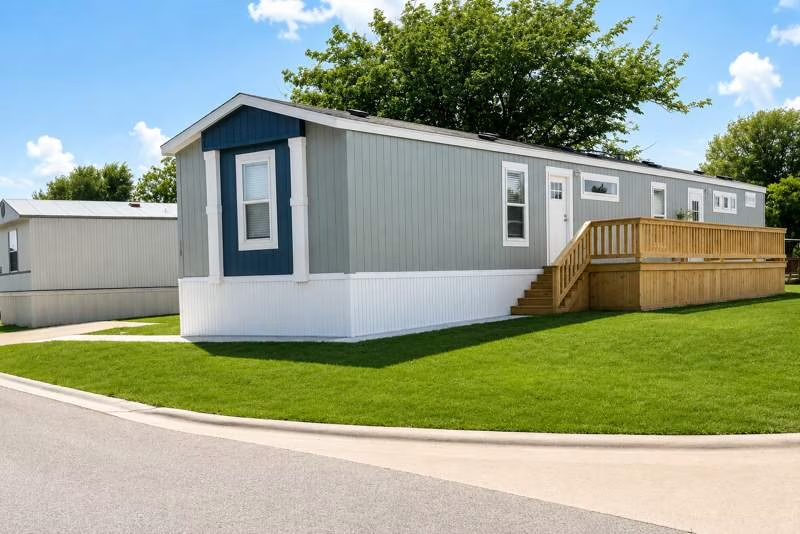
You find a manufactured home you love – the layout works, the monthly payment fits, and the neighborhood feels right. Then you hear the lot rent number and pause. That reaction is normal, especially if you are new to manufactured home living or you have only owned site-built homes where the land and the home are bundled together.
Manufactured home lot rent is simply the monthly amount you pay to lease the homesite in a manufactured home community. Your home may be yours, but the land it sits on is leased. What matters is not just the dollar amount, but what the community provides in return: safety, upkeep, infrastructure, and a place that actually feels like a neighborhood.
What manufactured home lot rent includes (and what it doesn’t)
Lot rent is not a mystery fee. It is the price of a homesite and the ongoing costs of operating and maintaining the community. That said, the details vary by property, so it helps to know what typically falls into each bucket.
At a baseline, lot rent covers your right to occupy a specific homesite and the community’s ongoing responsibilities for shared areas. Think maintained roads, lighting, common landscaping, stormwater systems, signage, and the behind-the-scenes coordination that keeps the place functioning.
Often, lot rent also includes some utilities or utility-related services. In many communities, trash service is included. In others, water and sewer may be included, billed back at a flat rate, or sub-metered so residents pay based on use. The same is true for lawn care in common areas versus your private yard – community standards may require residents to maintain their own yard while the community maintains shared green space.
What lot rent usually does not include is your home payment (if you are financing), homeowners insurance, property taxes on the home (in states where that applies), and your own utility usage when it is individually metered. It also does not automatically mean every amenity is included. A clubhouse, pool, or fitness room may be part of the community experience, but whether there are separate fees depends on the operator and the local market.
The most important step is to ask for a clear breakdown before you commit. A well-run community will be direct about what is included, what is billed separately, and how billing works.
Why manufactured home lot rent varies so much
Two communities can be ten miles apart and have noticeably different lot rent. That is not always a sign that one is “overpriced.” It is usually a reflection of what the location demands and what the community invests in.
Location is the obvious driver. Land values, local wages, insurance costs, and property taxes all differ by county and state. Communities near major employers, growing suburbs, or desirable school districts tend to command higher lot rent because demand is higher.
Infrastructure is the quieter driver. Communities with upgraded roads, reliable water and sewer systems, improved drainage, and modern lighting have real operating and replacement costs. Those upgrades show up in day-to-day livability – fewer potholes, better visibility at night, fewer service interruptions – but they also influence what it costs to run the property responsibly.
Management quality matters, too. A community that enforces reasonable standards, responds to maintenance requests, and keeps common areas clean is doing ongoing work. That work takes staffing, systems, and planning. You may not “see” it in a line item, but you feel it when the community runs smoothly.
Amenities can affect lot rent, but they are not the whole story. A pool is great, but many residents care just as much about well-lit streets, predictable rules, and a management team that is present and accountable.
The real budgeting question: predictable, not just low
A low lot rent number can look attractive on a listing. The better question is whether the overall living cost is predictable.
Start by adding up your total monthly housing cost: your home payment (or rent if you are renting a home), lot rent, utilities, insurance, and any community fees. Then ask what changes over time. For example, if water and sewer are included but have a cap, what happens when usage exceeds it? If trash is included, how often is pickup and what items require special handling?
Also ask how lot rent increases are handled. Most communities adjust lot rent over time to keep up with rising costs like insurance, payroll, and infrastructure maintenance. The key is transparency and communication. You want a community that provides clear notice, explains changes, and operates in a way that earns trust.
If you are comparing options, it helps to treat “all-in monthly cost” as your main metric, with lot rent as one important component.
Manufactured home lot rent vs. renting an apartment
People often compare lot rent to apartment rent dollar-for-dollar, and that can be misleading.
When you rent an apartment, your rent covers the unit and the land under it. With manufactured home living, you may be building equity in a home you own while leasing the lot. That changes the math. Your monthly costs may be split across a home payment and lot rent, but you are often getting more space, a yard, and a neighborhood layout that feels more residential.
There are trade-offs. Apartment living can be simpler because one payment covers everything and repairs inside the unit are typically handled by the landlord. If you own your manufactured home, you will be responsible for home maintenance, just as you would be in a site-built house. On the other hand, many residents prefer the privacy of detached living, the ability to personalize their home, and the community feel that comes from neighbors who actually stay.
If you already own a home: how to evaluate a community’s lot rent
For homeowners who are moving a manufactured home into a community, lot rent is only one part of the decision. You are also choosing the standards and infrastructure that will support your home long-term.
Ask about the homesite itself: pad type, driveway, utility hookups, and whether the lot accommodates your home’s size. Ask about rules that protect property values and day-to-day peace – things like pet policies, vehicle parking, exterior upkeep, and quiet hours. Reasonable standards are not about being restrictive. They are about protecting the neighborhood experience.
Then look at the community’s condition. Are streets in good shape? Is lighting consistent? Are common areas clean? Do you see signs of recent improvements, like resealed roads, trimmed trees, or updated signage? Lot rent is easier to understand when you can see how the community is being maintained.
Finally, ask how service requests work and how communication happens. A resident portal, clear office hours, and documented processes are not “nice to have.” They reduce friction when you are trying to get answers, pay rent, or resolve an issue.
Questions to ask before you sign
Most lot rent surprises come from assumptions. A few direct questions can prevent that.
Ask what, specifically, your manufactured home lot rent covers. Then ask which utilities are included, which are billed separately, and whether billing is flat-rate or usage-based. Ask about deposits, one-time community fees (if any), and how late payments are handled. Ask how often rent is reviewed and how residents are notified of changes.
Also ask about the lease term and renewal process. A longer-term lease may offer stability, while a month-to-month arrangement can offer flexibility. Neither is automatically better – it depends on whether you are prioritizing predictable costs or the ability to move more easily.
If you are touring in person, ask to see the lot you would actually live on. The view from the leasing office is never the full story.
What “good value” lot rent looks like
Good value is not the cheapest number. Good value is a community that earns its rent through clean common areas, visible upkeep, responsive management, and a sense of safety and belonging.
You can usually feel it within minutes of arriving. Residents wave. Kids ride bikes. The streets are passable and well lit. Rules are posted clearly, and they are enforced consistently. When you ask a question, you get a straight answer.
That is the reputation shift many people experience after visiting a well-managed manufactured home community. It is not a fallback option. For many households, it is the practical choice that still feels like home.
If you are comparing communities across states or trying to narrow down options by monthly budget, a community search and transparent listings make the process easier. For example, Medallion Communities helps residents explore locations, view available homes, and take care of basics like applying and paying through an online portal – the kind of operational clarity that supports predictable living.
When lot rent feels high: what to check first
Sometimes lot rent looks high because you are comparing it to a number that does not include the same services. If one community includes trash and sewer and another does not, the cheaper lot rent can become the more expensive option once you add everything back in.
It can also feel high when a community is in the middle of improvement work. Upgrades like road repairs, drainage improvements, or new lighting can affect operating costs, but they also reduce headaches you would otherwise live with for years.
If the price still feels out of reach, be direct about your budget. Ask whether there are different homesites, move-in specials on available homes, or nearby sister communities with different pricing. The right fit is not only about the number – it is about whether the community can support your life without constant trade-offs.
Living in a manufactured home community should feel steady: a place where your monthly plan makes sense, your questions get answered, and your street feels like it belongs to the people who live there. When lot rent is transparent and management is consistent, you stop thinking about the fee and start enjoying the neighborhood you are paying to be part of.