A quiet night at an RV park can turn stressful fast when a water pump starts cycling, a battery will not hold a charge, or a small roof leak becomes a soft ceiling. Consistent RV maintenance helps protect the comfort, independence, and travel plans that make RV living and traveling worthwhile. It also helps you arrive at your next site ready to enjoy the community, not search for an emergency repair.
Whether you travel a few weekends each year, spend winters in a warmer state, or live in your RV full-time, the best routine is the one you can keep. Start with regular visual checks, follow your manufacturer’s service schedule, and address small changes before they become expensive disruptions.
RV Maintenance Starts With a Reliable Routine
An RV is a home and a vehicle in one. It has an engine or tow vehicle considerations, plumbing, electrical systems, propane appliances, tires, seals, and moving parts. Those systems age differently, so waiting for one annual inspection is rarely enough.
A useful rhythm is to check the RV before every trip, inspect key exterior and safety items monthly during active use, and schedule deeper seasonal service. Full-time RVers may need to perform some checks more often because their systems work harder. An RV stored through winter needs a different approach than one parked at a long-term site with regular power and water connections.
Keep a simple maintenance log in your phone or a notebook. Record dates, mileage, tire pressure readings, battery checks, sealant repairs, filter changes, and service appointments. A clear record makes it easier to spot recurring issues and gives future buyers confidence that the RV has been cared for.
Before You Travel: Check What Keeps You Safe
The pre-trip walk-around is one of the most valuable habits an RV owner can build. Take ten or fifteen minutes before departure to look for anything that changed since the last time you moved.
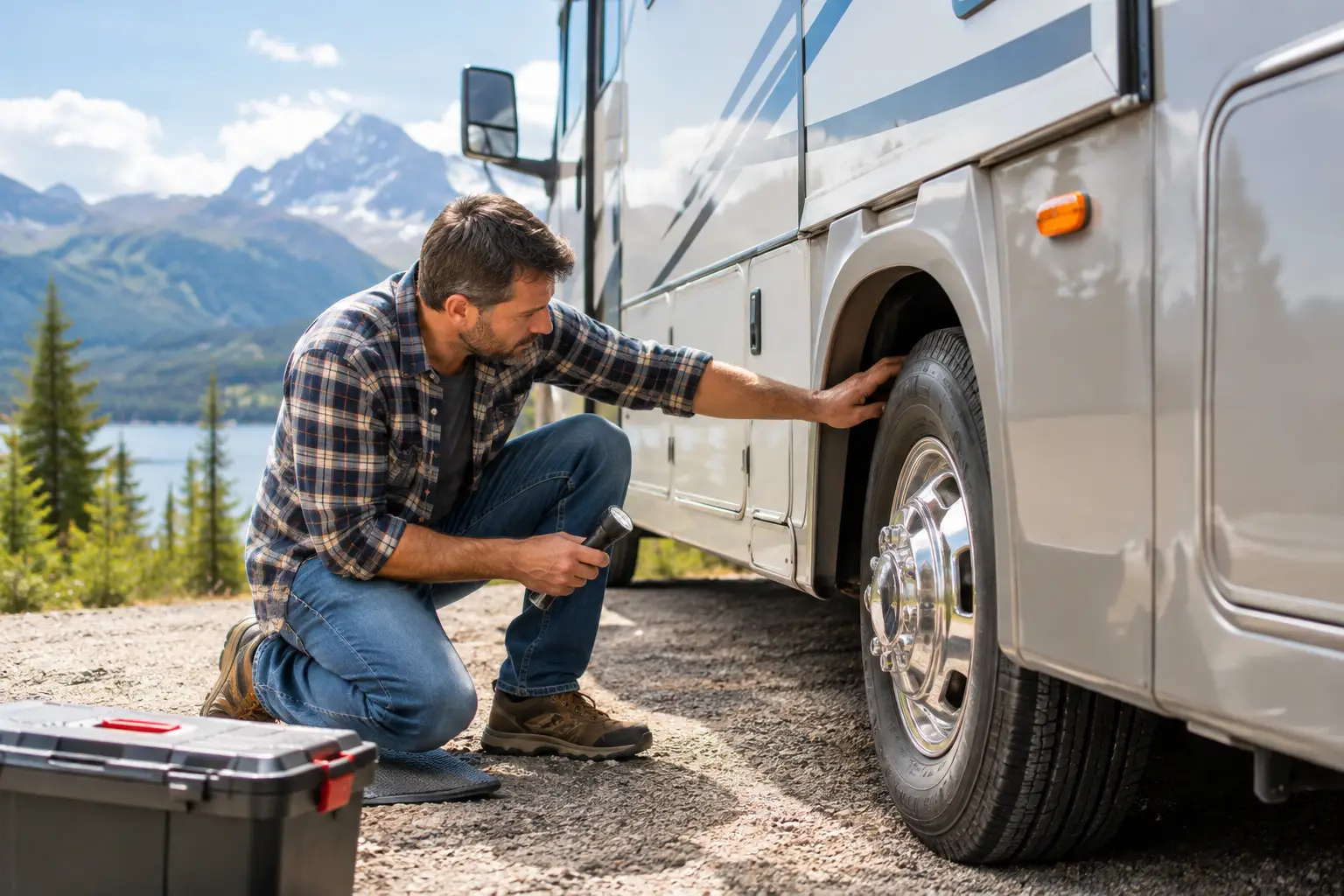
Start with tires. Check pressure when tires are cold and use the pressure listed for your RV and tire load requirements, not a guess based on a passenger vehicle. Look for cracks, bulges, uneven wear, embedded debris, or sidewall damage. RV tires can age out before their tread appears worn, especially after long periods of sun exposure or storage.
Then inspect exterior lights, turn signals, brake lights, mirrors, steps, awnings, windows, and storage compartment latches. If you tow a trailer, confirm the hitch, coupler, safety chains, breakaway cable, electrical connection, and weight-distribution equipment are secure. For motorhomes, check engine oil, coolant, windshield washer fluid, and any dashboard warning lights.
Inside, secure loose items and test the essentials: smoke alarms, carbon monoxide detectors, propane detector, fire extinguisher, and emergency exit windows. Replace detector batteries on schedule, and replace the units themselves according to their manufacturer dates. Safety equipment only helps when it is functional and easy to reach.
Protect the Roof, Seals, and Exterior
Water intrusion is one of the costliest RV problems because it can hide behind walls, under flooring, and around windows long before you see a drip. Your roof and exterior seals deserve regular attention.
Inspect the roof at least a few times a year and after severe weather, low branches, or a long drive through heavy rain. Look closely around vents, skylights, antennas, air conditioners, seams, ladder mounts, and front or rear caps. Watch for cracked, peeling, lifted, or missing sealant. Use a cleaner and sealant approved for your specific roofing material, whether it is rubber, fiberglass, aluminum, or another surface.
Do not walk on the roof unless your RV manufacturer says it is walkable and you can do so safely. A professional inspection is a smart choice if you are unsure about roof condition, see staining inside, or cannot safely reach the area.
Wash the exterior regularly, including the awning fabric and slide-out toppers. Dirt, tree sap, and mildew hold moisture against surfaces and can shorten the life of finishes. When retracting an awning, make sure it is dry and free of leaves or small branches. During high winds, retract it even if you plan to be away for only a short time.
Care for Water, Waste, and Propane Systems
Freshwater systems need attention even when an RV is not moving. Use a potable-water hose, a pressure regulator, and a filter suited to your water source. Check hoses and fittings for leaks, especially at the city-water connection and beneath sinks. A slow leak can damage cabinetry and flooring without creating an obvious puddle.
Sanitize the freshwater tank according to your owner’s manual, particularly after storage or if the RV has been unused for an extended period. Empty and rinse the gray and black tanks as recommended for your setup. Avoid putting grease, wipes, paper towels, or harsh chemicals into RV drains and tanks. Even products labeled flushable can cause clogs in an RV system.
Propane requires careful handling. Inspect the tank compartment and hoses for corrosion, damage, or unusual odors. If you smell propane, turn off the supply if it is safe to do so, avoid switches or open flames, leave the area, and seek qualified help. Have propane appliances and regulators inspected by a trained technician if you notice weak performance, soot, or repeated ignition issues.
Keep Electrical Power and Batteries Dependable
Battery trouble is a common source of avoidable frustration. Check battery terminals for corrosion, keep connections tight, and make sure the battery is charged correctly for its type. Flooded lead-acid batteries may require water-level checks, while AGM and lithium batteries have different charging and storage needs.
If your RV sits for weeks or months, do not assume shore power alone is protecting the battery bank. Confirm that the converter or charger is operating properly and that its charging profile matches your batteries. In some situations, a battery maintainer or solar setup can help. In others, disconnecting batteries during storage may be the better choice. It depends on the system, climate, and whether the RV must power devices such as monitoring equipment.
Test GFCI outlets regularly, inspect the shore power cord for heat damage or worn insulation, and never force a connection that feels loose. At a park, use the appropriate surge protection device and make sure your RV’s electrical load matches the pedestal service available at the site.
Seasonal RV Maintenance Prevents Storage Surprises
When temperatures are expected to fall below freezing, winterize the plumbing system before the first hard freeze. This generally involves draining water, bypassing the water heater when appropriate, and using RV antifreeze or compressed air according to the manufacturer’s process. Missing one low point or exterior shower line can lead to burst plumbing.
In hot climates, summer maintenance deserves equal attention. Inspect tire condition and pressure more frequently, clean air conditioner filters, clear debris from the condenser area, and check that refrigerator ventilation is unobstructed. Sun covers, roof inspections, and interior ventilation can reduce heat stress on your RV’s finishes and systems.
Before storing the RV, remove food, clean the refrigerator, leave doors propped open if recommended, empty tanks, and check for places rodents can enter. Covering the RV can be useful, but only with a breathable cover designed for RV use. A poorly fitted tarp can trap moisture and rub against exterior surfaces.
Know When to Call a Professional
Many owners can handle cleaning, inspections, basic sealant touch-ups, and routine filter replacements. But electrical faults, brake service, tire mounting, propane leaks, major water damage, and structural repairs call for qualified professionals. The upfront service cost is often far less than the damage caused by a repair attempted without the right tools or experience.
Choose service providers who work with RV systems regularly, and ask for a written explanation of the recommended repair. A well-maintained RV supports safer roads, better stays, and more confidence when you pull into a new community. Give it steady attention, and it will be ready when the next open road calls.