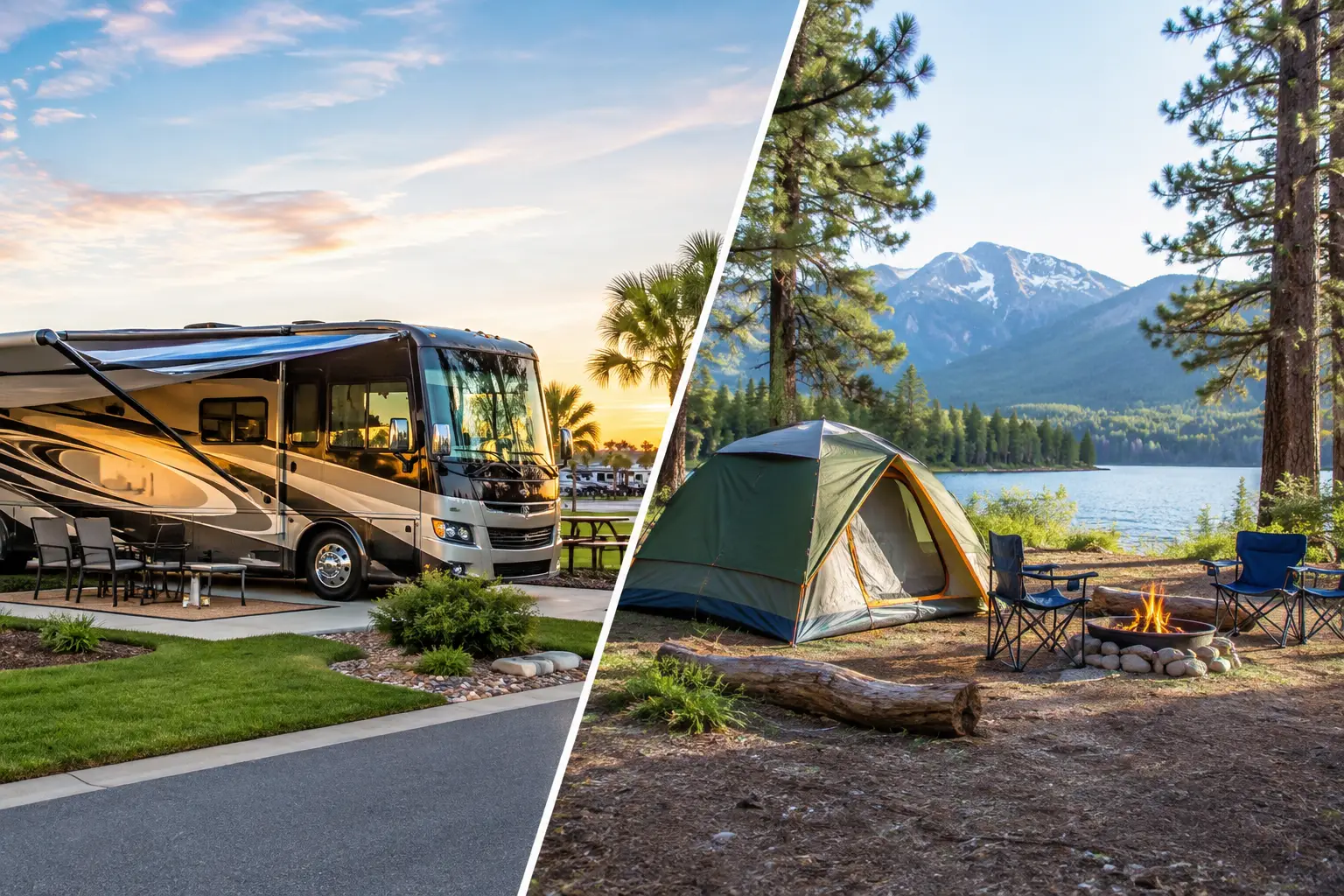
A great RV trip can feel completely different depending on where you park. The RV resort versus campground decision is not simply about hookups or nightly rates. It shapes how you rest, work, meet neighbors, entertain family, and handle the practical details of life on the road.
Some travelers want a quiet, wooded site close to a trailhead. Others need dependable Wi-Fi, a level concrete pad, laundry facilities, and a place that feels welcoming for a month or a season. Neither choice is automatically better. The right fit depends on what you need from your stay.
What Is the Difference Between an RV Resort and a Campground?
A campground is generally designed around outdoor access and a simpler camping experience. It may offer tent sites, primitive sites, partial hookups, cabins, or RV spaces. Campgrounds range widely, from public parks with limited services to privately operated properties with full hookups and recreation areas.
An RV resort is typically built for a more comfortable, service-oriented RV stay. Sites are often larger and more consistently maintained, with full hookups and utility connections designed for modern RVs. Resorts may include amenities such as pools, clubhouses, planned activities, laundry rooms, dog parks, fitness areas, and reliable internet access.
The terms can overlap. A well-run campground may have resort-style features, and an RV resort can still deliver the relaxed outdoor atmosphere travelers expect. Instead of relying only on the property name, look closely at its site details, amenities, rules, and guest experience.
RV Resort Versus Campground: Compare What Matters
Amenities and everyday comfort
The clearest distinction often comes down to convenience. Campgrounds may provide the basics: a place to park, a fire ring, picnic table, restrooms, and perhaps water or electric service. That can be exactly right for a weekend focused on fishing, hiking, or sitting around the campfire.
RV resorts tend to support longer and more self-sufficient stays. Full hookups, clean bathhouses, laundry facilities, package handling, online payment options, and responsive onsite management can make a meaningful difference when your RV is your home base. Families may value a pool or activity space, while remote workers may prioritize internet reliability and a quiet site during the day.
Amenities are not just extras when you plan to stay for weeks or months. They affect your routine, your comfort, and how much time you spend driving elsewhere to handle ordinary tasks.
Setting and atmosphere
Campgrounds often place nature at the center of the experience. You may find mature trees, waterfront views, hiking access, darker night skies, and a little more distance from neighboring sites. The trade-off can be tighter roads, uneven terrain, limited cell service, or fewer nearby services.
An RV resort may be closer to local attractions, shopping, restaurants, medical care, or major travel routes. The atmosphere is usually more social and organized, particularly at properties that welcome seasonal guests and full-time RVers. You might meet neighbors at community events, spend an afternoon at the pool, or enjoy the reassurance of a property with visible management and clear standards.
Travelers looking for solitude may prefer a quieter campground. Those who value connection, predictability, and easy access to town may feel more at home at an RV resort.
Site quality and RV compatibility
Before you reserve, confirm that the site works for your specific RV. This matters whether you choose a resort or campground, but it is especially important for large fifth wheels, motorhomes, and rigs towing an additional vehicle.
Ask about site length, turning room, pad surface, shade, slide-out clearance, and the location of utility connections. Verify the electrical service as well. A 50-amp rig needs more than an outlet that merely looks convenient on a map.
RV resorts often have larger pull-through or back-in sites designed for a variety of RV sizes. Campgrounds can be ideal for smaller units, pop-ups, and travelers who are comfortable with more rustic conditions. Still, every property is different. A detailed site description is more useful than assumptions based on the category alone.
Cost and value
A campground may have a lower nightly price, especially if it offers partial hookups or fewer facilities. That can make it a smart choice for a short stay when you plan to spend most of your time outdoors or exploring the area.
RV resorts may cost more upfront, but the value can be better for longer stays. Full hookups can reduce the need to use a dump station or refill tanks. Included amenities may replace visits to a laundromat, gym, public pool, or coworking space. A convenient location can also reduce fuel costs and travel time.
Look beyond the advertised rate. Ask whether electricity is included for monthly stays, whether there are fees for extra vehicles or pets, and what the cancellation policy covers. A lower rate is only a better deal if the site provides what you actually need.
Length of stay
For a one- or two-night stop, a simple campground may be all you need. Easy check-in, a safe place to rest, and dependable hookups can keep the trip moving without adding unnecessary cost.
For a seasonal stay or a longer work assignment, an RV resort often makes more sense. Long-term guests benefit from well-kept common areas, a stable community environment, package access, laundry, and management that can address maintenance concerns promptly. The more your RV functions as home, the more daily conveniences matter.
Many travelers find that their preferences change during a trip. They may choose campgrounds near national parks and outdoor destinations, then book an RV resort when it is time to recharge, catch up on work, or settle in for a while.
How to Choose the Right Property for Your Trip
Start with the purpose of your stay. If you are visiting family, working remotely, escaping winter weather, or staying for an extended period, prioritize full hookups, site condition, security, and access to everyday services. If you are traveling for recreation and want to be close to the outdoors, focus on location, scenery, and the type of camping experience you enjoy.
Then consider the details that can make or break an arrival. Confirm check-in hours, after-hours procedures, pet policies, vehicle limits, mail options, quiet hours, and whether the property accommodates your RV length. Read recent guest feedback with a practical eye. Look for recurring comments about cleanliness, staff responsiveness, road conditions, safety, and the accuracy of site descriptions.
For longer stays, it is also worth asking how the property communicates with guests. Clear rules, accessible management, and simple digital tools for reservations or payments help create the dependable experience many full-time and seasonal RVers want.
Questions Worth Asking Before You Reserve
A reservation call or online inquiry should leave you with clear answers. Ask whether the site has full hookups, what amperage is available, and whether the site is level. Confirm Wi-Fi and cell coverage if you work remotely. If you are traveling with children or pets, ask about designated recreation areas, breed or leash rules, and traffic patterns within the property.
You should also ask what happens if something goes wrong. Is there an onsite manager? How are maintenance requests handled? Is there a clear contact for after-hours concerns? A well-managed property does not need to promise perfection. It should make it easy to get help when you need it.
Find a Stay That Supports Your Travel Style
The best choice is the one that lets you enjoy the reason you took the trip. A campground may give you the quiet, scenery, and simplicity you came to find. An RV resort may give you the comfort, reliability, and sense of community that makes a longer stay feel easy.
At Medallion Communities, thoughtfully maintained RV destinations are designed around the details travelers notice: clean spaces, accessible support, and a setting where guests can settle in with confidence. Choose the property that fits your rig, your routine, and the kind of memories you want to make once the engine is off.