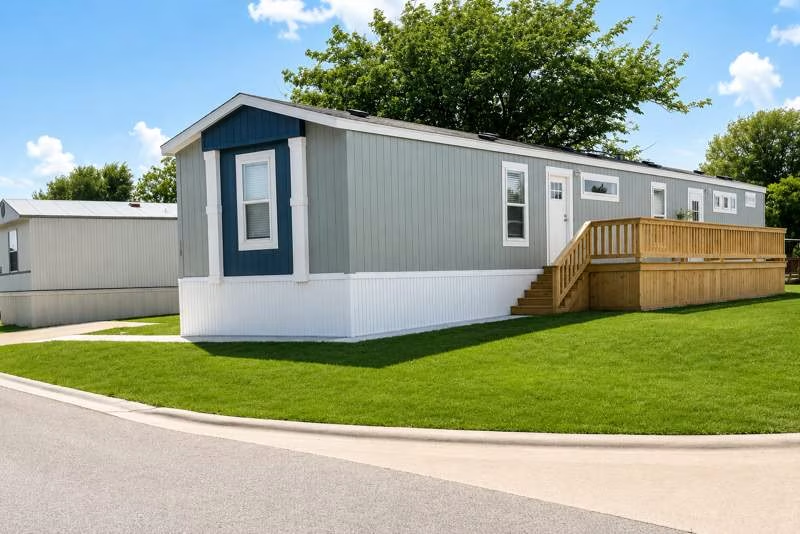
A clean street, a working light at the entrance, and a manager who actually responds – those details shape daily life more than most people realize. When people talk about the top benefits of community management, they are really talking about something practical: whether a neighborhood feels stable, cared for, and worth coming home to.
That matters even more in manufactured home communities, where outdated assumptions still linger. Good management changes the experience from the ground up. It protects the value residents receive, supports a stronger sense of belonging, and creates a place that feels organized without feeling impersonal.
Why community management matters so much
A home is never just the walls you live in. It is also the street you drive down at night, the condition of shared spaces, the way issues are handled, and whether neighbors feel like they are part of a respectful community.
That is why professional management has such a visible effect. In a well-run community, residents can see the difference in everyday details. Maintenance requests are addressed. Property standards are clear. Communication is easier. The environment feels more predictable, and for many families and working adults, predictability is a big part of feeling secure.
The value of management is not abstract. It shows up in how people live day to day.
The top benefits of community management for residents
1. A cleaner, better-kept neighborhood
One of the first things residents notice is appearance. When management is attentive, common areas are maintained, landscaping is handled, signage stays in good condition, and issues that drag down the look of a property are less likely to sit unresolved.
This is not just about curb appeal. A cleaner environment affects how people feel in their own neighborhood. It creates pride, supports a more welcoming atmosphere, and helps residents feel that the place they chose is being cared for properly.
There is also a practical side. Consistent upkeep helps prevent small issues from becoming expensive ones. A pothole, drainage problem, or damaged shared feature is easier to address early than after it gets worse.
2. More safety and peace of mind
Safety is one of the strongest reasons residents look for a managed community rather than an unmanaged property or loosely maintained neighborhood. Good community management supports safety in visible ways, from better lighting and maintained roads to clearer rules and faster attention when something needs to be reported.
Of course, management alone cannot remove every risk. No neighborhood can promise perfection. But there is a real difference between a place where concerns disappear into a void and one where there is a process for handling them.
That peace of mind matters to parents, older adults, shift workers getting home late, and anyone who wants to feel more comfortable in their surroundings. Well-managed communities tend to feel more orderly, and order goes a long way toward helping residents feel secure.
3. Faster problem-solving when issues come up
Every community has issues. The difference is how they are handled.
A responsive management team gives residents a clear path when they need help, whether the issue involves billing, maintenance, community rules, or shared infrastructure. Instead of wasting time trying to figure out who to call or waiting days for a response, residents have a system that is built to keep things moving.
This is one of the less glamorous but most important benefits of community management. People do not think much about it until something goes wrong. Then it becomes obvious how valuable it is to have organized communication, resident support, and reliable follow-through.
Digital tools can improve this even more. Online portals for payments, applications, and account access make routine tasks easier and reduce friction for busy households. That does not replace human support, but it can make the whole experience more convenient.
4. Clear expectations that protect quality of life
Rules are not always popular, but in the right setting, they serve a useful purpose. Community management helps set expectations around upkeep, shared spaces, parking, and other day-to-day matters that can quickly create frustration if nobody is paying attention.
The key is balance. Standards should protect residents without making life harder than it needs to be. When they are enforced fairly and communicated clearly, they help create a neighborhood that feels respectful and consistent.
For residents, that consistency matters. It reduces conflict, limits guesswork, and helps preserve the kind of environment people want when they choose community living in the first place. For homeowners moving a manufactured home into a community, this structure can be especially important because it gives them confidence that the neighborhood will remain orderly over time.
5. A stronger sense of belonging
One of the biggest advantages of community living is right there in the name. The best managed neighborhoods do more than collect rent or oversee lots. They help create conditions where people feel connected to where they live.
That can come from shared spaces, community events, friendly communication, or simply an environment where residents know management is present and invested. Belonging does not always come from large social programs. Often, it starts with smaller signals: a neighborhood that feels welcoming, common areas people actually use, and a general sense that residents are not being treated like account numbers.
This benefit is easy to underestimate, especially when housing decisions are often driven by budget. But emotional comfort matters. People want affordability, yes, but they also want to feel at home. A well-managed community supports both.
6. Better value for the money
Affordable housing is not really affordable if poor management creates extra stress, delays, or decline. Residents look at monthly cost, but they also look at what they are getting in return – service, upkeep, neighborhood standards, and overall livability.
This is one of the top benefits of community management that deserves more attention. Professional oversight helps protect the full value of the housing experience. That is especially meaningful for budget-conscious households trying to make smart, long-term decisions.
For renters, better management can mean fewer headaches and a more stable day-to-day routine. For buyers, it can mean greater confidence in the setting around their home. For existing manufactured homeowners bringing a home into a community, it can mean knowing the infrastructure and management processes are in place to support that move.
The trade-off, in some cases, is that stronger standards may feel more structured than informal living arrangements. But for many residents, that structure is part of the value. It helps protect what they are paying for.
7. A community that improves over time
The strongest management teams do not just react. They plan.
That shows up in infrastructure upgrades, attention to roads and lighting, better resident communication, and ongoing efforts to keep the community attractive and functional. A neighborhood that is improving sends a clear message: this is a place with direction, not a place being left behind.
That matters for resident confidence. People want to know their community is being stewarded, not just occupied. They want to see that management notices what needs attention and invests in making daily life better.
In manufactured home communities, this also helps challenge outdated stereotypes. A professionally managed neighborhood with visible improvements, clear standards, and responsive service offers a very different experience from the assumptions many people still carry. It shows what community living can actually be when it is done well.
What residents should look for in a managed community
Not every management model delivers the same results. Some communities have rules on paper but inconsistent follow-through. Others maintain property well but fall short on communication. The best fit depends on what a household values most, but a few signs tend to matter across the board.
Look for responsiveness, visible upkeep, clear policies, and practical systems that make resident tasks easier. Pay attention to whether the community feels lived in and cared for, not just advertised well. Reviews and resident feedback can help, but so can the basics: how the property looks, how questions are answered, and whether management seems organized.
For many households, that combination of warmth and structure is what makes the difference. A place can be affordable and still feel welcoming. It can have standards and still feel neighborly. In fact, the best communities tend to offer both.
When community management is done right, people feel it in ordinary moments – coming home after work, walking outside with their kids, paying rent without hassle, or seeing that a concern was taken seriously. That is what turns a property into a neighborhood people are proud to call home.