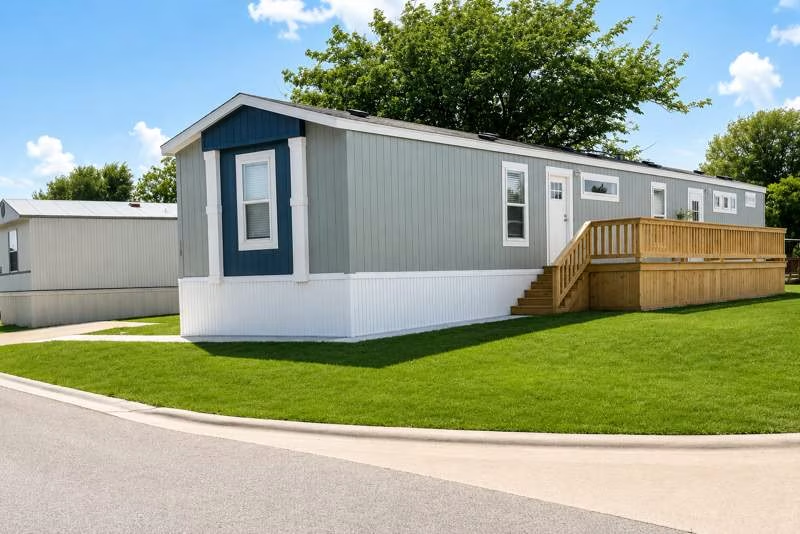
You can usually tell within the first few minutes whether a neighborhood feels cared for. The streets look maintained, common areas feel inviting, and residents seem comfortable being outside. When people search for the top signs of well managed communities, they are often trying to answer a practical question: Will this be a stable, respectful place to live?
That matters even more when affordability is part of the equation. A community should not force you to choose between a manageable monthly budget and a place that feels safe, clean, and connected. Strong management helps make both possible. It shapes the day-to-day experience in ways people notice right away, and in ways they only fully appreciate after living there for months or years.
Why well-managed communities feel different
Good management is not just about collecting rent or enforcing rules. It is about creating the kind of environment where residents can count on consistency. That includes how quickly maintenance concerns are addressed, how clearly expectations are communicated, and whether the property shows visible signs of ongoing care.
In manufactured home communities, this can be especially important. People are not simply renting a unit in a large anonymous complex. They are choosing a neighborhood setting, often with long-term neighbors, shared amenities, and a stronger sense of place. When management is attentive, the whole community benefits. When it is not, the effects show up quickly.
Top signs of well managed communities
1. The property looks consistently cared for
The first sign is usually visual. Roads are in decent condition, lighting works, common spaces are tidy, and vacant areas are not left to decline. Homes and lots may still reflect individual style, but the overall setting feels orderly rather than neglected.
This does not mean everything has to look brand new. In fact, an established community can still feel very well run even if it is not polished in every corner. What matters is whether upkeep appears ongoing. Fresh gravel, trimmed green spaces, working streetlights, and clean shared areas suggest management is paying attention before small issues turn into bigger ones.
2. Management is responsive and easy to reach
Residents should not have to chase someone down for basic answers. In well-managed communities, there is a clear process for getting help, whether the issue is a billing question, a maintenance request, or an application update.
Responsiveness is about more than speed. It is also about clarity. People want to know who to contact, what to expect, and when they can expect it. Digital tools like resident portals can help make that easier, but technology only works when there is real follow-through behind it. A convenient system means little if requests disappear into a void.
3. Rules are clear, fair, and consistently applied
Every community needs standards. The question is whether those standards support quality of life or create confusion and frustration. Good management sets expectations clearly from the start and applies them in a way that feels consistent.
This can include guidelines around parking, pets, lot upkeep, noise, and shared spaces. Residents generally do not mind reasonable rules when they understand the purpose behind them. Problems tend to come from vague policies, selective enforcement, or sudden changes with little communication. A well-run community respects residents enough to be direct and predictable.
4. Safety is treated as an everyday priority
Safety is not just a marketing phrase. In a well-managed community, it shows up in practical details. Lighting is maintained. Streets and walkways are kept in usable condition. Problem areas are addressed instead of ignored. Residents feel like management takes concerns seriously.
No neighborhood can promise perfection, and anyone suggesting otherwise is not being realistic. But there is a meaningful difference between a community that actively works to support resident safety and one that reacts only after problems escalate. Families, working adults, and older residents all notice that difference.
5. Residents show pride in where they live
One of the strongest signs of good management is resident behavior. When people feel respected, they are more likely to care for their homes, follow community standards, and contribute to a positive atmosphere.
You might see kids playing outside, neighbors talking, patios decorated, or lots kept up with personal touches. That sense of pride does not happen by accident. It usually reflects a community where expectations are clear, maintenance is not neglected, and residents believe the place is worth investing in.
Of course, every resident has different circumstances, and not every home will look the same. The point is not uniformity. The point is whether the overall environment suggests people feel settled and want to stay.
6. Infrastructure gets attention before it becomes a crisis
Good community management is often most visible in what you do not have to think about. Water, drainage, road surfaces, lighting, signage, and utility coordination may not be glamorous, but they affect daily life in a major way.
Communities that are well managed tend to invest in these basics over time. They do not wait for every issue to become urgent. That may mean upgraded streets, repaired curbs, better lighting, or improvements to common facilities. These details signal long-term stewardship rather than short-term patchwork.
There is a trade-off here. Infrastructure work can sometimes cause temporary inconvenience. Construction, repairs, and upgrades are not always pleasant while they are happening. But in most cases, residents would rather see visible improvement than ongoing neglect.
7. The application and move-in process is organized
How a community handles prospective residents says a lot about how it operates overall. If the application process is confusing, communication is inconsistent, or move-in expectations are unclear, that often points to broader management problems.
A well-run community makes it easier to understand available homes or lots, pricing, requirements, and next steps. That is especially important for people comparing homes for rent, homes for sale, or options for moving in a manufactured home they already own. Organized leasing and onboarding processes reduce stress and help residents start off with confidence.
This may sound like a small point, but it matters. A smooth beginning often reflects a management team that values transparency and respects people’s time.
8. Amenities and shared spaces are actually usable
Clubhouses, playgrounds, laundry facilities, green spaces, or other amenities only add value if they are maintained and accessible. In weaker communities, shared spaces may appear attractive in photos but feel underused or poorly kept in person.
In better communities, these areas support daily life. They are clean, functional, and part of the neighborhood rather than an afterthought. Even modest amenities can make a big difference when they are dependable. A simple gathering space that is well maintained often matters more than a long list of features that are rarely usable.
9. The community feels like a place people can build a future
This is the sign that ties everything together. Well-managed communities offer more than a place to park, rent, or sleep. They create conditions for stability. Residents can plan ahead because they trust the basics will be handled with care.
For some households, that means finding an affordable rental in a neighborhood that feels welcoming. For others, it means pursuing entry-level homeownership with confidence. For homeowners moving an existing manufactured home, it means knowing the lot, infrastructure, and management standards support long-term livability.
A strong community does not need to be flashy. It needs to feel dependable.
What to look for when you visit in person
If you are evaluating your options, pay attention to more than price alone. Ask how maintenance requests are submitted and how quickly they are usually handled. Notice whether the streets, lighting, signage, and common areas look maintained. Read the rules and see if they are clear. If possible, get a feel for whether residents seem comfortable and settled.
It is also smart to look for evidence of consistency, not just curb appeal. A front entrance can be cleaned up for showings. The better test is whether the rest of the community feels equally cared for. In many cases, the top signs of well managed communities are not dramatic. They show up in the everyday details that make living there easier.
That is part of what continues to reshape how people think about manufactured home living. Communities like Medallion show that affordability and strong management can go together when stewardship is treated as a real responsibility, not just a slogan.
If a place feels cared for, communicates clearly, and shows respect for the people who live there, that is not a small advantage. It is often the difference between finding housing and finding a neighborhood where you can truly feel at home.