A home can look like the right fit in a listing and still bring surprises after move-in: a utility bill you did not expect, a parking rule that affects your household, or a lease date that does not match your timeline. That is why knowing what should renters ask before applying can save time, application fees, and unnecessary stress.
For renters seeking an attainable home and a neighborhood they can feel good about, the best questions do more than confirm the rent. They reveal how a community is cared for, how responsive management is, and whether the day-to-day experience matches what your household needs.
What Should Renters Ask Before Applying About Costs?
Start with the complete monthly picture. The advertised rent is a meaningful number, but it may not represent every housing expense. Ask what is included in the monthly rent and what you will pay separately. Depending on the home and community, residents may be responsible for electricity, gas, water, sewer, trash service, internet, lawn care, or other services.
Ask for an estimate of the typical utility costs if one is available, especially for a home you are seriously considering. Utility use varies with the size and condition of the home, the season, and your household habits, so an estimate is not a guarantee. Still, it gives you a more realistic starting point for your budget.
You should also ask about the security deposit, application fee, administration fees, and any holding deposit required to reserve the home. Confirm which charges are refundable, when they are due, and what circumstances could affect a refund. If a pet will be part of your household, ask about pet deposits, pet rent, breed or size guidelines, and the number of pets allowed.
A clear question to use is: “What will I need to pay before move-in, and what recurring costs should I plan for each month?” A well-managed community should be able to explain this plainly.
Understand the Application and Approval Process
Applying before you understand the qualification process can create avoidable disappointment. Ask what the community reviews during an application, such as income, rental history, credit history, background information, or occupancy requirements. Requirements can vary by location and by home, so do not assume that a rule at one property applies everywhere.
Find out what documents you will need to provide. Common items may include photo identification, recent pay stubs, proof of income, bank statements, or information for co-applicants. If your income comes from hourly work, self-employment, benefits, or multiple sources, ask how the community prefers you to document it.
Timing matters, too. Ask how long approvals typically take, whether all adults in the household must apply, and whether the home will remain available while your application is being processed. If you have a target move-in date, share it early. This helps the management team tell you whether the home and approval timeline are likely to work for you.
If something in your application history may need context, it is better to ask how to address it than to guess. Honest, early communication is usually more productive than submitting incomplete information.
Look Closely at the Home Before You Commit
A tour is not only a chance to picture your furniture in the living room. It is your opportunity to understand the home’s condition and how it will function for your household. Ask whether you can see the exact home you would be renting, not just a similar floor plan or model.
As you walk through, look at practical details: windows and doors, flooring, faucets, appliances, heating and cooling, storage, and exterior steps. Ask which appliances are included and whether any are the resident’s responsibility to maintain. If the home has a yard, shed, driveway, or porch, confirm who maintains each area.
Ask if repairs or cleaning will be completed before move-in and whether you can receive that information in writing. A move-in inspection is also worth discussing. Knowing how existing wear is documented helps protect both you and the housing provider when it is time to move out.
For manufactured homes, comfort and efficiency can depend on features that are easy to overlook during a quick visit. Ask about the age and servicing of the heating and cooling system, insulation, and any recent upgrades. You are not looking for a perfect home. You are looking for a home whose condition and maintenance expectations are clear.
Ask About the Lease, Renewal, and Moving Out
Your lease sets the rules for the relationship, so give yourself time to read it before signing. Ask how long the lease term is, when rent is due, what happens if a payment is late, and how lease renewals work. A lower initial rent can be appealing, but it is reasonable to ask whether rent may change at renewal and how residents are notified.
Ask about notice requirements if you need to move out before the lease ends. Life changes happen: a job transfer, a family need, or a shift in household income. Understanding early termination terms and required notice before you sign is far easier than learning them when you are already under pressure.
You may also want to ask how rent payments and maintenance requests are handled. Digital tools, such as an online resident portal, can make routine tasks simpler, but the key question is whether there is a reliable process when you need help. Ask how to submit a request, how urgent repairs are handled after hours, and how residents receive updates.
Make Sure the Community Fits Your Daily Life
The right home is only part of the decision. Your surroundings affect how comfortable you feel when you come home, where your children play, whether guests can visit easily, and how connected you feel to your neighbors.
Ask about community standards for parking, guests, noise, outdoor storage, grilling, pets, and home appearance. These guidelines help a community stay clean, welcoming, and respectful for everyone, but they should also fit your lifestyle. For example, a household with multiple vehicles should understand parking availability before applying, while a pet owner should clarify walking areas and waste-removal expectations.
If amenities are offered, ask how they are used and whether there are hours, reservation policies, or seasonal availability. A clubhouse, playground, or community gathering space can add real value, particularly for families and residents who want more than a place to sleep. It is also fair to ask about planned events or ways residents can get involved.
Take a few minutes to observe the community beyond the home itself. Are streets and common areas maintained? Is exterior lighting in good condition? Do homes and yards show care? These details often tell you more about a neighborhood’s standards than a brochure can.
Get a Feel for Management and Maintenance
Responsive management is one of the biggest differences between simply renting a home and feeling secure where you live. Ask who manages the community, how to reach the office, and what residents should do if they have a concern outside normal business hours.
You can also ask how maintenance priorities are handled. Emergency issues, such as a major water leak or loss of heat in cold weather, require a different response than a cosmetic repair. Understanding that distinction helps set fair expectations. What matters is that there is a clear process and that residents know who is accountable.
If you are touring in person, pay attention to how questions are answered. You deserve direct information, not vague promises. Communities such as Medallion Communities are built around the idea that attentive management, maintained infrastructure, and respectful standards contribute to a stronger sense of belonging. The people managing your future neighborhood should be ready to explain how those values show up in everyday operations.
Questions Renters Should Ask Before Applying for a Manufactured Home
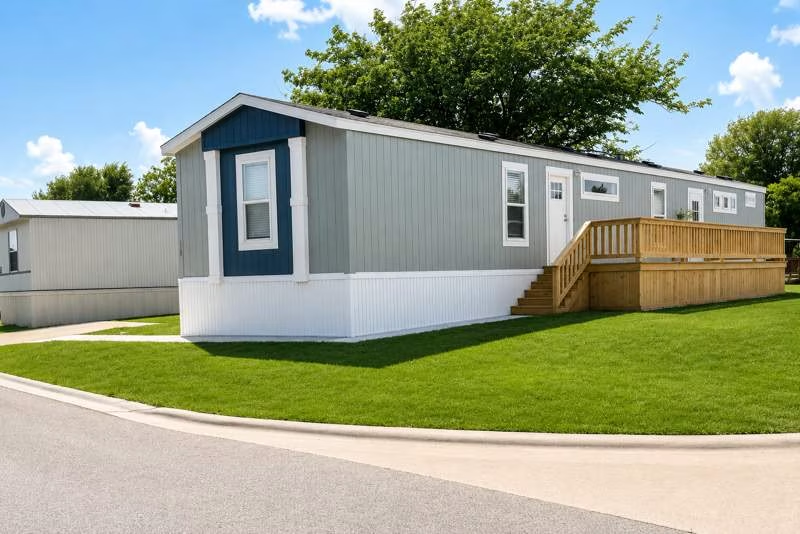
Renting a manufactured home can offer useful space, a private entrance, and the feel of a neighborhood at a more attainable price point than many other housing options. It can also come with details that differ from apartment living.
Ask whether the rental amount covers both the home and the homesite. If not, request a written breakdown. Confirm who is responsible for lawn care, snow removal where applicable, and upkeep of features such as skirting, steps, or outdoor fixtures. Ask whether there are restrictions on adding a fence, garden, storage structure, or satellite equipment.
Location inside the community can matter as well. A home near an entrance, playground, mailbox area, or community building may be convenient for one household and less ideal for another. Visit at a time when you can see normal activity, if possible. The goal is not to find a silent neighborhood. It is to choose one whose rhythm feels right for you.
Before submitting an application, write down the answers that affect your budget, move-in date, and household routine. A thoughtful decision starts with straightforward questions and ends with a home where you can settle in, participate in the community, and build a more stable next chapter.