A manufactured home move is not simply a matter of hitching up and heading down the road. Before the first axle turns, your home, your moving company, the current property, and the destination community may all need to meet specific requirements. Understanding manufactured home relocation requirements early can protect your budget, prevent scheduling delays, and help your household arrive ready to settle in.
The details vary by state, county, home age, and destination. Still, the most successful moves follow the same principle: confirm that the home can be moved legally and safely, then make sure the new site is prepared to receive it.
Start With the Destination Community
If you plan to move into a manufactured home community, begin there – before hiring a transporter or applying for permits. A community needs to confirm that it has an available lot suitable for your home and that your home meets its standards for age, size, condition, and appearance.
This step is about more than paperwork. Communities are responsible for protecting infrastructure, maintaining property standards, and supporting a neighborhood where residents can feel secure and proud to live. A home that fits one site may not fit another due to lot dimensions, utility placement, road width, setbacks, or local zoning rules.
Ask the community what information it needs to review your home. It may request the year, make, model, dimensions, photos, serial or HUD label information, and proof of ownership. Some communities also require a resident application and approval before a move-in date can be scheduled.
At Medallion Communities, prospective residents who bring in their own home should expect a clear review process designed to confirm the home and site are a good fit. That upfront conversation helps avoid an expensive situation where a home is already in transit but cannot be installed as planned.
Confirm lot, utility, and installation details
A vacant lot is not automatically move-in ready. Verify where water, sewer, electric, and gas connections are located, whether the lot needs grading or site work, and who is responsible for each task. Ask whether a new pad, skirting, steps, landscaping, or driveway work will be needed.
You should also confirm the installation standard. Most jurisdictions require manufactured homes to be installed according to federal standards and applicable state or local rules. The installer may need to use an approved foundation system, anchors, tie-downs, piers, and leveling methods appropriate for the home and the site.
Verify That the Home Is Eligible to Move
Not every manufactured home can or should be relocated. Age, condition, construction type, and prior modifications can affect whether a mover, insurer, local authority, or destination community will approve the move.
The first practical question is whether the home can travel safely. A qualified manufactured-home mover can inspect the frame, axles, wheels, hitch, roof, siding, and structural condition. Homes that have been heavily altered, have significant water damage, or have compromised frames may require repairs before they can move. In some cases, relocation costs exceed the value of the home.
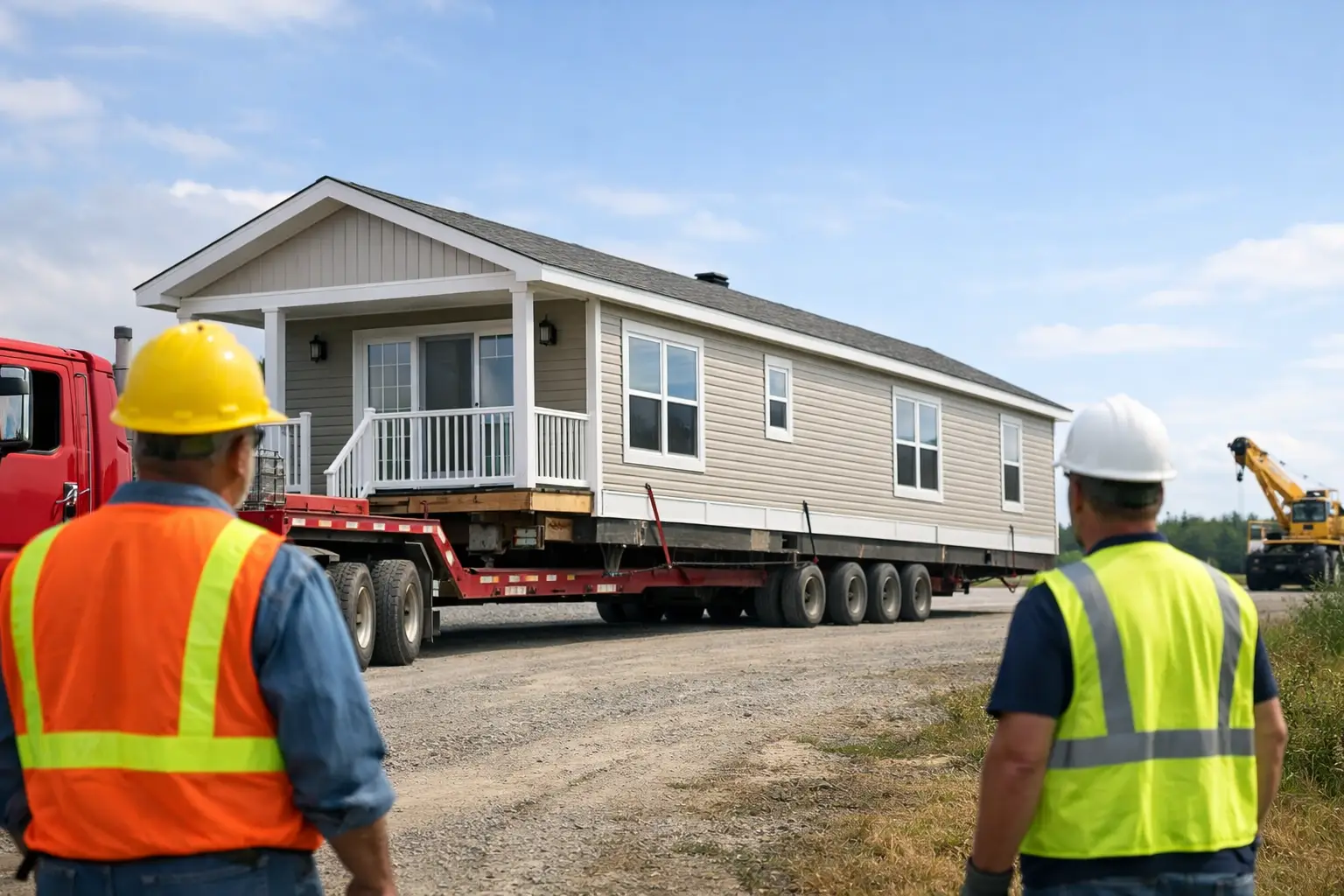
If your home is a multi-section model, each section generally travels separately and is rejoined at the destination. That adds work for disconnecting utilities, removing skirting and exterior features, transporting sections, and completing the final installation. It also increases the importance of accurate measurements and a clear schedule.
Gather ownership and title documents
Ownership documentation is often central to the move. Requirements differ by state, but you may need a clear title, registration, bill of sale, or other proof that you have the legal right to relocate the home. If there is a loan on the home, contact the lender early. A lienholder may need to approve the move or provide documentation before the title can be transferred or permits can be issued.
Many states also require confirmation that property taxes are current before they will issue a moving permit. If the home is located in a community, make sure your rent, utility balances, and any applicable move-out obligations are resolved with the current owner or manager. An unpaid balance can delay the release of the home.
Keep copies of every document in one place, including your title, tax clearance, insurance information, community approval, mover contract, and permit records. A move involves several parties, and having documents ready can keep a small question from turning into a missed moving date.
Permits, Routes, and Local Rules
Manufactured home relocation requirements often include permits from the state, county, city, or transportation department. The moving company commonly handles transportation permits, but you should confirm exactly what is included in its service and what remains your responsibility.
Oversize-load permits may be required because of the home’s width, length, height, and weight. The approved route can account for bridge clearances, construction zones, narrow roads, power lines, and traffic restrictions. Some moves require escort vehicles, utility coordination, or travel during specific hours.
Local building or installation permits may be separate from road permits. The destination jurisdiction may require inspections for the foundation, utility connections, electrical work, plumbing, or final setup. Do not assume that a transportation permit authorizes occupancy after arrival. Moving the home and installing it are related jobs, but they are not always governed by the same office or permit.
Because rules can change between neighboring counties, ask the destination community and local permitting authority which approvals apply to your specific lot. A reputable mover and licensed installer can help coordinate the process, but the homeowner should understand the timeline and retain the records.
Choose Qualified Professionals and Clarify the Scope
The lowest transportation quote is not always the lowest-cost move. A quote may cover only hauling, while another includes disconnection, reassembly, set-up, permits, escorts, utility coordination, or insurance. Compare scopes of work line by line.
Use professionals who are properly licensed and insured for manufactured home transport and installation in the relevant state. Ask how they handle route permits, weather delays, unexpected site conditions, and damage claims. Confirm who will remove and reinstall skirting, steps, porches, awnings, HVAC equipment, and attached structures.
Before signing, make sure the contract states the home dimensions, pickup and delivery locations, expected timing, payment schedule, included services, and responsibilities for permits. It should also identify what happens if the home cannot be moved on the planned date due to weather, road restrictions, incomplete site work, or missing approvals.
Insurance deserves a close look. The mover’s coverage and your homeowner insurance may protect different parts of the process. Ask your insurer whether the home is covered while in transit, during installation, and before utility connections are complete. If coverage changes during the move, arrange the right policy before work begins.
Prepare the Home and the Site Before Moving Day
A good relocation plan leaves little to chance. Inside the home, secure loose items, remove valuables, and protect breakables. Disconnect utilities through the proper providers and make arrangements for any required inspections. Exterior items such as sheds, decks, fences, satellite dishes, and window air conditioners may need to be removed or handled separately.
At the destination, confirm that access roads are clear and that the lot is ready. Trees, parked vehicles, low-hanging branches, soft ground, and unmarked utility lines can stop a move at the last minute. The site should be prepared before the home arrives, not while the transport crew is waiting.
Plan for the period between delivery and move-in, too. Setup, inspections, utility activation, and final finishing work can take time. The exact schedule depends on weather, permit availability, contractor coordination, and the condition of the lot. Building in a reasonable buffer is usually more affordable than rushing work that affects safety or long-term maintenance.
Budget for the Full Relocation, Not Just Transportation
Moving a manufactured home can involve transportation, permits, inspections, site preparation, installation, utility connections, repairs, insurance, and community-related fees. The total depends heavily on distance, home size, route complexity, local rules, and the condition of both the home and the destination lot.
Get written estimates for each major part of the project and ask what could change the price. For example, a short move can still become costly if the home needs frame repairs, the route requires escorts, or the lot needs a new foundation system. On the other hand, a well-prepared lot and a home in good traveling condition can reduce surprises.
Relocating a home can be a smart path to attainable homeownership and a stronger neighborhood fit. The best next step is simple: get approval from the destination community, confirm the home’s condition and documents, and build your schedule around permits and site readiness. With those pieces in place, your move can lead to more than a new address – it can lead to a community where you feel at home.