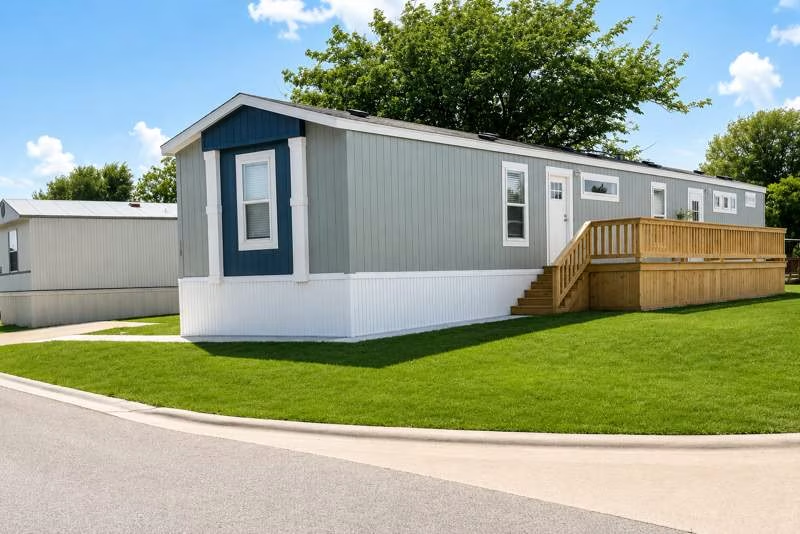
A lot can look perfect on paper, then feel too tight the first time you try to picture your car, your patio chairs, your trash bins, and your daily routine all fitting into the same space. That is why learning how to choose lot size matters before you apply, buy, or move a manufactured home. The right lot does more than hold a home – it supports the way you want to live.
For many households, lot size is not about getting the biggest space available. It is about finding the right fit for your home, your budget, and your day-to-day comfort. A larger lot may give you more room to spread out, but it can also come with higher site costs, more upkeep, and more decisions about how the space will be used. A smaller lot may be easier to maintain and more affordable, but only if it still gives you enough breathing room.
How to choose lot size without guessing
The best way to approach lot size is to start with real-life needs, not just square footage. Think about how you park, where people enter the home, whether you want outdoor seating, and how much open space actually matters to your household. If you already own a manufactured home and plan to move it into a community, the question becomes even more practical. The lot has to work with the home’s dimensions, utility connections, access points, and local community standards.
A common mistake is focusing only on whether the home technically fits. A home can fit on a lot and still leave you frustrated with limited parking, cramped outdoor space, or awkward placement near a road or neighbor. That is why the smarter question is not just, “Will it fit?” It is, “Will it feel right after move-in?”
Start with the home itself
Before you compare lots, know the size and setup of the home you want. Single-section and multi-section manufactured homes have very different footprints. The length and width matter, but so do stairs, skirting, utility hookups, and any features that extend beyond the home body itself.
If you are bringing in your own home, confirm the exact measurements and transport requirements early. Some lots can handle a certain width more easily than others, and community access roads or placement angles can affect whether installation is straightforward or complicated. A lot that looks large enough in theory may still create challenges during set or tie-down.
If you are choosing from homes already available in a community, this part is easier, but it still helps to ask how the home sits on the lot. Two similar homes can feel very different depending on where they are positioned and how much usable outdoor area is left around them.
Usable space matters more than raw space
Not every foot of a lot feels equally useful. A narrow strip along one side of the home may count toward lot size, but it may not give you much practical value. The same goes for oddly shaped corners, sloped areas, or space interrupted by utility equipment.
When you look at a lot, think in terms of how you will actually use the space. Can you park comfortably? Is there room near the entrance for guests to walk up without feeling squeezed? If you want a small grill, a bench, or a few plants, where will they go? These details often matter more than the stated dimensions.
Match the lot to your lifestyle
A household with two vehicles, visiting family, and children playing outside will likely define “enough space” differently than a single resident who wants a low-maintenance setup. There is no universal right answer here. The right lot size depends on how much outdoor function you need and how much upkeep you want to take on.
If you value privacy, pay attention to spacing between homes and the way neighboring lots are arranged. Sometimes a modest lot with smart placement feels more private than a larger lot in a busier section of the community. If convenience matters more, you may prefer a lot closer to community amenities, mail access, or the main entrance, even if the outdoor footprint is a bit smaller.
This is where trade-offs become real. More room can mean more flexibility, but it can also mean more responsibility. Smaller can mean simpler, but only when it does not feel restrictive.
Budget is part of how to choose lot size
Lot size affects more than appearance. It can influence monthly site costs, setup costs, and maintenance expectations. That does not mean you should automatically choose the smallest option to save money. It means the lot should earn its cost by improving your daily life.
If your budget is tight, focus on the space you will truly use. A manageable lot with solid parking, comfortable entry access, and enough room for basic outdoor living may serve you better than paying extra for square footage that stays empty. Attainable housing works best when your monthly costs stay predictable and your home still feels comfortable.
On the other hand, if you know outdoor space is important to your household, trying to save a little upfront by choosing too small a lot can lead to frustration later. A cramped setup can affect everything from vehicle parking to how welcoming the home feels.
Think beyond move-in day
Lot size decisions often feel urgent during the application or buying process, but this choice will shape your experience long after move-in. Ask yourself what the space will feel like six months from now, not just what it looks like today.
Will your work schedule mean multiple cars coming and going? Do you expect frequent visitors? Are you planning to stay for several years? A lot that feels fine for a quick decision may feel limiting once daily routines settle in. Choosing with a longer view helps you avoid that mismatch.
Community rules and infrastructure matter
In a well-managed manufactured home community, lot size is only one piece of the picture. Community standards, road access, utility placement, setbacks, parking rules, and home-size requirements all shape what a lot can realistically support.
This is especially important if you are moving your own home into a community. The lot has to be compatible not just with the home, but with the infrastructure around it. Utility hookups need to align. Access for installation needs to be workable. The home must meet community requirements for size, condition, and placement.
That kind of structure is a good thing. Clear standards help protect property appearance, resident safety, and long-term quality of life. In a community-focused setting, the goal is not simply to fill a space. It is to create an environment where homes fit well, streets stay accessible, and residents feel proud of where they live.
Walk the lot if you can
Photos and dimensions help, but walking a lot gives you a much better sense of scale. Stand where the front door would be. Look at the distance to the road, the parking area, and the neighboring homes. Notice whether the lot feels open, tucked in, quiet, or busy.
Try to picture ordinary moments, not just move-in day. Carrying groceries inside. Backing out of your parking space before work. Sitting outside in the evening. Taking the trash out. A lot should support those routines comfortably.
If you cannot visit in person, ask detailed questions. Request measurements, ask about parking layout, and find out how the home will sit on the lot. The goal is to reduce surprises.
Questions that help you choose the right lot size
If you are still comparing options, a few practical questions can quickly narrow the field. How many vehicles need to fit comfortably? How much outdoor space will you actually use each week? Do you want lower maintenance, more privacy, or easier access to amenities? Are you bringing in a home with specific placement needs?
Those questions get you closer to the right answer than square footage alone. They turn lot size from an abstract number into a housing decision that reflects real life.
For many residents, the best lot is the one that balances affordability with comfort and gives the home room to feel settled, not squeezed. In a professionally managed community, that balance matters because your lot is part of a bigger living environment – one where upkeep, layout, and neighbor experience all count. Medallion Communities understands that people are not just looking for a place to set a home. They are looking for a place where daily life feels easier, safer, and more connected.
The right lot size is the one that gives you enough space to live well without paying for more than you need. If a lot supports your home, your routine, and your peace of mind, you are looking in the right direction.