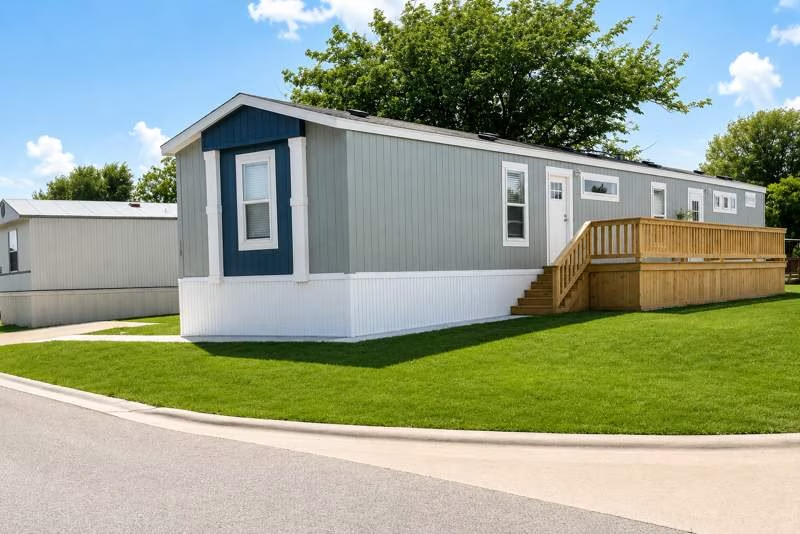
The day your home arrives is not the day the process starts. If you already own a manufactured home and want to place it in a well-managed neighborhood, knowing how to prepare for community move-in can save you time, money, and a lot of avoidable stress.
A successful move-in starts long before transport is scheduled. It begins with making sure your home qualifies for the community, your paperwork is complete, and your budget reflects more than just the moving truck. When those pieces come together early, the actual move feels much more manageable, and your first days in the community can be focused on settling in instead of solving last-minute problems.
How to prepare for community move-in before anything is scheduled
The first step is confirming that the community is the right fit for both you and your home. Every manufactured home community has standards designed to protect property values, maintain safety, and support a clean, welcoming environment for residents. That may include rules about the age, size, condition, skirting, roofing, tie-down requirements, and exterior appearance of incoming homes.
This is where many people lose time. They assume that because they already own the home, they can move it anywhere with an open lot. In reality, lot dimensions, utility access, local code requirements, and community guidelines all matter. A home that works well on one site may need updates or modifications before it can be approved for another.
Ask direct questions early. Find out whether the community accepts outside homes, what documentation is required, and whether the lot can accommodate your home’s width, length, and setup needs. A responsive management team should be able to explain the process clearly, including what happens first, what approvals are needed, and what timelines typically look like.
Start with home approval and resident application
In most cases, there are two approvals involved. The community needs to approve the home, and the community also needs to approve the resident or household applying for the lot. Treat these as equally important.
For the home itself, be prepared to provide details such as the make, model, year, serial information, dimensions, and current condition. Photos are often part of the review. If your home needs repairs, fresh paint, updated skirting, or other exterior improvements, it is better to know that before transportation is arranged.
For your application, expect the same kind of screening you would see in other professionally managed housing settings. That may include identity verification, income review, background screening, and occupancy information. This process is not there to create barriers. It helps maintain a stable, respectful community where residents know management is paying attention to standards.
If you are moving with family members, confirm who needs to be listed on the application and what documents each person needs to provide. Delays often happen when one part of the household paperwork is missing.
Why timing matters
Approval timelines vary. Some homes are ready for review quickly. Others need title work, repair documentation, or updated records before they can move forward. If you are trying to coordinate a sale, a lease ending, or a school-year transition, build in extra time. Rushing rarely makes the process easier.
Understand the true cost of move-in
One of the biggest mistakes people make is budgeting only for transportation. Moving a manufactured home into a community involves several cost categories, and the total depends on distance, local regulations, home size, and site conditions.
Beyond the mover’s quote, you may need to pay for permits, escorts, utility disconnect and reconnect, setup, leveling, tie-downs, skirting, steps, inspections, and lot preparation. If the home is older, repairs may be required before the move or before final approval after installation.
There can also be ongoing move-in costs tied to the homesite itself, such as security deposits, lot rent, application fees, or charges related to activating utility accounts. None of this means community move-in is a bad financial choice. It means accurate planning matters. Attainable housing works best when the numbers are clear from the start.
A practical way to approach this is to separate your budget into three parts: pre-move costs, transport and setup costs, and first-month community costs. That gives you a more realistic picture and makes it easier to spot gaps before they turn into stress.
Inspect the home before you move it
If your home has been sitting in place for years, do not assume it is ready to travel. Manufactured homes experience wear differently than site-built homes, and transport puts stress on the frame, axles, roofline, and connections.
Have the home evaluated for any structural or exterior concerns that could affect transport or community approval. Look closely at roofing, windows, siding, subfloor areas, doors, and undercarriage components. If there has been water intrusion, soft flooring, or deferred maintenance, deal with it early.
This step protects more than your investment. It can also prevent a situation where the home arrives but cannot pass final setup or inspection requirements without additional work.
Documents to gather before move day
Paperwork is rarely the exciting part, but it keeps everything moving. Depending on your state and the home’s history, you may need the title, bill of sale, tax clearance, registration documents, proof of ownership, proof of insurance, and lender authorization if there is an existing loan.
It also helps to keep contact information for the community office, transporter, installer, utility providers, and any local permitting office in one place. When questions come up, and they usually do, having those details ready saves time.
Prepare the homesite, not just the home
A move-in is successful only when the lot is ready to receive the home. That includes confirming access routes, pad conditions, utility locations, setback requirements, and any site-specific limitations such as tree clearance or narrow roads.
This is one reason community standards matter. In a professionally maintained neighborhood, lot preparation is part of a broader commitment to safety, appearance, and long-term livability. Clean streets, working infrastructure, and clear setup requirements are not cosmetic details. They shape your day-to-day experience after move-in.
Ask what site work is already complete and what remains your responsibility. In some cases, the lot may already be graded and utility-ready. In others, additional preparation may be required before the home can be placed.
If your home includes add-ons such as decks, awnings, sheds, or carports, ask whether those are permitted and whether they must be installed after the main home setup is complete. Community rules are there to create consistency, but they also help you avoid spending money on improvements that are not approved.
Coordinate utilities and inspections early
Electric, water, sewer, and in some cases gas service all need to line up with your move timeline. Utility activation is not always immediate, especially if inspections must happen first.
This is another area where early coordination pays off. Confirm who is responsible for each connection and whether licensed contractors are required. Ask when inspections take place, what must be completed beforehand, and whether you need to be present.
If your move occurs during very hot or very cold weather, utility timing matters even more. A short delay can be uncomfortable. A longer one can create problems for appliances, plumbing, or occupancy plans.
Plan for the first week after community move-in
When people think about how to prepare for community move-in, they often focus on getting the home onto the lot. That is only part of the transition. Your first week in the community sets the tone for how quickly the place starts to feel like home.
Keep essential items accessible rather than buried in storage. Important medications, paperwork, chargers, basic cookware, bedding, and cleaning supplies should be easy to reach right away. If setup work is still being finalized, you will appreciate having the basics close at hand.
It also helps to learn the everyday rhythms of the community early. Find out how trash pickup works, where to park, how to handle maintenance questions, and what communication channels the office uses. In communities that offer resident portals or digital tools, setting up your account right away can make rent payments, service requests, and updates more convenient.
Just as important, give yourself a moment to get acquainted with the neighborhood. A well-kept manufactured home community should feel welcoming, orderly, and lived in – not temporary. When management is attentive and residents take pride in where they live, that sense of belonging becomes one of the biggest benefits of move-in.
Expect a few moving parts and stay flexible
Even with strong planning, community move-in can involve shifting timelines. Weather changes, permit offices run behind, transport schedules move, and repair needs sometimes show up late. That does not mean the process is going badly. It means this kind of move has more coordination points than a standard apartment transition.
The best approach is to stay organized, communicate often, and work with a community team that sets clear expectations. If one step changes, you want to know quickly what that affects next.
For many homeowners, the goal is bigger than relocating a structure. It is finding a place that offers affordability, stability, and a real neighborhood feel. Communities like Medallion are built around that idea – giving residents a place where standards are upheld and daily life feels supported, not overlooked.
A move goes more smoothly when you treat it as the start of belonging, not just the logistics of arrival. Ask the extra question, confirm the extra detail, and give yourself enough time to do it right. That preparation is what turns move-in day into the beginning of something solid.