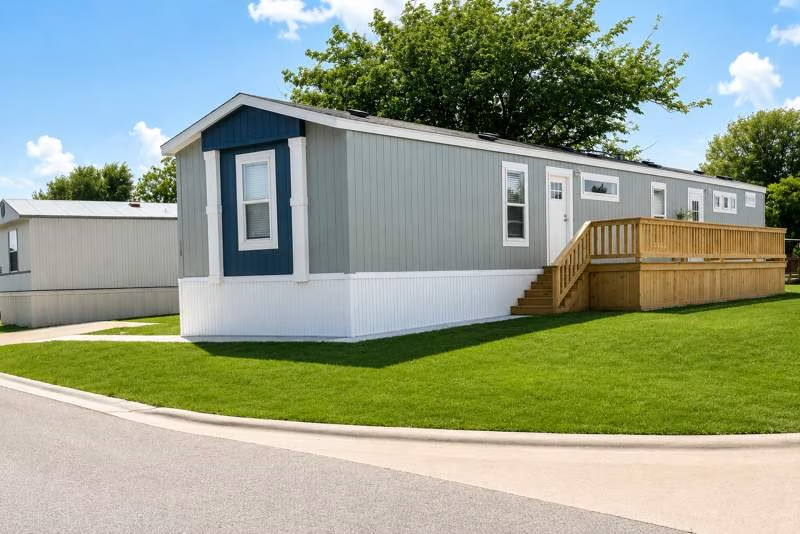
A quiet street, working streetlights, neighbors who wave, and a home that fits your budget – that is the real starting point for a manufactured home community lifestyle guide. For many families, working adults, and retirees, the question is not whether this housing option is “good enough.” It is whether a community feels well run, safe, and worth putting down roots in.
That distinction matters. Manufactured home living is often judged by old assumptions, while the day-to-day reality depends on something far more practical: management, upkeep, community standards, and whether residents feel respected. When those pieces are in place, a manufactured home community can offer a strong mix of affordability, stability, and neighborhood connection.
What daily life really looks like
The best communities do not feel temporary. They feel lived in, cared for, and organized. You notice the basics first – clean common areas, maintained roads, visible lighting, and homes that reflect pride of place. Those details are not cosmetic. They shape how safe a place feels when you get home from work, walk the dog after dinner, or watch your kids ride bikes nearby.
Daily life also tends to be more neighbor-oriented than many apartment settings. People are closer to ground level living, outdoor spaces are more visible, and there is often a stronger sense of who belongs in the community. That can make it easier to build familiarity over time, whether that means chatting outside, joining a seasonal event, or simply knowing someone will notice if a problem needs attention.
At the same time, community living is exactly that – community living. You are not choosing total isolation. You are choosing a setting with shared standards, shared spaces, and a management structure that helps keep things running smoothly.
A manufactured home community lifestyle guide to value
Affordability is usually the headline, but value is the real story. A lower monthly cost only helps if the community supports a stable, comfortable life. That includes predictable housing expenses, a manageable footprint, and fewer surprises around maintenance or neighborhood conditions.
For renters, this can mean getting more space than a typical apartment at a monthly cost that still fits the household budget. For buyers, it can mean a more attainable path into homeownership. For homeowners moving in an existing manufactured home, it can mean finding a community with the right lot setup, infrastructure, and policies to support a long-term fit.
Still, affordable does not mean identical. Costs vary based on location, home size, amenities, age of the home, and whether you are renting, buying, or leasing a homesite. That is why smart comparison goes beyond the advertised price. Look at the full monthly picture and ask what you are getting in return.
What to look for before you choose a community
A good first impression matters, but it should not be the only thing guiding your decision. The strongest communities combine visible upkeep with clear operations.
Start with the grounds. Are streets maintained? Is lighting in place? Do common areas look cared for? Are homes generally well kept? Consistent upkeep usually signals consistent management, and that affects life far beyond curb appeal.
Then look at how the community communicates. Can you easily get answers about availability, applications, rules, and payments? Are expectations clear? A resident portal, straightforward leasing information, and responsive staff may sound administrative, but they make daily life easier. Good systems reduce confusion and help residents handle routine needs without unnecessary friction.
It is also worth asking how management handles concerns. Every community will face occasional issues, from maintenance questions to neighbor complaints. What matters is whether those issues are addressed promptly and fairly. Clean properties and strong standards usually come from attentiveness, not luck.
Amenities are helpful, but management is the difference
Clubhouses, playgrounds, green space, and community activities can add a lot to resident life. They create places to gather and help turn a housing site into a neighborhood. For families, those features may support a more social and active routine. For older adults or busy professionals, they can make the community feel friendlier and more connected.
But amenities are only meaningful when they are maintained. A clubhouse that is rarely open or a common area that looks neglected will not improve your experience. In practice, strong management often matters more than a long amenity list.
That is one reason many residents prefer communities that show steady investment in infrastructure – better roads, improved lighting, cleaner grounds, and visible attention to safety. Those upgrades affect everyone, every day.
Understanding community rules without the stigma
Rules can make people nervous, especially if they worry about too many restrictions. In a well-managed manufactured home community, rules are not there to make life difficult. They are there to protect the quality of life residents are paying for.
Reasonable standards around parking, noise, pets, lawn care, and home exteriors help keep the community orderly and comfortable. They also help preserve the welcoming feel that draws people in to begin with. If one resident lets a lot fall apart or creates repeated disturbances, everyone around them feels the impact.
Of course, there is a balance. Rules should be clear, enforced consistently, and designed to support livability rather than micromanage it. If policies are vague or selectively applied, that can create frustration fast. Before moving in, ask for the community guidelines and read them as a practical document, not a legal formality.
Renting, buying, or moving your own home in
This is where lifestyle and logistics meet. Renting often works well for households that want flexibility, predictable costs, and less responsibility upfront. It can also be a good entry point for people who want to experience a community before making a longer-term decision.
Buying may make more sense if your goal is stability and building a stronger sense of ownership. For many households, a manufactured home provides a more accessible route to having a place of their own without the price tag of traditional site-built housing.
If you already own a manufactured home, moving it into a community can be a strong option, but it requires more due diligence. Not every community can accommodate every home. You need to confirm lot availability, utility connections, home age requirements, dimensions, transport logistics, and any setup standards. This path can work very well, but only when the operational details are clear from the start.
Safety, cleanliness, and belonging matter more than square footage
People rarely stay somewhere just because the rent fits the spreadsheet. They stay because the place feels dependable. They feel comfortable letting their kids play outside, walking to the mailbox after dark, or trusting that concerns will be handled.
That is why safety and cleanliness are not side issues. They are central to the manufactured home community lifestyle. A neighborhood with active management, visible upkeep, and residents who take pride in where they live usually feels more stable. You can sense the difference quickly.
Belonging matters too. A good community does not ask residents to lower their expectations. It gives them a place where affordability and dignity can exist together. That idea is central to how many communities are changing perceptions in this housing category, including Medallion Communities, which emphasizes both value and attentive management.
Questions worth asking on a tour
When you visit, pay attention to what you see and what you hear. Ask how maintenance requests are handled, how rent or lot payments are made, and what the move-in process looks like. Ask whether there are community events, what utility responsibilities residents carry, and how rules are communicated.
Also trust your own read of the environment. Are people outside? Does the place feel calm? Does the staff answer directly? A tour is not just about seeing a home. It is about testing whether the community supports the life you want to build.
The right fit depends on your priorities
No single community is perfect for every household. Some residents want a quiet setting with simple amenities and strong rules. Others care more about social activities, location, or school access. Some want to rent now and buy later. Others need a homesite for a home they already own.
That is why the best choice usually comes down to fit, not hype. Look for a community that matches your budget, your routine, and your standards for cleanliness, management, and neighborhood feel. When those pieces line up, manufactured home living is not a compromise. It is a practical, welcoming way to create stability and feel at home.