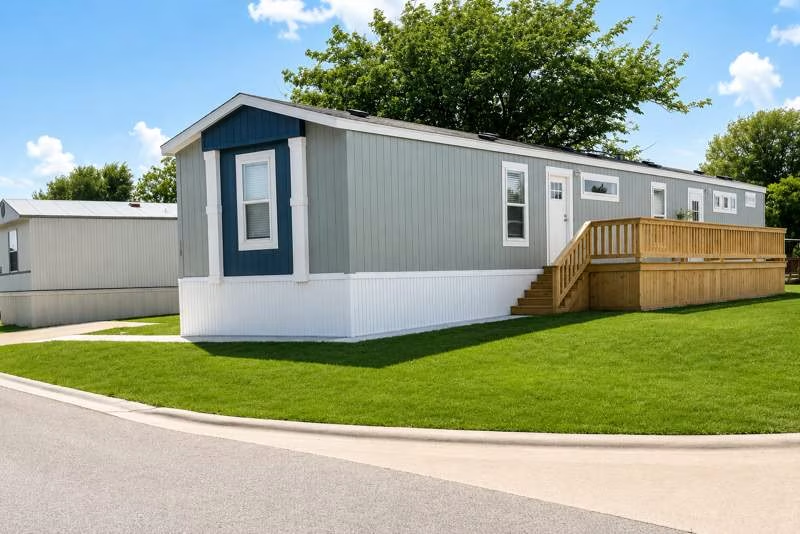
A lot of families start with the same question: how do you get enough space, a safe neighborhood feel, and monthly costs you can actually live with? For many households, the best affordable manufactured homes for families offer a practical answer – especially when the home is paired with a well-managed community that supports everyday life.
Manufactured housing has changed, and families know it. The old stereotypes do not match what many buyers and renters are actually looking for now: clean streets, predictable costs, responsive management, and homes with layouts that work for real family routines. That is why the search should never stop at the home itself. A family home is not just square footage. It is also where the kids play, whether the streets feel cared for, and how quickly issues get handled when life happens.
What makes a manufactured home a strong family fit
The best family-friendly manufactured homes are not always the biggest ones. They are the ones that use space well. A smart three-bedroom layout can feel more functional than a larger home with wasted hallway space or a cramped kitchen.
For most families, the right layout starts with bedroom separation and a common area that can carry a lot of daily traffic. Parents often prefer a primary bedroom set apart from the kids’ rooms for privacy. Families with younger children may want bedrooms closer together. It depends on the age of the kids, work schedules, and whether anyone needs a quiet area for schoolwork or remote work.
The kitchen matters more than many people expect. In family homes, it usually becomes the command center – meals, homework, conversations, calendars, and everything in between. Look for enough counter space, usable cabinet storage, and room to move without everyone bumping into each other. An open living and kitchen area can make the home feel larger and more connected, but some families still prefer a little separation for noise control. Neither is better across the board. It comes down to how your household actually lives.
Storage is another detail that separates a workable home from a frustrating one. Closets, pantry space, laundry placement, and entry storage all make a difference once a family moves in. A home can look great during a showing and still fall short once backpacks, coats, groceries, and laundry become part of the picture.
Best affordable manufactured homes for families: what to prioritize
Affordability is about more than the sales price or rent amount. Families need to look at total monthly housing cost. That includes lot rent if applicable, utilities, insurance, maintenance expectations, and any community fees. A lower upfront price can still become a strain if the ongoing costs are not clear.
That is why families often do best when they focus on value instead of chasing the absolute lowest number. Value means the home is reasonably priced, but it also means the community is maintained, the rules are clear, and the environment supports long-term stability. Saving money matters. So does avoiding avoidable stress.
Three-bedroom homes are usually the sweet spot for families because they balance cost and flexibility. They can give parents a separate room, space for children to share or spread out, and an extra room that can serve as a nursery, office, or guest space when needed. Two-bedroom homes can still work well for smaller households or buyers who want to keep costs down, but they usually require more compromise over time.
Single-section homes often appeal to families focused on monthly affordability. They can be efficient, easier to maintain, and less expensive than larger multi-section options. Multi-section homes usually offer more living space, larger kitchens, and more separation between rooms. If the budget allows, they can feel much closer to a traditional site-built layout. If the budget is tight, a well-designed single-section home in a strong community may be the better long-term decision.
Why the community matters as much as the home
Families do not just move into a floor plan. They move into a neighborhood experience.
This is where a lot of housing searches go wrong. People compare bedrooms, finishes, and prices, but they do not spend enough time evaluating the community itself. For families, that part is critical. You want to know whether the property feels cared for, whether management is visible and responsive, and whether the environment supports a real sense of belonging.
A well-run manufactured home community can change the entire experience of affordable housing. Clean common areas, maintained streets, lighting, clear expectations, and a team that follows through all contribute to daily peace of mind. Those details are not cosmetic. They influence how safe residents feel, how proud they are to live there, and how stable the community remains over time.
Amenities can help too, but they should not distract from the basics. A clubhouse or gathering space can add value for families who want social connection and community activities. Still, the essentials come first: upkeep, communication, and management standards that protect quality of life.
That reputation shift matters. Families today are choosing manufactured housing because it can offer a more attainable path to stable living, not because they are settling for less. In many cases, they are making a smart trade-off – lower costs without giving up the neighborhood feel they want.
Renting versus buying: which is better for your family?
There is no one answer here, and families should be careful about blanket advice.
Renting a manufactured home can be a strong option for households that want flexibility, lower upfront costs, or time to build savings. It can also reduce some of the maintenance responsibilities that come with ownership. For families adjusting to a new job, a school change, or a tighter budget, renting may offer the predictability they need right now.
Buying can make sense for families looking for more permanence and a path toward homeownership at a lower cost than many traditional homes. It may provide more control over the space and, depending on the situation, better long-term value. But ownership comes with more responsibility, and families should be realistic about ongoing expenses.
Some households also already own a manufactured home and need a well-managed place to move it. In that case, the quality of the community becomes even more important. Families need confidence that the lot, infrastructure, and management standards will support both the home and the household for years to come.
How to compare options without getting overwhelmed
The easiest way to narrow the search is to focus on daily life instead of showroom impressions. Ask yourself where your kids will do homework, where groceries will go, whether the bathroom setup works on busy mornings, and whether the neighborhood feels like a place you would want to come home to every night.
Price filters help, but they should not be the only tool. Families should also compare bedroom count, square footage, community features, location, and the condition of the property. A slightly higher monthly cost may be worth it if the home saves space-related stress and the community is clearly better managed.
Pay attention to how easy it is to get answers during the search process. Clear listings, transparent pricing, and straightforward application steps often reflect a more organized housing provider. The same goes for resident tools that simplify routine tasks like payments and communication. Those details may seem small at first, but they can improve the day-to-day resident experience in a meaningful way.
For families considering communities like Medallion Communities, that combination of affordability, responsive management, and community standards is often what makes the difference. The goal is not just to find a lower-cost home. It is to find a place where your household can settle in and feel supported.
Red flags families should not ignore
If a community looks neglected, assume the problems are deeper than what you can see in one visit. Poor upkeep often signals inconsistent management, and that can affect everything from rule enforcement to maintenance response times.
Vague pricing is another warning sign. Families should know what is included, what is separate, and what costs may change. If getting basic answers feels difficult before move-in, it may not get easier later.
It is also worth watching for layouts that look spacious online but feel awkward in person. A family home needs more than visual appeal. It needs workable flow, enough storage, and room for real routines.
The best affordable manufactured homes for families are the ones that hold up after the tour, after move-in, and after the first year of everyday life. The right home should support your budget, but it should also support your routines, your comfort, and your sense of stability. When a home and community do that together, affordable living starts to feel a lot more like home.