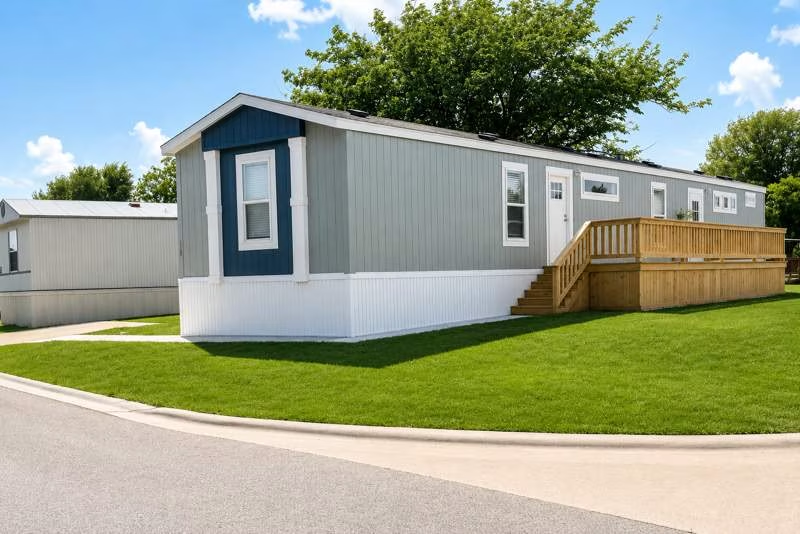
When someone asks about manufactured home community lot availability, they are usually asking more than one question at once. Is there an open site right now? Will my home fit? What will monthly costs look like? And just as important, will this feel like a place where I can settle in and stay? Those questions deserve straight answers, because finding the right lot is not just about parking a home. It is about choosing a neighborhood, a management team, and a day-to-day living experience.
What manufactured home community lot availability really means
A lot may look available on paper, but that does not always mean it is ready for every home or every timeline. In a well-managed community, availability depends on whether the site has the right utility connections, whether the size and setup match the incoming home, and whether the placement can meet community standards and local requirements.
That is why lot availability is never just a simple count of empty spaces. A community may have several open sites, but only one may be suitable for a multi-section home. Another may be ideal for a home already in the community portfolio but not for a resident bringing in an outside home. For renters and buyers, that difference matters because it affects move-in timing, upfront costs, and how quickly housing plans can come together.
Why lot availability changes so often
Manufactured home community lot availability can shift week to week, and sometimes day to day, especially in areas where affordable housing options are limited. A site may open because a resident purchased a home elsewhere, relocated for work, or transitioned from lot rental into a home within the same community. At the same time, that site may not be market-ready until inspections, cleanup, utility checks, or repairs are completed.
Demand also plays a major role. Communities in strong job corridors, near schools, or close to shopping and transportation tend to see faster turnover and faster absorption. In some markets, available lots move quickly because households are looking for a more predictable monthly housing option without giving up a neighborhood feel.
Seasonality can have an effect too. Families often try to move around school schedules, while weather can slow home transport and setup in certain regions. So when someone hears that a lot is opening soon, “soon” can mean different things depending on permitting, site prep, and the home itself.
What affects whether a lot is the right fit
Home size and site dimensions
Not every lot fits every manufactured home. Width, length, roofline clearance, skirting requirements, driveway access, and setback rules all matter. A site that works well for a single-section home may not be appropriate for a larger multi-section model.
This is one reason well-run communities ask detailed questions early. It saves time for everyone. If you already own a manufactured home and plan to move it in, having exact dimensions and transport details ready can help determine fit much faster.
Utility infrastructure
A lot also needs the right infrastructure. Water, sewer, and electric connections must be in place and compatible with the incoming home. In some communities, upgrades to pedestals, lines, or pads may be needed before a site can be offered.
From a resident perspective, this is actually a good sign when handled properly. It shows the community is paying attention to long-term livability instead of rushing occupancy at the expense of safety or service quality.
Community standards and local rules
Every community has standards designed to protect the resident experience. Those may cover home condition, age, exterior appearance, tie-down requirements, parking, and lot maintenance. Local zoning and permitting rules add another layer.
That can feel restrictive if you are trying to move quickly, but it is also part of what keeps a community clean, stable, and welcoming. Good standards are not there to create friction. They are there to support property upkeep, safety, and a stronger sense of belonging across the neighborhood.
How to evaluate manufactured home community lot availability without wasting time
If you are searching for a place to rent, buy, or move your home into, the fastest path is to look beyond whether a lot is technically open and focus on whether it is actually available for your situation.
Start with the basics. Ask whether the open lot is intended for a community-owned home, a home purchase, or a resident move-in. Then ask about lot dimensions, utility hookups, age or condition requirements, monthly lot rent, and timing for occupancy. Those details tell you much more than an “available” label ever will.
It also helps to ask about the community itself. Is onsite management responsive? Are streets, lighting, and common areas maintained? Are there clear rules that are applied consistently? Affordable housing works best when affordability is paired with stability, and that comes from active management and visible care.
For many households, the real decision is not simply where there is room. It is where there is room and where daily life feels supported.
Availability for renters, buyers, and homeowners bringing in their own home
The needs are different depending on how you plan to live in the community.
If you are renting, lot availability may be less visible because the community may place you in a home that is already on site. In that case, the open “lot” is tied to a ready home, and the main questions become price, floor plan, location within the community, and move-in date.
If you are buying a home in the community, availability often includes both the site and the specific home planned for it. This can simplify the process because the home and lot are already matched. It may also reduce setup uncertainty compared with moving in a home from another location.
If you already own a manufactured home, the process is more detailed. The community has to confirm that your home meets standards, that transport and installation are feasible, and that the lot can support the home properly. That path can be a strong option for homeowners seeking a better-managed neighborhood, but it usually requires more coordination.
Why fast answers matter in this search
People looking for attainable housing are rarely browsing casually. They may be working against a lease end date, a job relocation, a family change, or rising housing costs. That is why communities that provide clear, current information stand out.
A strong experience usually includes straightforward listing details, location-based search options, and a simple application process. Digital tools help, but responsiveness still matters. Residents want to know that when they ask whether a lot is open, they will get a real answer about availability, fit, and next steps.
That combination of convenience and attentiveness helps transform how people view manufactured home community living. It moves the conversation away from old stereotypes and toward what residents actually care about: clean surroundings, respectful standards, predictable costs, and management that follows through.
Signs a community is managing lot availability well
Well-managed lot availability is not just about filling sites quickly. It is about filling them responsibly. A community that is serious about resident quality of life will be transparent about what is open, what is pending, and what requirements apply.
You can often see that in the details. Streets are maintained. Lighting works. Common areas feel cared for. The leasing or sales process is organized. Expectations are clear. Those operational signals matter because they show the same team handling applications and move-ins is also stewarding the neighborhood after you arrive.
That is the standard Medallion Communities believes in. A vibrant, inclusive community does not happen by accident. It takes consistent management, thoughtful upkeep, and a real commitment to residents who want more than just a place to put a home.
The best question to ask first
Instead of asking only, “Do you have a lot available?” ask, “What do you have available that fits my situation right now?” That one change can save time and lead to better options.
It opens the door to a more useful conversation about home size, budget, timing, location, and whether you plan to rent, buy, or bring in your own home. It also helps the community guide you toward the best match instead of a quick answer that may not hold up once details are reviewed.
Finding the right lot is really about finding the right fit. When availability is matched with strong management and a genuine sense of community, the result is more than affordable housing. It is a place where everyday life can feel stable, connected, and worth coming home to.