Rent keeps rising in many markets, starter homes remain out of reach for a lot of households, and families are looking harder at one basic question: where can we find a place that is both affordable and stable? That is why affordable housing trends matter right now. They are not just about pricing charts or policy debates. They shape whether working adults can shorten a commute, whether retirees can stay near family, and whether first-time buyers can find a realistic path into homeownership.
For many households, the biggest shift is practical. People are moving away from the idea that affordability means settling for less. They want predictable monthly costs, a safe neighborhood feel, responsive management, and a home they can actually picture themselves staying in for years. That change in expectations is influencing where demand goes and which housing models are gaining ground.
Affordable housing trends are moving beyond price alone
The old view of affordable housing focused almost entirely on monthly payment. Price still matters, of course, but it is no longer the full story. Residents are weighing total value more carefully. A lower rent does not feel affordable if maintenance is inconsistent, infrastructure is aging, or the community lacks basic standards that support day-to-day comfort.
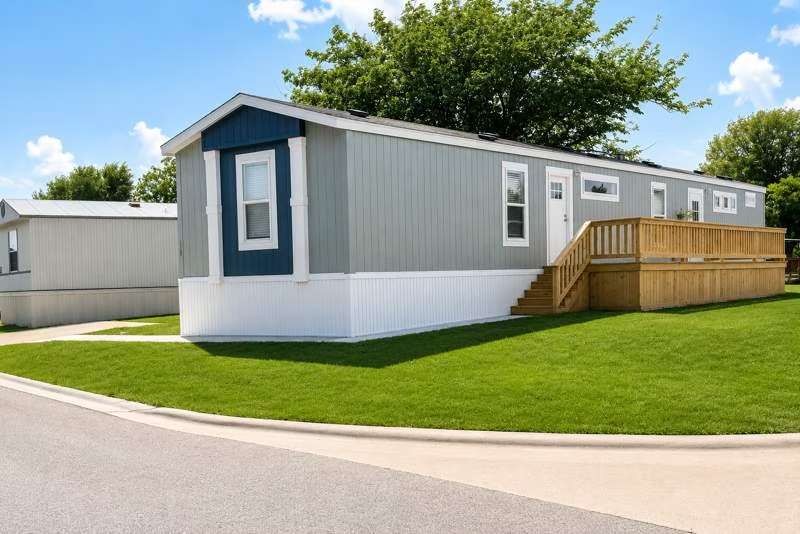
That is one reason well-managed manufactured home communities are getting more attention. They often offer a middle ground that many households have been missing – lower housing costs than many site-built options, paired with the neighborhood structure people want. For renters, that can mean more square footage and a more predictable budget. For buyers, it can mean a more attainable entry point into ownership.
This trend also reflects a broader market reality. Households are tired of trade-offs that leave them choosing between affordability and dignity. They want both. Communities that invest in upkeep, lighting, streets, common spaces, and resident support are standing out because they respond to what people actually value.
Manufactured housing is gaining a more serious look
One of the clearest affordable housing trends is the growing recognition that manufactured housing is not a fringe option. It is becoming part of the mainstream conversation about how to close the gap between income and housing costs.
That shift is happening for a few reasons. First, the affordability gap has become too large to ignore. In many areas, traditional homeownership is simply out of reach for moderate-income households, even those with steady jobs and decent credit. Second, many buyers and renters are reconsidering old assumptions. They are looking less at outdated stereotypes and more at what a community actually offers.
When a manufactured home community is professionally managed, clean, and designed around long-term livability, the value proposition becomes clear. Residents are not just paying for four walls. They are choosing a setting where standards matter, neighbors know one another, and the experience feels grounded and stable.
That does not mean every community is the same. Quality varies, and so do rules, amenities, and management practices. But that is exactly why the conversation is changing. People are evaluating these communities with more nuance than they used to, and that is a healthy development for the market.
Entry-level homeownership is being redefined
For years, entry-level homeownership often meant a small site-built house in an older neighborhood. In many regions, that option has thinned out. Prices, taxes, insurance, and repair costs have moved the goalposts.
Now, more households are redefining what a first home can look like. Manufactured homes are part of that reset. For some buyers, they offer a chance to build stability without taking on the financial strain that often comes with a conventional purchase. For others, they create a bridge – a way to move from renting into ownership while keeping monthly costs closer to manageable.
The trade-offs still matter. Buyers need to understand financing, community fees where applicable, long-term maintenance, and how location affects resale demand. But more families are willing to ask those questions because the alternative is often staying locked out of ownership entirely.
Community quality is becoming a deciding factor
Another major shift is that residents are choosing housing with a sharper eye on management and neighborhood standards. Affordable housing trends are increasingly tied to the full living experience, not just the unit itself.
That means communities with visible operational improvements have an advantage. Clean grounds, maintained roads, working streetlights, clear communication, and consistent rule enforcement all shape whether a place feels secure and welcoming. These details may sound basic, but they strongly influence resident satisfaction and long-term retention.
For families, this is especially important. Parents are not only asking what they can afford this month. They are asking whether the environment feels safe, whether management will respond when issues come up, and whether the community supports a sense of belonging.
This is where the strongest operators are helping reshape public perception. They are showing that affordability and quality management can exist together. Medallion Communities, for example, is part of that wider shift by emphasizing both attainable housing and the kind of community care residents can see in daily life.
Digital tools are quietly changing expectations
Affordable housing is also becoming more operationally efficient. Online applications, resident portals, digital payments, and easier communication with management are no longer extras. Residents increasingly expect them.
This matters because convenience supports stability. When households can apply online, review available homes by price, pay rent through a portal, or get questions answered faster, the housing experience feels more manageable. That can reduce friction for busy working adults and make it easier for prospective residents to compare real options instead of getting stuck in a confusing search.
Digital tools do not replace good management. They support it. If the service behind them is poor, technology alone will not fix the experience. But when both are present, they help affordable communities operate with more consistency and transparency.
More households want flexibility in how they live
One reason affordable housing trends look different today is that residents are not all following the same path. Some want to rent for flexibility. Some want to buy as soon as they can. Some already own a manufactured home and are looking for the right community to move into.
That variety is pushing housing providers to offer clearer options. A family that wants a rental home may prioritize move-in speed, predictable monthly costs, and a simple application process. A first-time buyer may focus more on long-term savings and whether ownership can fit their budget. A current manufactured homeowner may care most about lot standards, infrastructure, and whether management runs the community with consistency.
There is no single ideal model for everyone, and that is part of the story. Affordable housing works best when it gives residents choices that match their stage of life and financial goals.
Supply pressure is keeping affordability in the spotlight
Even as new housing gets built in some markets, supply pressure remains a serious issue. Land costs, construction costs, labor shortages, zoning barriers, and interest rates continue to affect what gets developed and who can afford it.
That means affordability is not likely to be solved by one new apartment project or one policy change. In many areas, the market needs a broader mix of housing types, including options that can be delivered and maintained at lower cost.
Manufactured housing communities fit into that conversation because they can serve households that are otherwise squeezed out of both rental and ownership markets. They are not the answer to every housing challenge. Local regulations, financing availability, and community condition all influence outcomes. Still, they remain one of the more practical options for expanding attainable housing without asking households to wait for a perfect market that may never arrive.
What residents should watch next
If you are trying to make a smart housing decision, the most useful affordable housing trends are the ones that affect everyday life. Watch whether monthly costs are truly predictable. Look at the condition of the community, not just the home itself. Pay attention to how management communicates, how quickly issues are handled, and whether the neighborhood feels cared for.
Also, think long term. A lower upfront cost can be a strong advantage, but stability matters just as much. The right housing choice is the one that fits your budget and supports the kind of life you want to build over time.
The market will keep changing, but one thing is becoming clear: affordable housing is no longer just about finding the cheapest option. It is about finding a place where cost, care, and community finally make sense together.
![Camping Near [Landmark] for a Better Stay](https://medallioncommunities.com/wp-content/uploads/2026/10/camping-near-landmark-for-a-better-stay-featured-150x150.webp)