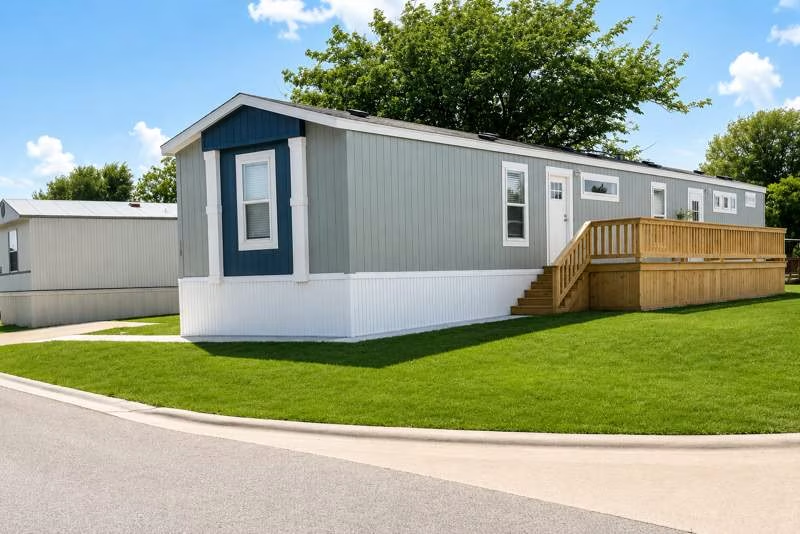
Sticker shock usually happens when someone sees a manufactured home price that feels within reach, then notices a separate monthly charge for the homesite. The next question is the right one: what does lot rent include, and is it actually a good value?
The answer depends on the community, the location, and the services behind the monthly fee. But in a well-managed manufactured home community, lot rent is not just a charge for a patch of land. It often supports the infrastructure, upkeep, and shared features that make day-to-day living more stable, comfortable, and predictable.
What does lot rent include in a manufactured home community?
At the most basic level, lot rent is the monthly fee paid for the homesite where your manufactured home sits. If you own the home but lease the land, this is the charge that gives you the right to occupy that specific lot under the community’s lease terms.
What does lot rent include beyond that basic right to use the lot? Often, it helps cover community operations such as road maintenance, common area landscaping, lighting, stormwater systems, and professional management. In some communities, it may also include trash service, sewer, or other utilities. In others, those costs are billed separately.
That distinction matters. Two communities may advertise similar lot rents, but one may include several services while the other charges extra for them. A lower number on paper is not always the lower monthly cost in real life.
The costs lot rent commonly covers
Most residents are really asking a practical question: what am I getting for this monthly payment? In many manufactured home communities, lot rent supports the physical framework that keeps the neighborhood running.
That usually starts with the homesite itself. You are paying for the use of the lot, along with access to the utility connections and infrastructure that allow the home to function properly. Depending on the community, that may include water, sewer hookups, drainage systems, paved streets, curbs, sidewalks, and maintained common spaces.
It also often covers property-wide upkeep. That can mean mowing and landscaping in shared areas, tree maintenance in common zones, snow removal in colder regions, street lighting, signage, and the general appearance of the neighborhood. These details are easy to overlook until they are missing. Clean grounds, well-kept streets, and visible maintenance are part of what gives a community its sense of pride and stability.
Professional management is another piece of the value. Lot rent may help support on-site or regional teams who handle resident communication, applications, lease administration, rule enforcement, maintenance coordination, and long-term property improvements. For residents, that can translate into faster answers, clearer expectations, and a community that does not feel neglected.
If the neighborhood includes amenities, lot rent may help support those too. A clubhouse, playground, green space, or community activity area does not maintain itself. Even when a resident does not use every amenity every week, those shared features still shape the experience of living there.
What lot rent usually does not include
This is where confusion can happen. Lot rent is not the same as total housing cost.
If you are buying a manufactured home, your mortgage or home loan payment is usually separate from your lot rent. If you are renting the home itself from the community, your monthly payment structure may be different, so it is worth confirming exactly how the charges are broken out.
Utilities are another area to check carefully. Electricity is commonly billed separately. Water, sewer, and trash may be included, partially included, or charged on top of lot rent. Internet and cable are typically separate as well.
You should also expect homeowner’s insurance, property taxes on the home where applicable, and personal maintenance inside the home to be separate costs. If you are moving your own home into a community, setup, transport, skirting, steps, tie-downs, and permitting may be one-time expenses outside of lot rent.
None of this is unusual. It simply means lot rent is one part of the full cost picture, not the whole picture.
Why lot rent can still be a strong value
For many households, the word rent can make the charge feel less appealing. But that misses how manufactured home communities are structured.
In a land-lease setting, lot rent can create access to a more attainable path to housing. Instead of purchasing both a site-built home and the land under it, residents may be able to buy or rent a manufactured home in a neighborhood setting with lower upfront cost. That can make homeownership or long-term housing stability more realistic for families, working adults, and retirees who want predictable monthly expenses.
The real comparison is not just lot rent versus no lot rent. It is total housing value versus alternatives. A community with reliable management, maintained streets, clean common areas, and useful amenities may offer a better everyday experience than a lower-cost option that leaves residents dealing with poor upkeep or unclear expectations.
This is also where reputation matters. Well-run communities help challenge outdated assumptions about manufactured housing by delivering what residents actually want – affordability, safety, responsiveness, and a place that feels cared for.
How to compare one community’s lot rent to another
A smart comparison starts with the full monthly picture, not just the advertised number. Ask for a clear breakdown of what is included in lot rent and what is billed separately. If one community includes sewer, trash, and lawn care in common areas while another does not, the monthly difference may be smaller than it first appears.
Next, look at the condition of the property. Are the roads in good shape? Is the lighting adequate? Do common areas look maintained? Are homesites orderly? A community’s standards tell you a lot about how your monthly payment is being used.
Management quality should carry real weight too. Responsive management is not a luxury. It affects billing clarity, rule enforcement, maintenance follow-through, and the overall sense of order in the neighborhood. If residents can easily pay rent online, submit information, and get answers, that adds convenience many people now expect.
Amenities matter, but only in context. A pool or clubhouse sounds great, but not if you are paying more for features you will never use. On the other hand, a playground, green space, or activity center may be a real benefit for households that want a stronger neighborhood feel.
Finally, ask about increases. Lot rent can change over time, just like other housing costs. It is fair to ask how often rates are reviewed, whether utilities are submetered, and what kinds of capital improvements or operating expenses may affect future pricing.
Questions to ask before you sign
If you are trying to figure out what does lot rent include for a specific property, the best move is to ask direct questions and get direct answers.
Ask which utilities are included and which are billed separately. Ask whether trash pickup is covered. Ask who handles lawn care for common spaces and who is responsible for the homesite itself. Ask whether amenities are part of the monthly charge. Ask about pet fees, parking rules, guest policies, and any other recurring costs that could affect your monthly budget.
If you are bringing in your own home, ask whether the lot is move-in ready and what site requirements apply. If you are buying a home already in the community, ask whether the quoted monthly amount includes only lot rent or combines other charges.
Clear answers upfront help avoid surprises later.
The bigger picture behind lot rent
Lot rent is not just a fee. In the right community, it helps support the systems that make a neighborhood livable – maintained infrastructure, property standards, shared spaces, and management that stays engaged.
That is why the better question is often not simply what does lot rent include, but whether what it includes matches the kind of place you want to live. In communities that prioritize cleanliness, safety, and belonging, monthly lot rent helps fund more than land. It helps sustain the experience of coming home to a place that feels cared for, and that can be worth a great deal.