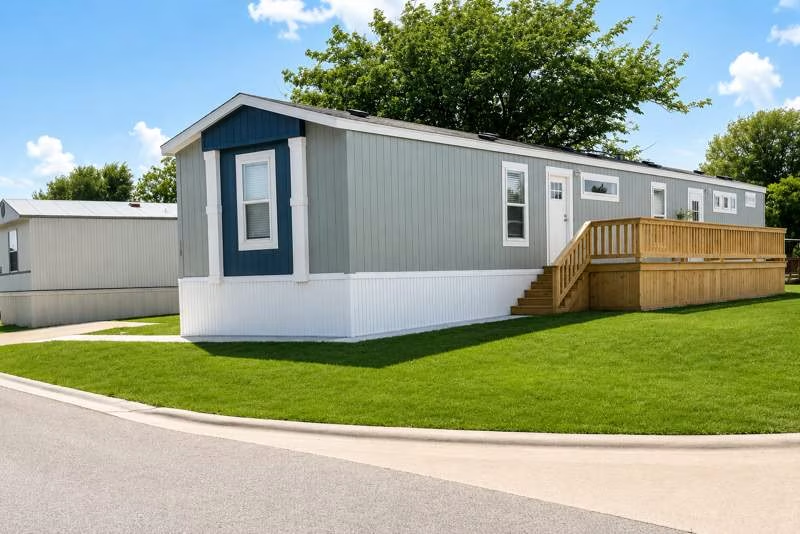
A well-kept neighborhood does not happen by accident. It comes from residents and management sharing clear expectations about how homes, yards, vehicles, pets, and common spaces are cared for. This guide to community rules and standards explains what those expectations are designed to do: protect your comfort at home while helping create a place where neighbors can feel proud to live.
For many households, manufactured home community living offers an attainable path to a home, a neighborhood, and more predictable housing costs. Community standards help preserve all three. They are not meant to take away individuality or make daily life difficult. When they are clear, reasonable, and applied consistently, they support a cleaner, safer, more welcoming place for everyone.
Why Community Rules Matter
Every resident experiences the condition of a community, even when an issue begins on one homesite. An overgrown yard can attract pests. A vehicle parked where it blocks access can create a safety concern. Unapproved exterior work may affect utility lines, drainage, or the appearance of nearby homes.
Rules give residents a shared baseline. They clarify what is expected before a concern becomes a disagreement, and they help management address issues fairly rather than subjectively. This matters for families who want children to play outside, working adults who want to come home to a calm environment, and homeowners who want their property to remain a source of pride.
Strong standards also help challenge outdated assumptions about manufactured home communities. Thoughtful landscaping, maintained streets, working lighting, respectful neighbors, and responsive management all contribute to the quality of life residents deserve. At Medallion Communities, that stewardship is part of building communities where people can put down roots.
What Community Standards Usually Cover
Your lease agreement, community rules, and local requirements are the official sources for your specific homesite. Details can vary by location, so it is always wise to read the documents provided during the application or move-in process and ask management when something is unclear.
Still, most communities address a similar set of everyday topics.
Home and yard appearance
Exterior standards commonly address lawn care, landscaping, trash storage, skirting, porches, steps, sheds, and the condition of the home exterior. The goal is not to demand identical homes. It is to make sure each site remains safe, orderly, and compatible with the neighborhood around it.
Before repainting, adding a fence, building a deck, replacing skirting, or installing a storage structure, check whether approval is required. A project that improves your home can still create problems if it crosses a lot line, interferes with drainage, or does not meet local code. Getting approval first is usually easier and less expensive than changing completed work later.
Seasonal changes are a practical part of home care. Keep walkways clear, secure outdoor items before severe weather, and address visible damage promptly. If a repair involves community-owned infrastructure or you are unsure who is responsible, contact the office rather than making assumptions.
Vehicles and parking
Parking rules help keep roads open for neighbors, guests, emergency vehicles, school buses, and service providers. Communities may set limits on where vehicles can park, how many are permitted at a homesite, whether street parking is allowed, and which vehicle types may be stored on the property.
Operational vehicles, current registration, and respectful parking habits are common requirements. Commercial vehicles, trailers, boats, recreational vehicles, and inoperable cars may have additional restrictions. These rules can feel specific, but they protect visibility, reduce congestion, and prevent a small parking issue from becoming a daily frustration for an entire street.
If you expect guests, are planning a move, or need temporary space for a contractor, reach out early. Management can explain the local policy and help you avoid an unnecessary violation.
Pets and shared spaces
Pets are part of the family for many residents, which is why clear pet expectations matter. Rules may cover leashes, waste removal, noise, breed or size restrictions, registration, and the number of pets allowed at a home. Service animals and assistance animals may be handled under applicable laws and procedures, so communicate with management if you need an accommodation.
The simplest neighborly practice is also the most effective: keep pets supervised, clean up after them immediately, and address repeated barking or other disturbances. Shared green spaces, sidewalks, playgrounds, clubhouses, and laundry areas work best when everyone leaves them ready for the next person.
Noise, guests, and neighbor consideration
A community is more than a collection of homes. People have different work schedules, family routines, and needs for quiet. Standards around noise, guest conduct, and common-area use help those routines coexist.
Reasonable sound during the day is part of normal life. Repeated late-night noise, disruptive gatherings, or unsafe behavior is different. If a concern arises, begin with a respectful conversation only when it feels safe and appropriate. If the situation continues or involves a serious safety concern, report it to management. In an emergency, contact local emergency services first.
Guests are welcome in many communities, but residents are generally responsible for their guests’ conduct. Let visitors know where to park, how to respect quiet hours, and which spaces are reserved for residents.
How to Follow Rules Without Guesswork
The most useful community standards are easy to understand, but questions will still come up. A good rule of thumb is to ask before you act when a change affects the outside of your home, your lot, utilities, parking, a pet, or a shared area.
Keep a copy of your lease and community rules where you can find them. Review them before starting a project or bringing in a new vehicle, pet, or long-term guest. If you receive a notice, read it promptly and focus on the requested next step. Notices often include a timeline for correction and a contact person who can answer questions.
Documentation can help when a repair or concern has multiple steps. Save approval emails, take dated photos before and after exterior work, and retain receipts for completed repairs. This is not about creating extra paperwork. It helps everyone communicate clearly if a question comes up later.
Digital resident tools can also make routine tasks easier. Using an online portal to pay rent, submit a request, or update contact information helps management respond with accurate details. For time-sensitive maintenance problems, follow the emergency reporting instructions provided by your community.
Fair Enforcement Builds Trust
Rules only serve a community when they are enforced consistently and communicated respectfully. Residents deserve to know what is expected, why it matters, and what they can do to resolve a concern. Management has a responsibility to listen, document issues, and apply policies without favoritism.
There is a balance to maintain. A minor first-time issue may call for a reminder and a reasonable opportunity to correct it. Repeated violations or conditions that create immediate health or safety risks may require faster action. Circumstances matter, but the shared standard should remain clear.
If you disagree with a notice, do not ignore it. Contact the office, explain your perspective, and ask what documentation or corrective action is needed. Many misunderstandings can be resolved quickly when both sides communicate early. If you need additional time because of a contractor delay, illness, or another challenge, ask before the deadline whenever possible.
A Shared Commitment to a Better Neighborhood
Community rules work best when residents see them as part of a shared commitment, not just a list of restrictions. A trimmed yard, a properly parked vehicle, a leashed pet, and a quiet evening each seem small on their own. Together, they create the kind of neighborhood people notice when they visit and value when they live there.
Your home should feel like your own, and your community should feel like a place where neighbors look out for one another. When a question arises, start with the written standards and a conversation with management. That simple step helps protect the comfort, value, and sense of belonging that make a community feel like home.