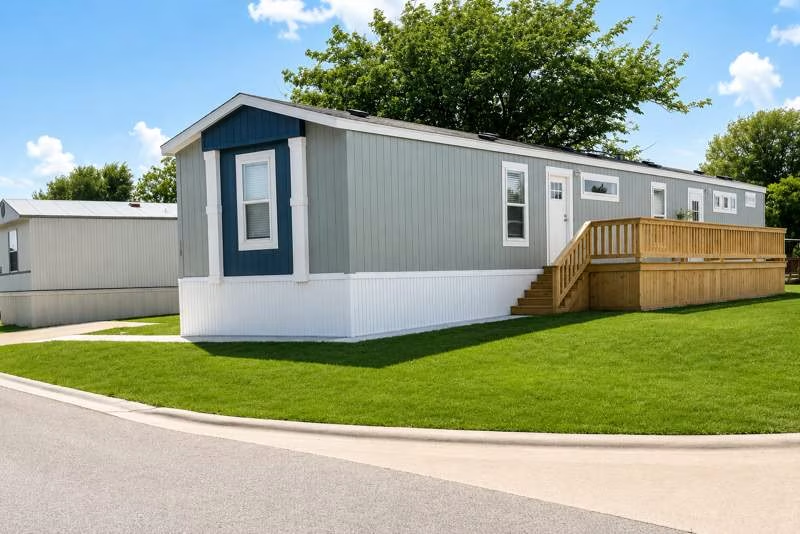
A safe community rarely announces itself with a single feature. You see it in the small details: a parent comfortable walking with a stroller after dinner, neighbors greeting one another, streets that are cared for, and a management team that responds when something needs attention. The best signs of community safety are visible in everyday life, not just in a brochure or online listing.
For families, working adults, first-time homebuyers, and longtime residents, safety is part of what makes a home feel stable. It affects whether you relax on your porch, let children play outside, feel comfortable coming home after a late shift, and trust that concerns will be handled respectfully. As you compare manufactured home communities or any neighborhood, look beyond one quick drive-through. Pay attention to how the community operates.
1. The property is clean, maintained, and cared for
A well-maintained community is not only more pleasant to come home to. It is often a practical sign that standards are in place and people are paying attention. Look at the condition of streets, common areas, landscaping, signage, mailboxes, and lighting fixtures. Are lots generally neat? Are trash areas managed? Do shared spaces look used and respected rather than neglected?
Cleanliness alone cannot guarantee safety, but it reflects daily habits of care. When residents and management both take pride in the surroundings, small issues are more likely to be addressed before they become larger problems. This is especially meaningful in an established manufactured home community, where property upkeep helps protect quality of life and the value of every resident’s home.
2. Lighting supports everyday routines
Good lighting is one of the clearest signs of a community designed for real life. It should make it easier to walk from your car to your front door, take out the trash, check the mail, or walk a dog in the early morning or evening. Pay attention to entrances, street corners, parking areas, pathways, community buildings, and mailbox locations.
The goal is not harsh lighting on every inch of the property. Thoughtful lighting creates visibility where people naturally move through the community. During a visit, consider returning near dusk if possible. A neighborhood can look very different after daylight fades, and this gives you a better sense of whether the space feels comfortable and cared for.
3. Neighbors appear connected and respectful
A strong sense of belonging is one of the most meaningful forms of everyday security. In a connected community, people tend to notice when something is out of place, look out for one another, and share useful information. That does not mean everyone needs to be close friends or know every detail of each other’s lives. It means there is a baseline of courtesy and shared respect.
Listen for the signs during a tour. Are people outside talking, tending to their homes, walking pets, or using common spaces? Do residents acknowledge one another? If you have an opportunity to speak with someone who lives there, ask what they enjoy about the neighborhood and whether management follows through when issues arise. Their answers can reveal much more than a polished sales message.
4. Community rules are clear and consistently applied
Rules are sometimes misunderstood as restrictive, but fair, clearly communicated standards can support a more peaceful place to live. Policies around parking, pets, lot upkeep, noise, guests, and common areas help set expectations for everyone. The key is consistency. Residents should understand what is expected and feel that concerns are handled fairly.
Before choosing a community, ask for the rules and take time to read them. Consider whether they fit your household’s needs, whether you rent, buy, or plan to move in a manufactured home you already own. A good fit is not about finding a community with no standards. It is about finding one whose standards create a clean, respectful environment without making daily life unnecessarily difficult.
5. Management is visible, reachable, and responsive
Responsive management is among the best signs of community safety because it turns policies and maintenance plans into action. Problems can occur in any neighborhood. What matters is whether there is a clear way to report an issue, get an answer, and see appropriate follow-through.
Ask practical questions during your search. How are maintenance concerns submitted? What happens if there is an after-hours issue? How are residents notified about planned work, weather events, or changes that affect the community? Digital resident tools can make routine tasks such as paying rent and submitting requests easier, but technology works best when it is backed by an attentive team.
At Medallion Communities, the focus on active management, property improvements, and resident support reflects a simple belief: affordable housing should still come with a community that is cared for. That kind of stewardship matters long after move-in day.
6. Streets and shared areas are designed for safe movement
Look at how vehicles, pedestrians, children, and pets move through the neighborhood. Are streets in good repair? Are speed limits posted where appropriate? Is there enough room to navigate parking and driveways safely? Do entrances and exits feel orderly and easy to understand?
A community’s layout cannot eliminate every risk, especially in areas with more traffic or limited space. Still, visible attention to road conditions, signage, drainage, and traffic flow shows that management recognizes how residents use the property every day. If children live in the community, notice whether drivers appear to move at reasonable speeds and whether families have spaces where they can gather away from traffic.
7. Homes and lots show resident pride
One home does not define an entire neighborhood. People have different schedules, budgets, abilities, and family responsibilities. But across a community, you can usually see whether residents feel invested in where they live. Maintained porches, tidy yards, seasonal decorations, gardens, and routine exterior care often signal pride and stability.
This point deserves nuance. A community should feel welcoming to people at different stages of life, not judged by perfection. The question is whether there is an overall culture of respect for shared surroundings. When homes and lots are generally cared for, residents are more likely to feel comfortable spending time outside and building neighborly connections.
8. Concerns have a clear reporting path
Safety depends partly on what happens when something does not feel right. Residents should know who to contact for maintenance issues, rule concerns, suspicious activity, or emergencies. For immediate danger, the right step is always to call 911. For non-emergency community concerns, a clear office contact, resident portal, or after-hours process can prevent uncertainty and delays.
Ask how the community handles reports and protects resident privacy. You do not need details about other residents or private situations. You do need confidence that concerns are received, documented when appropriate, and addressed according to established procedures.
9. Amenities encourage positive daily life
A clubhouse, playground, picnic area, or community event will not replace good lighting and attentive management. Yet amenities can strengthen the relationships that make a neighborhood feel more secure. Shared spaces give residents natural opportunities to meet, children places to play, and households a reason to spend time close to home.
The most useful amenities are the ones that are maintained and genuinely fit the community. A simple, clean gathering space can be more valuable than an impressive feature that is rarely used. Notice whether common areas feel welcoming and whether residents treat them with care.
10. You feel informed, not pressured
Trustworthy communities make room for questions. You should be able to understand pricing, lease or purchase terms, application steps, community guidelines, and what is included in your monthly costs. If you are considering moving your own manufactured home into a community, you should also receive straightforward information about lot requirements, approvals, utilities, and the move-in process.
No community can promise that every day will be perfect. Safety is built through consistent upkeep, clear communication, responsive management, and residents who share a commitment to their neighborhood. Give yourself time to visit, ask direct questions, and picture your ordinary routines there. The right community is one where those routines feel not only affordable and practical, but comfortably like home.