Saturday morning tells you a lot about a neighborhood. Are kids riding bikes? Do neighbors wave? Does the property look cared for, or does everything feel neglected? A real guide to finding family friendly communities starts there – not with a brochure, but with the small signs that everyday life will feel stable, safe, and welcoming.
For many families, the search is not just about square footage or monthly cost. It is about whether home will support the life you are trying to build. You may be comparing rent to ownership, looking for a place where your children can play outside, or trying to stretch your budget without settling for a community that feels overlooked. That is why the right community matters as much as the home itself.
What family-friendly actually means
A family-friendly community is not defined by a playground alone. It is a place where daily life works better. Streets feel safe to walk, common areas are maintained, and neighbors share a basic respect for one another. Families tend to notice the same signals quickly: lighting, traffic speed, noise levels, cleanliness, and whether management seems present and responsive.
It also means different things depending on your stage of life. A household with toddlers may care most about outdoor space and quiet evenings. A family with teenagers may focus more on commute times, internet reliability, and nearby activities. Working adults often need predictable housing costs and confidence that maintenance issues or rule violations will not be ignored.
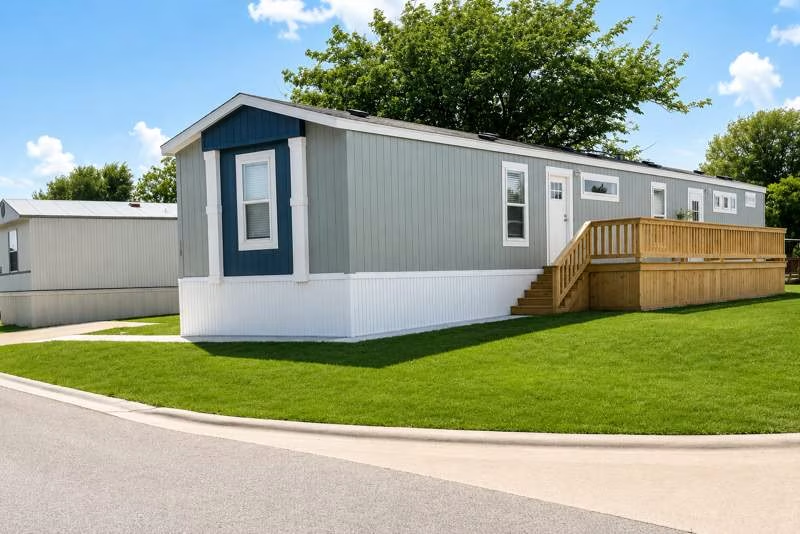
That is one reason manufactured home communities can be worth a closer look. The best ones offer something many families want: attainable housing within a neighborhood setting, with visible standards and a stronger sense of belonging than people often expect. The difference, of course, comes down to management and upkeep.
A guide to finding family friendly communities that fit real life
Start with your non-negotiables. Most families do better when they separate true needs from nice-to-haves before touring any property. Monthly affordability should come first, because even the most attractive neighborhood will create stress if the cost is too tight. Beyond lot rent or monthly rent, look at utilities, insurance, deposits, pet fees if relevant, and commuting costs.
Then think about your routine. How far is work? How long will school drop-off take? Is grocery shopping easy, or will every errand become a long drive? A community can look appealing online and still create daily friction if the location does not support how your household actually lives.
This is where a practical search helps. Look by city or state, narrow by price range, and compare whether homes are available for rent, for sale, or whether the community accepts move-ins for homeowners bringing their own manufactured home. Families often gain more flexibility when they know all three options upfront.
Look past the home and study the streets
When families tour a property, it is natural to focus on the kitchen, bedrooms, and storage. Those matter, but they are only part of the picture. Spend just as much time looking outside. Are roads in good condition? Is lighting adequate? Are homes and common areas neat without feeling overly restrictive? Do you see signs of regular maintenance?
Physical condition tells you whether a community is being managed with care. Fresh paving, trimmed landscaping, working streetlights, and clean shared spaces are not cosmetic details. They are signs that ownership and onsite teams are paying attention to quality of life. That usually translates into a better resident experience over time.
There is a trade-off here. Some communities have lower pricing because upkeep is lighter or infrastructure is older. That may still be a workable fit for some households, especially if location is excellent. But if you want long-term stability, visible reinvestment often matters more than the lowest advertised monthly number.
Pay attention to management quality
Good management can make an affordable community feel secure, organized, and welcoming. Weak management can undermine even a decent property. Families should ask straightforward questions: How are maintenance requests handled? What are the community rules? How quickly are concerns addressed? Is there an onsite office or a clear resident support process?
You can learn a lot from how these questions are answered. Clear, direct responses usually reflect a team that has systems in place. Vague answers, inconsistent policies, or a dismissive tone can be warning signs. Families need community standards, but they also need confidence that those standards are applied fairly and consistently.
Digital tools are worth noting too. Online applications, resident portals, and simple payment options may sound basic, but they reduce stress. When busy households can handle routine tasks efficiently, the community feels easier to live in.
Safety, comfort, and the feel of the neighborhood
No community can promise perfection, and families should be cautious of anyone who tries to. Still, some places clearly feel more secure than others. Visit at different times of day if you can. A property that seems quiet at 10 a.m. may feel very different in the evening.
Watch for practical indicators. Are people outside and at ease? Is there enough lighting after dark? Do speed limits seem respected? Are vacant sites or homes being maintained? Small observations often reveal more than a polished sales pitch.
Talk to residents when appropriate. You are not looking for rehearsed praise. You are listening for comments about responsiveness, cleanliness, and whether people feel comfortable staying long term. The most trustworthy feedback usually sounds specific: management fixed lighting quickly, the grounds are cleaner than they used to be, neighbors look out for one another.
Amenities matter, but only if they get used
Amenities can add value, especially for families, but they should support daily life rather than distract from core quality. A clubhouse, green space, playground, or community events can help residents connect and give children room to enjoy where they live. That said, a long amenities list does not make up for poor maintenance or inconsistent management.
Think about how your household will really use the space. A modest but clean playground may be more meaningful than a larger amenity area that feels neglected. Open space for walking, a place for kids to ride bikes, or a community room for gatherings can shape the neighborhood experience in practical ways.
Families should also consider whether the environment encourages respect. Well-used shared spaces usually reflect a stronger culture of community. When common areas are empty, damaged, or poorly kept, that may point to deeper management issues.
Schools, services, and everyday convenience
For many households, the right community is the one that makes the whole week run more smoothly. That means looking beyond the property lines. Consider access to schools, childcare, employers, medical care, parks, and everyday shopping. Even if your current routine is manageable, life changes quickly. A better location can give your family more flexibility later.
If school access is a priority, verify district information directly and ask about transportation options. If you work irregular hours, pay attention to commute reliability and nearby essentials. Convenience may not be the emotional part of the decision, but it often becomes the reason a place continues to work year after year.
Why affordability should feel stable, not risky
Families looking for attainable housing often face a false choice: lower costs or a neighborhood feel. In reality, the strongest communities offer both. The key is understanding whether affordability is supported by thoughtful management and clear expectations, not by cutting corners.
That is especially relevant in manufactured home communities, where perception often lags behind reality. A well-managed community can offer an appealing combination of value, pride of place, and day-to-day livability. Companies like Medallion Communities have built their reputation around that idea – that families should not have to give up belonging, cleanliness, or responsive management to find a home within reach.
As you compare options, look for pricing that feels sustainable rather than promotional. Ask what is included, what may change, and what the application process looks like. Stability matters more than a low starting number if your goal is to build a comfortable life over time.
A guide to finding family friendly communities with confidence
The best choice usually becomes clearer when you stop asking, “Is this home available?” and start asking, “Can our family live well here?” That shift changes everything. It puts the focus on streets, standards, support, and the kind of environment you come back to every evening.
A good community will not just check boxes. It will show you, in visible ways, that people care about where they live and that management cares about what residents experience. When you find that balance of affordability, attentiveness, and neighborhood pride, you are not simply finding a place to live. You are finding a place where family life can feel a little easier, steadier, and more connected.