Words matter in housing because they shape expectations before a resident ever schedules a tour. When people search mobile home park versus community, they are usually trying to answer a bigger question: Is there a real difference, or is it just a nicer label? The honest answer is that sometimes it is branding, but in the best cases, it reflects a very different living experience.
That distinction matters for families comparing monthly costs, working adults looking for stability, and homeowners who want a clean, well-managed place to move their manufactured home. If you are choosing where to live, the name on the sign matters less than what management does every day. Still, the shift from park language to community language often points to a broader change in standards, expectations, and quality of life.
Mobile home park versus community – what changes in practice?
Historically, the term mobile home park came from an earlier era of factory-built housing. Many properties were designed more like simple lots for homes, with limited amenities and a basic landlord-tenant relationship. The focus was often on providing space, utilities, and little else.
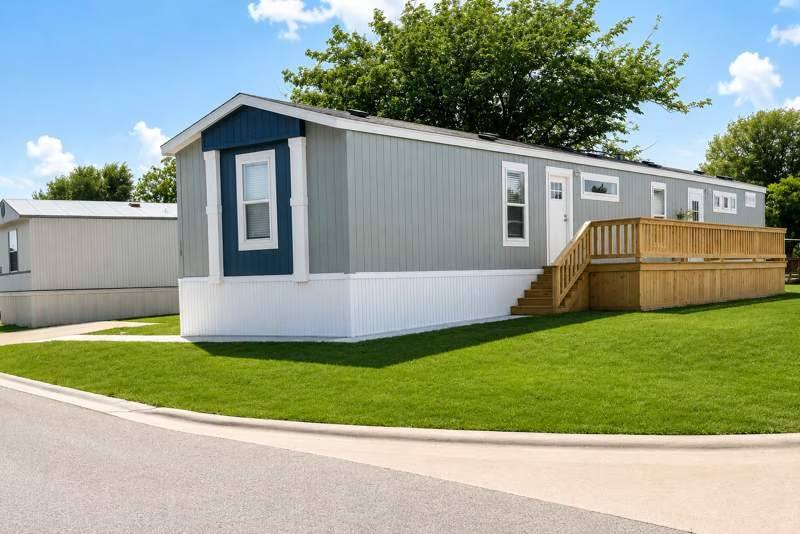
A manufactured home community usually signals a more resident-centered model. That can include clearer property standards, professional management, upgraded roads and lighting, amenity spaces, and a stronger sense that neighbors are part of a shared environment rather than just occupying adjacent lots. The word community suggests belonging, but it also suggests responsibility. If management uses that term, residents should be able to see the difference in upkeep, communication, and day-to-day operations.
That said, language alone is not proof. Some older properties call themselves communities without changing much. Others may still be called parks locally while offering a safe, welcoming, and well-run place to live. The real test is what you experience when you visit.
Why the word community matters to residents
For many people, the old image of a mobile home park comes with assumptions about neglect, instability, or limited oversight. Those stereotypes are outdated, but they still influence how people shop for housing. The word community pushes back on that by emphasizing a different reality – one where affordability and pride of place can exist together.
Residents are not just looking for a home that fits the budget. They are looking for a neighborhood feel, predictable rules, and confidence that problems will be addressed. A true community supports that through visible standards. Streets are maintained. Common areas are cared for. Lighting works. Management answers questions and follows through.
That kind of environment changes daily life. It affects how comfortable people feel walking outside in the evening, letting children play, inviting family over, or staying long term. Affordable housing works best when it also feels stable and respectful.
Management is often the biggest difference
If there is one factor that separates an outdated park model from a real community model, it is management. Onsite teams and regional operators set the tone through enforcement, responsiveness, and consistency.
In a loosely managed property, rules may exist on paper but not in practice. Deferred maintenance builds up. Communication becomes reactive. Residents are left to guess how issues will be handled. That creates frustration quickly, even when lot rent or home prices seem attractive at first.
In a well-managed community, expectations are clearer. Applications are organized. Rent payments are straightforward. Maintenance requests have a process. Residents know who to contact and what standards apply. That structure is not about making a place feel rigid. It is about protecting quality of life for everyone who lives there.
The lifestyle side of mobile home park versus community
The phrase mobile home park versus community also comes down to how a property feels beyond the home itself. Two places can offer similar square footage at a similar monthly cost and still deliver very different experiences.
A community-minded property creates more opportunities for connection and comfort. That might mean a clubhouse, shared green space, community events, playgrounds, pet-friendly policies, or simply a layout that feels intentional rather than crowded. Not every resident wants organized activities, and that is fine. The value is often more basic: knowing you live somewhere people care about.
There is also a practical side to that atmosphere. Properties with stronger standards often hold up better over time because residents and management both contribute to upkeep. When roads, signage, landscaping, and homesites are maintained, the entire neighborhood feels more secure and established.
Affordability still has to lead
Calling a property a community should never mean pricing out the households who need attainable housing. For most renters and buyers in this category, affordability is still the starting point. The goal is not luxury. The goal is value.
That is why the best communities focus on predictable monthly costs and livability at the same time. Residents should not have to choose between a manageable housing payment and a place they feel good about coming home to. Manufactured housing continues to meet a real need because it can create a path to rental stability or entry-level homeownership without forcing people into housing that stretches the budget too far.
This is also where transparency matters. Prospective residents should understand lot rent, home pricing, utility responsibilities, application requirements, pet rules, and move-in standards upfront. A trustworthy community makes those details easier to navigate, not harder.
What to look for when touring a community
If you are comparing options, focus less on marketing language and more on evidence. Start with the condition of the property. Look at the streets, lighting, signage, vacant lots, and common areas. A well-cared-for environment usually reflects stronger long-term management.
Next, pay attention to the homesites themselves. Are yards reasonably maintained? Do homes appear occupied and cared for? Is there a visible standard without the place feeling unwelcoming? Good communities balance pride in appearance with realistic expectations for residents.
You should also ask how management operates. Can you pay rent online? How are maintenance issues handled? What is the application process like? Are there clear rules for residents bringing in their own manufactured home? These details may sound administrative, but they affect your daily experience more than a sales brochure ever will.
If possible, listen to residents. Their comments often reveal the truth about a property faster than anything else. People talk about responsiveness, cleanliness, safety, and whether management follows through. Those are the things that turn a housing option into a place people stay.
When a park and a community are basically the same
There are cases where the difference is mostly semantic. Some long-established properties still use older terms because that is what local residents have always called them. A smaller property may not offer amenities, but it may still be clean, respectful, and professionally managed. In that case, the label matters less than the performance.
There are also communities that are in transition. New ownership may be investing in infrastructure, improving standards, and rebuilding trust over time. Residents may still refer to the property as a park out of habit while the living experience gradually improves. That kind of change does not happen overnight, but it can be meaningful when management is committed to upgrades and clear communication.
For operators like Medallion Communities, the community model is not just a naming choice. It reflects a responsibility to maintain the property, support residents with practical tools, and create neighborhoods where people feel they belong. That is what shifts perception in a lasting way.
The better question to ask
Instead of asking only whether a property is a mobile home park or a community, ask whether it is managed with care. Ask whether the environment feels stable. Ask whether the standards are visible and fair. Ask whether you can picture yourself building a routine there that feels comfortable and sustainable.
The best manufactured home communities do more than offer an affordable address. They support everyday life through clean surroundings, responsive management, and a sense that residents matter. That is not a small difference. It is the difference between simply having a place to put a home and having a place that feels like home.