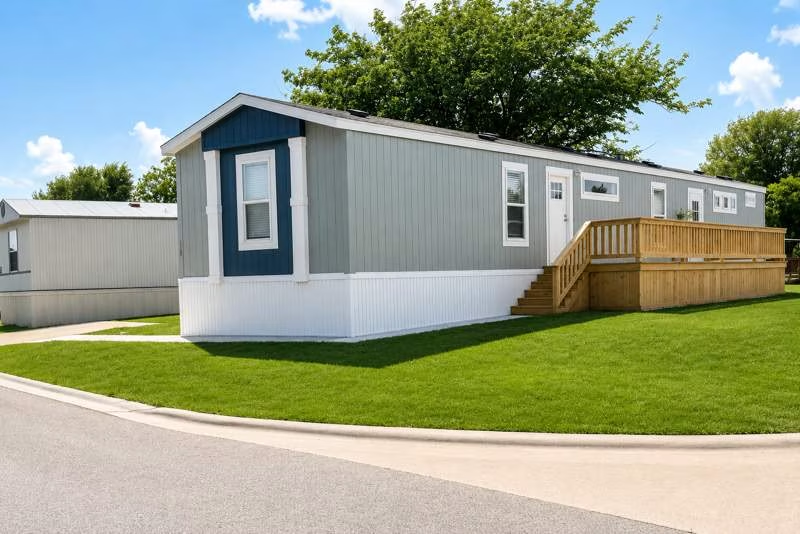
When parents talk about finding family friendly communities, they usually are not talking about a buzzword. They are talking about the walk from the car to the front door after dark. They are talking about whether the streets feel cared for, whether neighbors look out for each other, and whether home still feels affordable after groceries, gas, and school expenses hit the monthly budget.
That is what makes this conversation different from a simple home search. A floor plan matters. Monthly cost matters. But for families and working households, the bigger question is whether a place supports everyday life without adding stress. The strongest communities do that quietly, through good upkeep, practical rules, responsive management, and a real sense of belonging.
What family friendly communities really offer
A family friendly community is not defined by a playground alone. Amenities can help, but they are only one piece of the picture. What families actually feel day to day is stability. They notice whether common areas are clean, whether roads and lighting are maintained, and whether management responds when something needs attention.
That kind of environment affects more than appearance. It shapes how comfortable residents feel letting kids ride bikes, meeting neighbors, or spending time outside. It also influences whether a household sees the community as a temporary stop or a place where they can put down roots.
Affordability is part of this, too. Many families are not looking for luxury. They are looking for value. They want a home and a neighborhood feel without monthly costs that leave no room for savings or emergencies. A well-managed manufactured home community can meet that need in a practical way, especially for renters, first-time buyers, and households trying to make a smart move without overextending.
Safety starts with the basics
When people hear the word safety, they often think about gates or patrols. Those may matter in some places, but the basics usually make the biggest difference. Good lighting, clear streets, maintained lots, and visible management all shape how secure a community feels.
Families pay attention to details. Are abandoned vehicles sitting around? Do residents follow community standards? Is there a process for handling concerns? These are not small things. They show whether the property is being actively managed or simply occupied.
There is also a social side to safety. Communities tend to feel stronger when residents know each other, even casually. A wave from a neighbor, kids recognizing familiar faces, and a shared expectation that common spaces should be respected all help create a more comfortable environment. You cannot force that culture, but management can support it by keeping standards clear and treating residents with consistency and respect.
Affordable does not have to mean settling
One reason manufactured home communities matter for families is simple: housing costs have changed faster than many household budgets. For a lot of working adults, the old choice between renting an apartment or buying a site-built home no longer feels realistic. That does not mean quality has to disappear from the search.
Family friendly communities can offer a different path. They often give residents more space, more privacy, and more of a neighborhood setting than many other attainable housing options. That is especially meaningful for households with children, multigenerational families, or people who just want a home that feels more grounded than an apartment hallway.
Of course, affordability should be evaluated honestly. Lower monthly housing costs are helpful, but families should also look at utility costs, community fees where applicable, maintenance responsibilities, and commute time. A cheaper home farther from work or school may not actually save money in the long run. The best housing decision is usually the one that balances price with daily convenience and quality of life.
Why management matters more than most people expect
Two communities can look similar on paper and feel completely different in person. The difference is often management.
Responsive management affects everything from curb appeal to resident confidence. If roads are improved, lighting is repaired, and questions get answered clearly, people notice. If concerns disappear into a voicemail box, they notice that too. Families especially want to know who is responsible for the property and whether that responsibility is taken seriously.
This is where reputation often changes. Manufactured home communities are still misunderstood in some markets, usually because people picture outdated properties with inconsistent standards. But communities with attentive management, clear resident expectations, and visible reinvestment tell a different story. They show that attainable housing and strong community standards can exist together.
Digital tools can help here as well. Online applications, resident portals, and straightforward payment systems do not replace good management, but they do make everyday tasks easier. For busy households, convenience matters. If paying rent, submitting information, or getting answers is simple, that reduces friction and saves time.
The signs of a strong neighborhood feel
Families often know within a short visit whether a place feels welcoming. That instinct is worth paying attention to, but it also helps to know what creates it.
A strong neighborhood feel usually comes from consistency. Homes and lots look cared for. Shared spaces are usable and inviting. Residents seem comfortable being outside. Rules exist, but they support livability rather than making the community feel rigid.
It also comes from balance. Families want standards, but they do not want to feel like they are moving into a place with no warmth. The best communities manage to protect property conditions while still feeling inclusive and lived in. That is harder to build than it sounds, and it is one reason good community stewardship matters so much.
For some households, amenities like a clubhouse or community events add to that sense of connection. For others, the real draw is quieter and more practical: clean streets, respectful neighbors, and confidence that the property will continue to be maintained. It depends on the family, their stage of life, and what they need most from where they live.
How to evaluate family friendly communities before you move
It helps to look beyond photos and pricing. Visit at different times of day if you can. A community may look one way at noon and very different in the evening. Pay attention to lighting, traffic flow, noise levels, and whether common areas are being used comfortably.
Ask direct questions. Find out how maintenance concerns are handled, what the community standards are, and whether there have been recent property improvements. If you already own a manufactured home and plan to move it into a community, ask about lot requirements, utility connections, and the approval process early. A good fit depends on both the home and the site.
Notice how the leasing or management team communicates. Are they clear, respectful, and organized? Do they answer practical questions without overpromising? That experience often tells you a lot about what life in the community will be like after move-in.
If resident feedback is available, pay attention to the themes. Look for comments about cleanliness, responsiveness, and whether people feel comfortable living there long term. No community is perfect, and a few mixed opinions are normal. What matters is the pattern.
Why this matters for long-term stability
Families do better when housing is predictable. That does not just mean affordable. It means knowing the property is being maintained, the rules are enforced fairly, and the community is set up for everyday life to run smoothly.
Stable housing supports routines. It helps children stay connected to school and friendships. It gives working adults one less source of uncertainty. It creates room for future planning, whether that means saving money, building credit, or simply enjoying home more.
That is why the best family friendly communities are not selling an image. They are delivering a living experience that works. Clean streets. Reliable management. Homes people can afford. A place where belonging is supported by action, not just language.
At Medallion Communities, that belief shapes how community living should feel: welcoming, well-managed, and built around real life. For families searching for attainable housing with a neighborhood feel, that kind of environment can make all the difference. The right community will not just check boxes on a list. It will make coming home feel easier every single day.